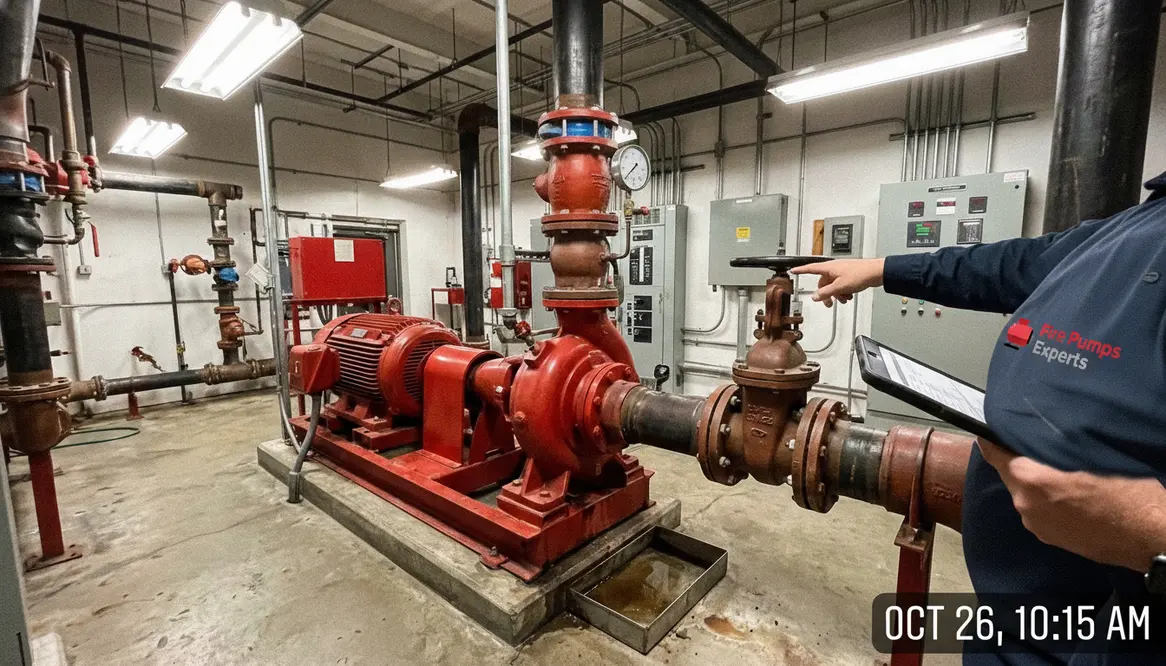
Fire Pump No Flow Test Key Check for Major Buildings
When I talk about a fire pump no flow test, I am talking about a simple but serious check that tells me whether a fire pump can still do its job when the building needs it most. In a commercial tower, industrial plant, or major property, that matters a lot. The pump may sit quietly for months, almost like a prop in a crime show waiting for its big scene, but when the system calls, it has to perform without drama. In this guide, I will explain what the test is, why it matters, how I approach it, and what good results look like.
What a no flow test checks
A fire pump no flow test checks pump pressure and performance with no water moving through the system. In plain words, I want to see what the pump does when the discharge valve stays closed. This gives me a clear reading of the pump’s churn pressure, which helps me spot wear, weak settings, or control issues. Because there is no demand on the system, the test is safe, controlled, and very useful for routine inspection.
For large commercial and industrial buildings, this test matters because a fire pump must support the sprinkler and hydrant system under real emergency conditions. However, a no flow test does not replace a full performance test. Instead, it acts like a health check. It tells me if the pump still looks sharp before I ask it to play the lead role.
Why it matters in major buildings
I use this test to catch problems early. A drop in churn pressure can point to pump wear, blocked suction, poor alignment, air leaks, or control trouble. Also, a pump that seems fine on the surface may still hide trouble inside the casing. That is where testing earns its keep.
For major property buildings, the risk is not just equipment damage. It is business interruption, code trouble, and a system that may not support fire protection when it counts. So, I treat each test as part of a bigger picture. In that picture, reliability, safety, and compliance all sit at the same table. And yes, unlike most board meetings, this one actually matters.
How I carry out the test step by step
I always begin with a visual check. First, I look at the pump room, valves, gauges, power supply, and controller. Then I confirm the system is ready for the test and that alarms, signals, and supervision are in order. After that, I run the pump with no water flowing through the discharge line and record the pressure readings at set intervals.
During the test, I watch for steady operation, strange vibration, heat, leaks, or noise. A fire pump should sound firm and work with purpose. If it starts making odd sounds, I pay attention right away. Machines do not usually whisper good news when they complain.
What I check during a fire pump no flow test
Here is the core of what I focus on:
What I observe
Why it matters
Churn pressure
Gauge stability
Heat buildup
Noise and vibration
Controller response
Leaks or drips
Shows the pump’s baseline performance
Helps confirm consistent operation
Can reveal strain or friction
Often point to mechanical issues
Confirms the system starts and runs properly
May signal seal or pipe trouble
Each of these points helps me build a clear picture. Moreover, the test becomes more useful when I compare the results with past readings. One reading on its own tells part of the story. A trend tells the full plot, and unlike a plot twist in a streaming series, I want that one to be predictable.
How I use results to spot trouble early
Once I finish the test, I compare the numbers with the pump’s expected range and with past records. If the pressure sits too low or changes in a strange way, I dig deeper. Sometimes the cause is simple, like a valve issue. Other times, it points to pump wear, bearing trouble, or a suction problem.
That is why I also look at the full fire protection setup. A pump does not work alone. It supports the hydrant system, sprinkler line, and overall water supply. For that reason, I like to cross check the pump test with the building’s broader fire system needs. If you want a deeper look at system standards, I also recommend this AS 2419 fire pump and hydrant performance guide. It adds strong context for performance and compliance in larger sites.
Fire pump no flow test and maintenance planning
A no flow test works best when I treat it as part of regular maintenance, not a one time event. Scheduled checks help me protect the pump room, avoid surprise failures, and keep the system ready for service. Also, they support better planning. When I know how the pump behaves month after month, I can spot slow changes before they become expensive repairs.
For commercial and industrial properties, that matters because downtime can cost far more than the test itself. And if the pump room needs repairs, I want that plan in hand before an emergency shows up uninvited. Emergencies never send a calendar invite. Rude, really.
FAQ
Conclusion
If you manage a commercial or industrial facility, I recommend making the fire pump no flow test part of your routine. It gives you early warning, better control, and stronger peace of mind. More importantly, it helps protect people, property, and operations. So, do not wait for a problem to write the script. Check the pump, review the numbers, and keep your fire protection system ready for the moment it matters most.