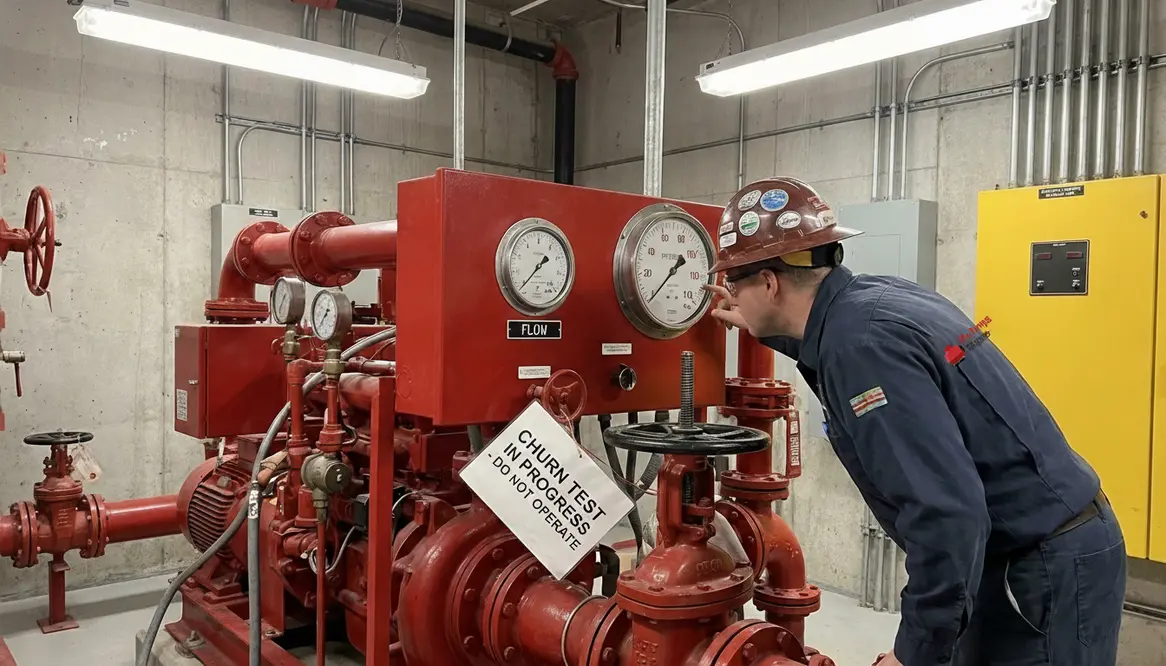
Fire Pump Churn Test: What It Measures for Facilities
If I had to explain a fire pump churn test in plain words, I’d say this: it is a no flow performance check for a fire pump, done to see how the pump behaves when it runs but no water leaves the system. In other words, the pump sits there doing its job while the pressure builds, the heat rises, and the system shows its true colors. For commercial and industrial facilities, and for major property buildings, this test matters because it helps reveal whether the pump can stay stable, safe, and ready when a real fire emergency arrives. And yes, it sounds a bit like making a marathon runner jog in place, which is oddly dramatic for a machine.
In this article, I will walk through what the test measures, why it matters, and how it supports dependable fire protection for large properties. I will also point to a useful AS 2419 fire pump and hydrant performance guide for anyone who wants a deeper look at system performance.
Why the test matters for large facilities
I see the churn test as a health check, not a checkbox. A fire pump can look fine during normal use, yet still hide weak spots that show up only under load. Because commercial sites and industrial plants often rely on high demand water systems, they need pumps that do not overheat, lose pressure, or act like they have stage fright when called into service.
During a churn condition, the pump works against a closed or nearly closed system. So, the test helps me understand how the pump handles stress without the flow of water cooling it down. That matters because pumps in large buildings must stay within safe limits. If they run too hot, seals can fail, parts can wear out, and the system can lose trust fast. Fire safety is not the place for surprises, unless the surprise is that everything works perfectly. That would be refreshing.
What the fire pump churn test measures
When I perform or review a churn test, I look at several key points. These tell me whether the pump is healthy and whether it can support the building when needed.
Performance point
Discharge pressure
Suction pressure
Temperature rise
Vibration and noise
Engine or motor stability
Seal and bearing condition
What it tells me
I see whether the pump can build and hold pressure at no flow.
I check how the water supply behaves while the pump runs.
I watch for heat that could damage pump parts.
I listen and feel for signs of wear, misalignment, or trouble.
I confirm that the driver stays steady during operation.
I look for early signs of failure or stress.
Because these readings work together, they give a fuller picture than one number alone. A pump may hit the right pressure, but if the temperature climbs too fast, I know I need to look closer. Likewise, a noisy pump may still run, but noise often whispers trouble before the trouble starts shouting.
How I interpret the results
I do not treat the churn test like a yes or no quiz. Instead, I read it like a story. First, I look at the starting pressure and compare it to expected values. Then, I watch how the pump behaves over time. If pressure stays steady and temperatures remain within range, that usually points to a sound system. However, if pressure drifts, heat rises fast, or vibration grows stronger, I start asking deeper questions.
For example, low suction pressure can suggest a supply issue. On the other hand, excessive heat may point to poor cooling, closed valves, or an internal problem in the pump. A pump that shakes like it just heard bad news may have alignment trouble or worn parts. The trick is not to panic. Instead, I use the test to catch small issues before they become expensive ones. That is the kind of drama no building owner wants on a Tuesday afternoon.
How often should the test happen?
I always advise following the relevant code, site risk, and maintenance plan. In many facilities, the churn test forms part of routine fire pump checks, along with weekly or monthly inspections and scheduled servicing. However, the exact timing depends on the system design, local rules, and the critical nature of the property. A hospital tower, a warehouse, and a high rise office building all deserve the same seriousness, even if their daily rhythms differ.
That is why I recommend checking performance against a trusted standard and keeping records that show patterns over time. If the pump starts drifting from its usual readings, that trend often matters more than a single test result. In the real world, equipment rarely fails with a polite announcement. It usually hints first.
Where to learn more and what to do next
If I want a deeper technical view, I review guidance that connects pump performance with hydrant system needs. I also look at how the pump fits into the wider fire protection setup for the property. For local support, I can explore los angeles fire pump services to better understand options for commercial and industrial facilities and major properties that need reliable system care.
In practice, the fire pump churn test gives me confidence. It shows whether the pump can hold pressure, manage heat, and stay stable when demand goes to zero but expectations stay sky high. That is exactly what large facilities need from their fire protection systems.
Quick FAQ about the fire pump churn test
Conclusion
If you manage a commercial, industrial, or major property building, I suggest taking the fire pump churn test seriously and treating it as part of your risk control plan. It can reveal weak points early, protect your equipment, and support code compliance. If you want help reviewing pump performance or planning service, now is the time to act. A calm system starts with a careful check, and a careful check starts with the right team.