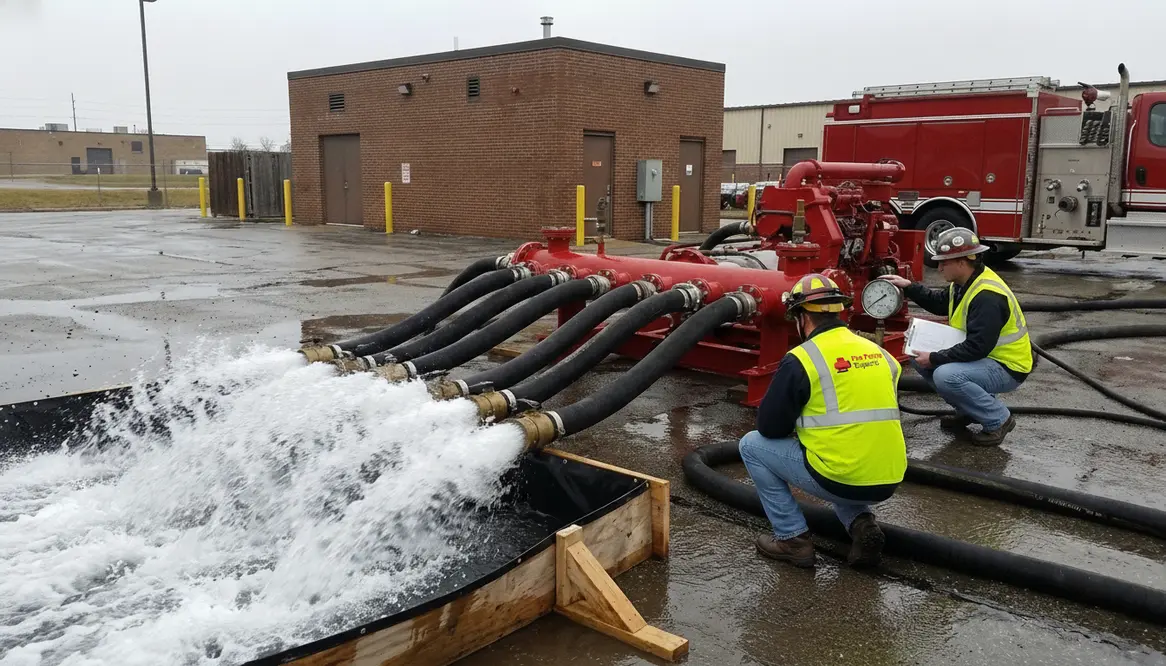
Fire Pump 150% Flow Test Explained
When I talk about a fire pump 150 percent flow test, I am talking about one of the most important checks for commercial and industrial fire protection systems. In plain terms, this test proves whether a fire pump can deliver more than its rated capacity when the pressure drops and the building needs it most. That matters a lot in major properties, because a pump that only looks good on paper can still fold under real demand. And yes, that would be the kind of plot twist nobody wants on a Tuesday.
What I mean by a fire pump 150% flow test
I use this test to measure how a fire pump performs at 150 percent of its rated flow. First, I start with the pump’s nameplate rating, then I push it to a higher demand point and watch what happens to pressure, flow, and stability. This tells me if the pump can handle real fire conditions without losing its nerve.
For commercial and industrial facilities, this is not just a box to tick. Instead, it gives me proof that the system can support hydrants, sprinklers, and other fire protection hardware during peak demand. In other words, it helps me separate a dependable pump from a very expensive paperweight.
How I test a fire pump in the field
Before I begin, I check the pump room, gauges, valves, suction source, and discharge line. Then I verify that the pump is ready for testing and that the building team knows what is about to happen. I always treat this step with care, because a fire pump test can affect water pressure across a property.
What I check first
- Pump status and controller condition
- Suction supply and water level
- Discharge pressure and test header setup
- Valve positions and system isolation
What I record during the test
- Churn pressure
- 100 percent flow point
- 150 percent flow point
- Any drop, surge, or odd sound from the pump
Next, I measure performance at several flow points. I do not rush this part, because the data tells the real story. A solid pump should maintain acceptable pressure at higher flow, while also staying smooth and stable. If the pump starts acting like it has stage fright, I know I need to look deeper.
What the test results tell me
The results show whether the pump meets the required curve and supports the property’s fire protection demand. If the pump holds pressure well at 150 percent flow, that is a strong sign the system can handle heavy use. However, if pressure falls too fast, I look at the suction supply, pump condition, pipe losses, and controller settings.
I also compare the results with the expected performance curve. That helps me spot wear, blockage, poor alignment, or a pump that has drifted away from its design point. Since major properties depend on steady fire water delivery, even a small weakness can create a big risk later. And nobody wants a fire safety report that reads like a cautionary tale from a bad action movie.
Why this matters for large facilities
For industrial plants, high rise buildings, and other major commercial sites, this test supports compliance, reliability, and life safety. It also helps the owner plan repairs before a failure turns into a shutdown or a serious hazard.
How I use standards and guidance to judge performance
I do not rely on guesswork. Instead, I use the pump curve, site conditions, and the right fire protection guidance to judge whether the system performs as expected. When I need a practical reference for hydrant and pump performance, I look to this AS 2419 fire pump and hydrant performance guide. It helps me connect the test result to real world system needs.
For broader service support in Los Angeles, I also use los angeles fire pump service as a local SEO reference point for businesses that manage commercial and industrial fire protection assets.
I find this step valuable because standards do more than set rules. They give me a clear way to explain results to building managers, engineers, and safety teams without turning the meeting into a fog machine of jargon.
How often I recommend this test
I recommend regular testing based on the site’s risk level, system design, and local code needs. Large buildings and industrial facilities should keep a firm testing schedule, because pumps can change over time due to wear, corrosion, or poor water supply. In many cases, monthly inspection and annual performance testing work together to keep the system honest.
Also, a good test record helps with maintenance planning. It shows trends, not just one result. That way, I can see if a pump is slowly losing strength before it fails in a real emergency. As far as surprises go, I prefer birthday cake, not fire pump failure. If you have ever looked at a fire pump 150 percent flow test record and felt relief, that feeling is exactly what the paperwork is supposed to deliver.
Quick refresher: a fire pump 150 percent flow test is where the system proves it can maintain performance at 150 percent of rated flow, not just cruise through calm, lower-demand moments.
FAQ: Fire pump 150% flow test
Conclusion
If you manage a commercial or industrial property, I urge you to take the fire pump 150 percent flow test seriously. It tells you whether your system can perform when pressure drops and lives depend on fast water delivery. So, do not wait for a weak result to find you first. Schedule proper testing, review the curve, and keep your fire pump ready for the moment it truly matters. The goal is simple: predictable performance at the flow level that actually tests the pump, not just the version of reality that looks easy on paper.