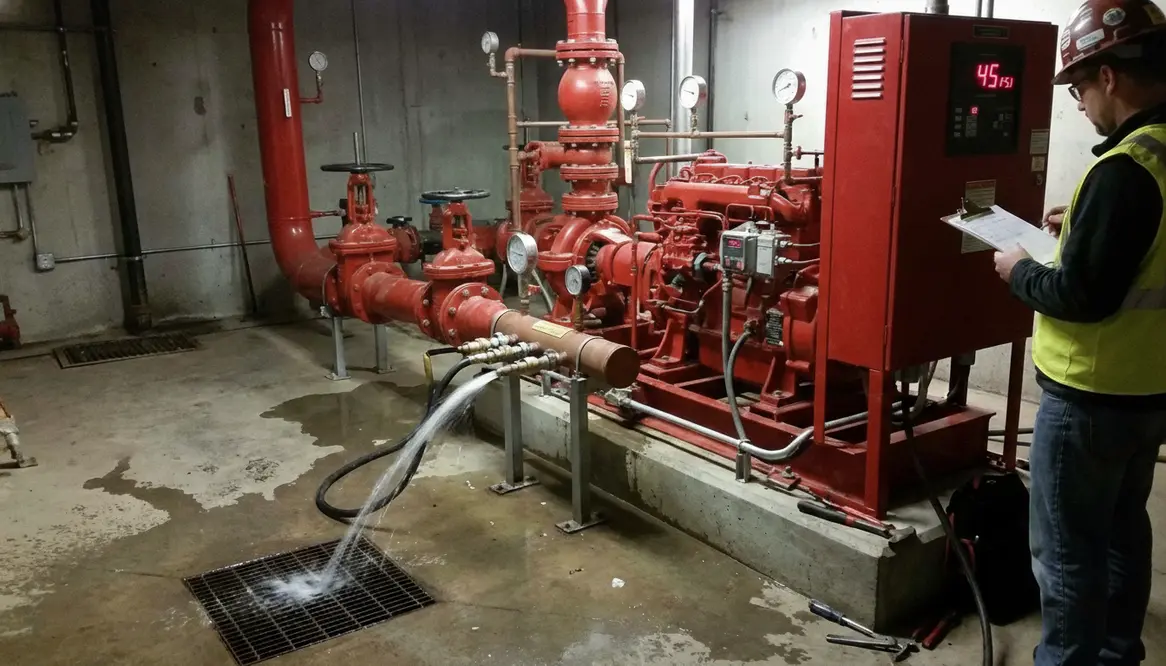
Fire pump churn and rated flow test explained
Why a Fire Pump Passes Churn but Fails at Rated Flow
I have seen this problem more than once, and it always raises the same uneasy question: how can a fire pump look fine at churn, then fall apart when the system asks for real water? In plain terms, the pump may hold pressure with no demand, yet our fire pump fails flow test once the flow rate climbs to the level that matters. That gap is not a mystery. It usually points to a weak spot in the pump, the water supply, or the setup around it. And yes, it is a bit like a movie trailer that promises a blockbuster and then gives you a budget sequel.
What churn tells me and what it does not
Churn is the no flow test. The pump runs, builds pressure, and sits there like a well dressed security guard. That tells me the motor, driver, and casing can create pressure under light load. However, it does not prove the pump can move enough water when sprinklers or hydrants open. So if fire pump fails flow test shows up later, I know churn was only the opening scene.
In many commercial and industrial facilities, churn can hide real trouble. A pump may have good seals, smooth bearings, and a healthy speed, yet still miss rated flow because the suction side cannot feed it fast enough. Therefore, I never stop at churn. I check the full demand curve, because the real work starts when water has to move, not when it just sits there looking impressive.
Why the pump loses flow under load
The most common reason is not enough water getting to the pump. If suction pressure drops, the pump starts to starve. Then the discharge pressure falls, and the pump cannot hold its rated point. Air leaks, blocked strainers, valve issues, or a weak water source can all cause this. Also, a worn impeller or a bad clearance inside the pump can let churn stay high while flow sinks fast.
Here is the simple truth. At churn, the pump only needs to build pressure. At rated flow, it must move a large volume of water without choking. That is where the stress shows up. Think of it as a bouncer trying to rush a concert crowd. At first, he looks in control. Then the doors open, and chaos walks in wearing steel toes.
How I trace the real fault on a fire pump
When fire pump fails flow test after passing churn, I follow a clear path. First, I look at suction conditions. Then I review pump speed, driver performance, relief settings, and pipe size. After that, I compare actual readings to the expected curve. If the pump is too far off the curve, I know the issue is not a small tuning problem. It is a real system problem.
Quick check I use during troubleshooting
Possible cause
Low suction pressure, clogged intake, air leak, undersized supply, worn impeller, wrong pump speed, valve not fully open
What I look for
Pressure drop, noise, vibration, unstable discharge, poor amperage pattern, visible restriction
What it means
The pump may pass churn but lose capacity once demand rises
That kind of check saves time. It also keeps people from blaming the wrong part. A motor can sound proud and steady, yet the suction line may be the real villain in the scene. And unlike a bad sequel, this one can cost real money.
Why the system curve matters more than guesswork
The pump does not work alone. It works against the system curve. If the facility has long pipe runs, too many fittings, partial blockages, or a water source that cannot keep up, the pump must work harder than expected. As flow rises, friction loss rises too. So a pump that looks fine at churn may miss rated flow because the system demands more than the water path can give.
That is why I always compare the test result with the pump curve and the system design. If the test data lands below the expected line, I know the issue is real. And if the curve shows a steep fall at higher flow, I start with the supply side before I accuse the pump of giving up early like a side character in a soap opera.
When codes, maintenance, and design all matter
For commercial and industrial facilities, the test should not live in a vacuum. It should fit the code, the design, and the maintenance record. I often review guidance from the AS 2419 fire pump and hydrant performance guide because it helps connect test results to practical performance checks. In the same way, the los angeles fire pump service page can help facility teams think about local support and system care for major properties.
Regular inspection matters because small faults grow fast. A loose joint can pull in air. A valve left partly closed can choke flow. A worn component can still pass churn, yet fail once the system asks for full work. So I treat maintenance as part of the test, not something separate that gets a polite nod and a coffee break.
FAQ
Conclusion
I do not treat a good churn result as a clean bill of health. Instead, I use it as the first clue, then I test the full flow path and trace the pressure loss from source to discharge. If your fire pump passes churn but misses rated flow, act now. Review the suction side, compare the curve, and bring in the right service support for your commercial or industrial facility before a small issue turns into a very expensive surprise.