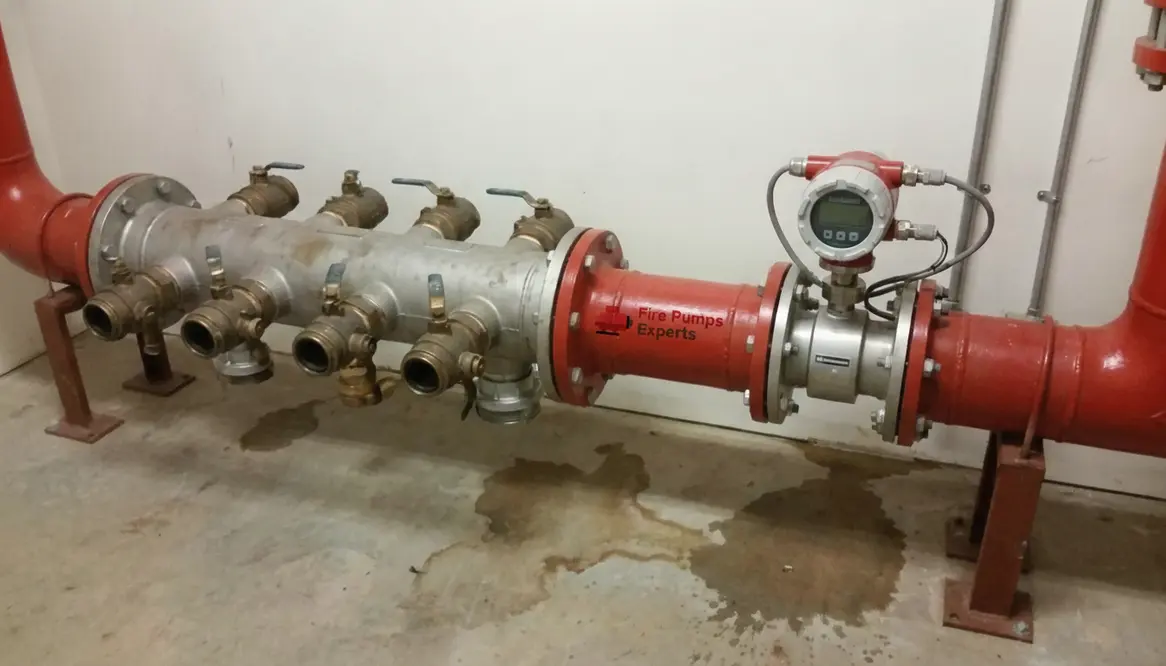
Fire Pump Test Header vs Flow Meter: How They Differ
When I talk about fire pump test header vs flow meter, I am really talking about two very different ways to prove a fire pump can do its job when the pressure drops and the stakes climb. One method sends water out through the test header. The other uses a flow meter to measure performance with less discharge. Both matter, yet they serve different goals. For commercial and industrial facilities, and for major properties, that difference can shape testing speed, water use, and site disruption. In other words, it is not just plumbing with attitude; it is life safety with a stopwatch.
What a fire pump test header does on site
A test header gives me a direct way to move water through the system and confirm how the pump behaves under load. I open the outlets, watch pressure, and see how the pump holds up across the range. Because the water leaves the system, this method feels simple and very real. It shows how the pump performs while actually pushing water out, which many facility teams trust because it mirrors service conditions.
However, that same realism comes with a cost. The test header can dump a lot of water fast, so I need proper drainage, space, and planning. If the site runs a busy industrial process or sits inside a dense commercial complex, that discharge can become a headache. Nobody wants a heroic pump test that leaves the loading dock looking like a lake scene from a disaster movie.
How a flow meter test works and when I use it
A flow meter lets me test the pump while measuring water movement inside the system instead of sending everything through test outlets. I can capture flow and pressure with far less water loss, which makes this method attractive for sites that need tighter control. It also helps when I want a quicker test with less mess and less impact on operations.
Still, a flow meter does not replace every other method. I use it when the site layout, water limits, or operational needs make it the smarter choice. It works well for many large commercial and industrial buildings, but I still check whether the setup matches the pump and the system design. If the meter is not sized or installed well, the numbers can lie with the confidence of a movie villain in the final act.
Fire Pump Test Header vs Flow Meter: what changes in real testing
Here is the real split. A test header gives me a direct discharge test, while a flow meter gives me a measured internal reading with less water loss. As a result, the test header often takes more setup and more site cleanup. By contrast, the flow meter often cuts disruption and helps keep testing neat.
With a fire pump test header vs flow meter decision, I also change how I plan the logistics. With a test header, I plan for discharge lines, drainage, and water handling. With a flow meter, I focus more on calibration, placement, and system fit. Both approaches test the pump, but they solve different problems.
Quick comparison for busy facility teams
Test header
Direct discharge through outlets
Uses more water
Needs more drainage planning
Shows very real pump behavior
Flow meter
Measures flow with less water loss
Usually cleaner and faster
Needs correct setup and calibration
Works well where site disruption must stay low
What I check before choosing a test method
Before I pick a method, I look at the facility type, water supply, access, and how much disruption the operation can handle. I also check the pump size, the system design, and any local requirements. For large properties, that step matters because a poor choice can slow production, block access, or create avoidable downtime. And yes, downtime has a way of showing up like an unwanted sequel nobody asked for.
I also lean on guidance that helps align testing with system performance expectations. For example, I often review the AS 2419 fire pump and hydrant performance guide from Kord Fire Protection because it helps frame how pump and hydrant systems should perform during testing and use. That kind of reference keeps the process grounded in real site demands, not guesswork.
How I keep testing useful for major properties
For commercial towers, warehouses, hospitals, data centers, and industrial sites, I want testing that protects uptime and still gives me solid numbers. So I choose the method that fits the site, not the one that looks flashy on paper. If the facility can handle discharge and needs a direct test, I use the test header. If water waste and disruption matter more, I often move toward the flow meter.
I also make sure the team understands what the results mean. A strong result does not only prove the pump works today. It also helps me spot weak pressure, poor setup, or system issues before they become very expensive surprises. That is the part people remember when the alarms stop sounding and the real work begins.
FAQ
Conclusion
If I want the cleanest answer for a commercial or industrial property, I match the testing method to the site, not the other way around. The fire pump test header vs flow meter decision comes down to water use, setup, accuracy, and disruption. So, if your facility needs a smarter testing plan, I recommend reviewing your system now and speaking with a fire protection specialist before your next test day arrives.