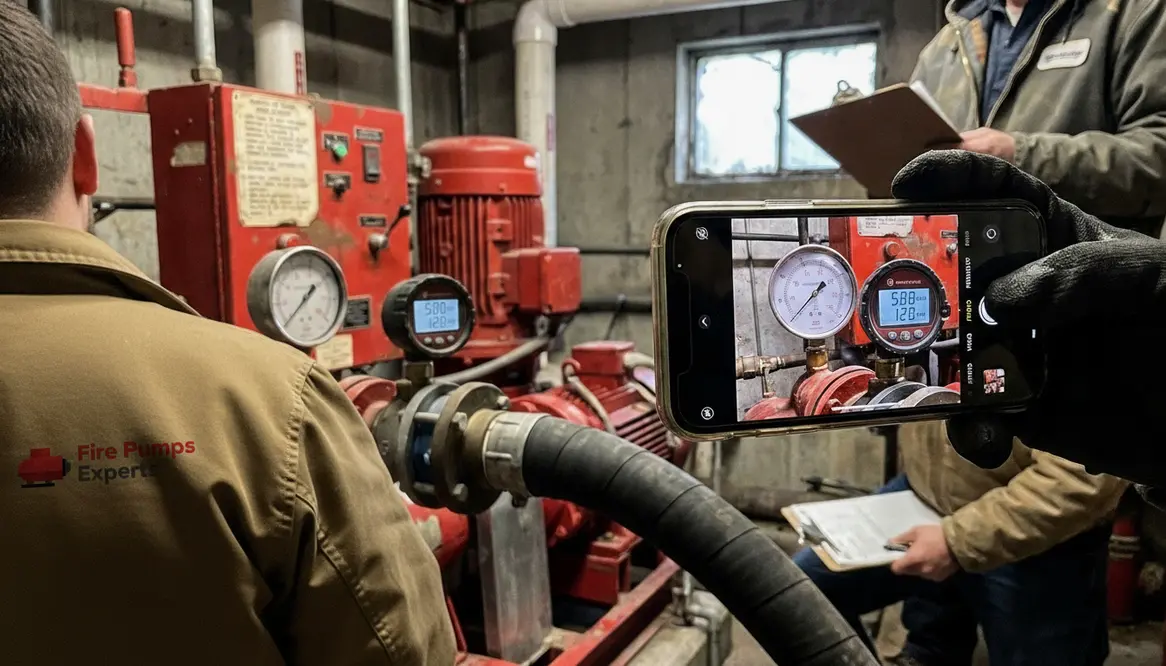
Fire Pump Flow Meter Testing Explained
I have seen plenty of fire systems that look fine on the surface, yet the real story comes out during a fire pump flow meter test. That test tells me whether the pump can deliver the water a commercial or industrial building needs when things go sideways. And yes, that is the kind of moment no one wants to “wing it.” In a warehouse, plant, or major property, guesswork is not a strategy. It is a headline nobody wants.
So, I will break this down in plain language. I will show what the test does, why it matters, how I approach it, and what good results actually look like. If you manage a large building, this is one of those maintenance items that feels boring right up until it becomes the most important thing in the room.
What a fire pump flow meter test actually checks
When I run a flow meter test, I am checking the pump’s ability to move water at different flow rates without relying on a full discharge into the system. In simple terms, I want to know if the pump can perform under pressure, not just hum along like it is auditioning for a role in a quiet library.
The test measures how the pump behaves at shutoff, at rated flow, and often beyond that point. This gives a clear picture of pressure, flow, and pump health. For commercial and industrial facilities, that matters because a pump that looks fine during a quick visual inspection can still fall short when the system actually needs it.
Also, this test helps spot issues like worn impellers, bad suction conditions, weak motors, or problems with the driver. In other words, it helps catch trouble before trouble turns into a very expensive fire drill.
What “real performance” means in the field
A fire pump flow meter test is not about a single dramatic number. It is about how the pump behaves across conditions. When pressure holds, flow is consistent, and the curve still makes sense, you can trust the system to do its job instead of simply existing beside it.
Why commercial and industrial buildings need this test
Large buildings carry higher risk. They often have bigger water demands, longer pipe runs, more complex systems, and more at stake if the fire pump fails. That is why I treat this test as a core part of fire protection, not a side task someone remembers after lunch.
The test helps with:
- verifying the pump still matches design needs
- finding hidden performance loss before it affects safety
- supporting maintenance records and compliance work
- reducing the chance of surprise repairs
And since commercial sites often run hard every day, small issues can build fast. A little wear in a busy industrial setting can snowball like a sequel nobody asked for.
How I perform a fire pump flow meter test
I start by confirming the pump setup, the test equipment, and the building conditions. Then I connect the flow meter and take readings at set points. From there, I compare the results against the pump curve and the site’s expected performance.
A practical flow for the test
Here is the basic flow I follow:
- First, I inspect the pump room and verify the driver, valves, gauges, and power source.
- Next, I make sure the test gear is ready and the discharge path is safe.
- Then I run the pump and record pressure and flow at each point.
- After that, I review the data and look for changes from past tests.
Because this test deals with real system performance, I also watch for unusual vibration, heat, odd pressure swings, or delayed response. Those clues matter. They often tell me more than one clean number ever could.
Fire pump flow meter test results explained in simple terms
Flow meter reading: This shows how much water the pump moves.
Pressure reading: This shows the force the pump creates.
Curve match: This shows whether the pump still performs like it should.
Stable operation: This shows the pump can hold steady under load.
When the numbers line up, I know the system is healthy. When they do not, I do not panic. Instead, I look for the reason. Maybe the pump lost efficiency. Maybe suction supply changed. Maybe the driver needs service. Either way, the data gives me a clean path forward.
For deeper guidance, I also like to compare results with the AS 2419 fire pump and hydrant performance guide, which helps frame expected performance for fire systems in practical terms.
When to schedule a test and what to watch for
I usually recommend testing on a regular maintenance cycle, and I pay close attention after any system change, repair, or sign of poor performance. If a site has increased water demand, new building work, or repeated pump issues, I want a fresh reading sooner rather than later.
Common warning signs include:
- pressure dropping below expected levels
- flow that no longer matches past results
- driver problems during startup
- unusual noise or vibration
- changing suction conditions
These clues do not always mean failure. However, they do mean I should take a closer look. Fire pump systems are not glamorous, but they are vital. They deserve better than a “looks okay to me” inspection from the guy who also thinks duct tape is a business plan.
Why this test supports better property protection
I view the fire pump flow meter test as proof, not paperwork. It gives owners, managers, and maintenance teams confidence that the system can do its job when needed. For major property buildings, that confidence matters just as much as the hardware itself.
If you want a local service example, I also recommend reviewing los angeles fire pump services at https://kordfire.com/fire-pump/ for commercial and industrial property support.
And if you want a deeper reference on fire pump and hydrant performance, I suggest the AS 2419 fire pump and hydrant performance guide from Kord Fire Protection for added context on system expectations and testing.
Quick FAQ
Conclusion
If I want a fire pump system to earn its keep, I test it properly and read the results with care. A fire pump flow meter test gives me the facts I need to protect a commercial or industrial property with confidence. So, if your site depends on steady fire water supply, do not wait for a problem to introduce itself. Schedule the test, review the data, and keep the system ready for the moment that matters most.