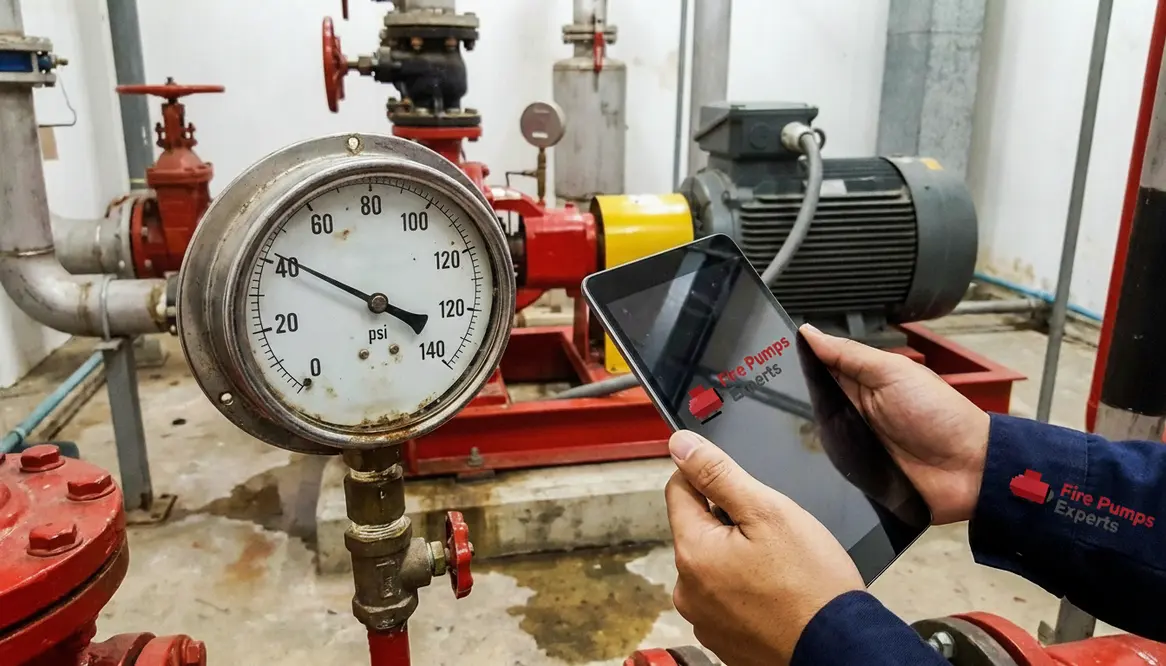
Why Fire Pump Pressure Fluctuates During Testing
When I look at fire pump pressure fluctuation during testing, I do not see random noise. I see a message. The pump, the suction line, the water supply, and the test setup all speak at once, and the gauge tells the story. If the pressure jumps, dips, or dances around like it missed its cue in a school play, something in the system needs attention. For commercial and industrial facilities, and for major property buildings, that matters a lot. A fire pump must perform with steady force when the stakes are high, not just when everything feels polite and calm.
In this article, I will break down the main causes, how I check them, and what I do to bring the numbers back under control. I will also keep it plain, because fire protection should not sound like a legal thriller.
What I check first during fire pump testing
Before I blame the pump, I start with the basics. First, I verify the test method. A poor test setup can create a false swing in pressure. Then I check the gauge, valves, suction source, and flow path. If one part acts up, the whole reading can look messy.
Here is the quick order I follow:
- I confirm the gauge is accurate and sized for the system.
- I inspect valve positions for partial closure or slow movement.
- I look for trapped air, loose fittings, or signs of leakage.
- I check the water supply for stability and volume.
Sometimes the issue is simple. A tired gauge can lie with a straight face, and that is rude, but common. Other times, the problem runs deeper. That is why I never stop at the first clue.
Why suction conditions cause pressure swings
Suction problems often drive fire pump pressure fluctuation more than people expect. If the pump does not get a steady supply of water, the discharge pressure will move around. I have seen this when a tank level drops too far, a suction valve opens too slowly, or a public main cannot keep up with demand.
Air pockets also cause trouble. They compress and release, which makes the pressure needle twitch like it just heard bad news. In addition, friction loss in the suction line can rise if the line is undersized, blocked, or poorly arranged. So, the pump may look unstable when the real issue sits upstream.
For commercial and industrial sites, this matters even more because their water demand often runs higher and longer. A big building cannot afford a weak or uneven supply. The pump needs a calm, steady feed, not a dramatic guest star.
How pump parts affect the reading
Now I move to the pump itself. Wear inside the impeller, casing, shaft, or bearing can change how the pump holds pressure. If the clearances open up too much, the pump loses efficiency. As a result, the discharge reading may rise and fall as the load changes during the test.
Control issues can also play a role. A weak controller, a poor automatic start signal, or a sudden change in motor speed can make the output less stable. If the pump starts strong and then settles in an odd way, I do not ignore that. I dig deeper.
And yes, even the smallest parts can matter. A loose coupling or failing seal may not look like much at first, but the system feels it. Fire pumps are a bit like a band. If the drummer is late and the bass player misses a beat, everybody notices.
Fire pump pressure fluctuation during testing: field signs I watch
When I test on site, I watch the pattern, not just the number. A steady drop may point to flow demand. A rapid bounce may point to trapped air or a bad gauge. A slow climb followed by a dip can point to supply limits or pump wear.
To make this easier, I split the signs into two groups:
Meanwhile, I also compare the test data with the expected performance curve. That step helps me separate normal change from real trouble. For a useful reference on expected results and code based checks, I often review the AS 2419 fire pump and hydrant performance guide. It helps me line up what I see in the field with what the system should deliver.
How I reduce fire pump pressure fluctuation
Once I find the cause, I fix it in a practical order. First, I confirm the gauge and test setup. Then I correct valve issues, bleed air, and inspect suction conditions. After that, I look at the pump internals and controller settings. I do not guess if I can verify.
Dual column view
Problem
Bad gauge
Air in the line
Weak suction
Wear in pump parts
What I do
I replace or calibrate it
I bleed and recheck the system
I inspect the supply and line size
I schedule repair or replacement
Also, I re test after each correction. That step saves time and keeps me honest. If the pressure settles, I know I hit the real cause. If it still wanders, I keep looking. No drama, just method.
For facilities that need service support, I also point teams to this local resource: los angeles fire pump service and support. It helps commercial and industrial properties stay focused on reliable fire protection performance.
FAQ for quick answers
Conclusion
If I see pressure move during a fire pump test, I treat it as useful data, not a nuisance. The system is telling me where the weak spot lives, and I listen. For commercial and industrial facilities, and major property buildings, that kind of clarity protects life, property, and uptime. So I check the supply, the pump, and the test gear in order, then I confirm the fix with a clean retest. If you need dependable help, take action now and keep your fire pump ready for the day it truly matters.