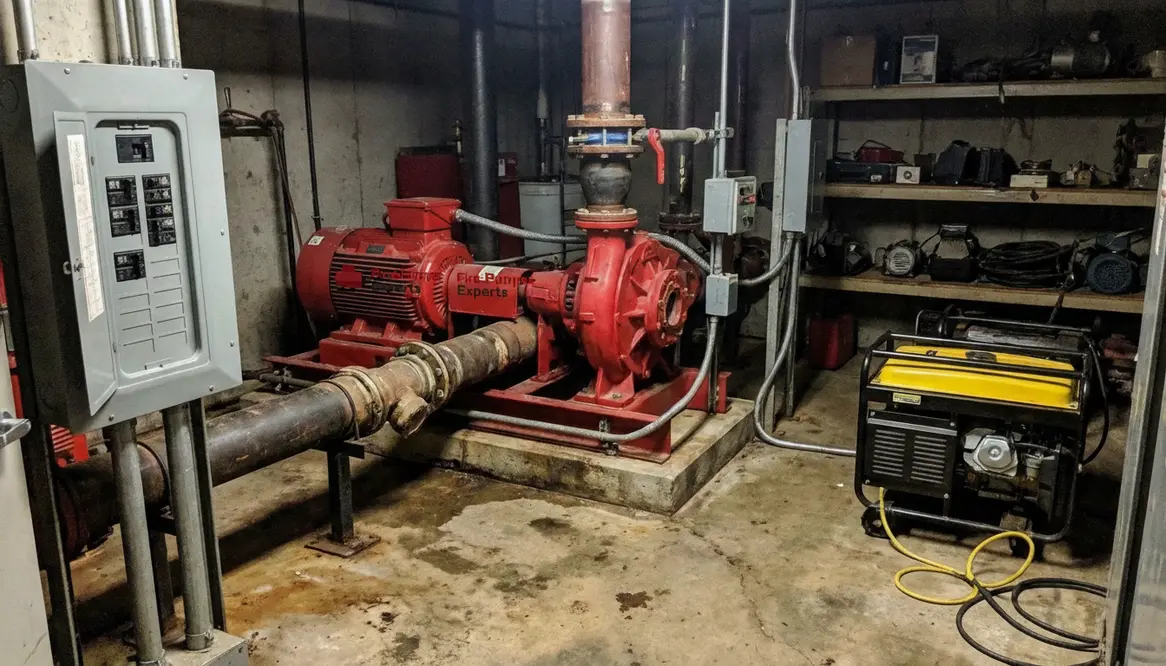
Normal and Emergency Power for Fire Pumps Explained
When I talk about fire protection in commercial and industrial buildings, I always start with one simple truth: fire pump emergency power is not a nice extra, it is part of keeping a building ready when things go sideways. In a tall office tower, a warehouse, or a major property, the fire pump has one job. It must move water fast, and it must do it even when the lights go out. That is why normal and emergency power matter so much. One keeps the system ready every day. The other steps in when the grid takes an unscheduled nap, which, frankly, seems to happen at the worst possible time.
In this guide, I will break down how normal power works, when emergency power comes into play, and why commercial and industrial facilities cannot afford a weak plan. I will also point to helpful resources, because in fire protection, guessing is a terrible hobby.
How normal power keeps the fire pump ready
Normal power comes from the building’s main electrical service or the standard power source assigned to the fire pump controller. In most cases, this power keeps the fire pump system on standby, ready to respond when pressure drops in the sprinkler or standpipe network. I like to think of it as the daily heartbeat of the system. Quiet, steady, and easy to ignore until it is gone.
For a commercial or industrial facility, normal power must support the fire pump without creating weak points. The pump controller, transfer devices, and alarms all need to work together. If one part fails, the whole system can stumble. That is why I always push for proper sizing, correct wiring, and routine testing. After all, a fire pump should not be powered like a phone charger from 2009.
When emergency power takes over
Emergency power steps in when the normal source fails. This can come from a generator, a legally required standby system, or another approved backup source, depending on the building design and code path. The goal is simple. The fire pump must keep working when utility power drops, because fire does not pause for a blackout.
For major properties, emergency power planning must account for startup load, running load, and the transfer process. The system should switch fast enough to keep pressure stable. Also, the backup source must have enough capacity to support the pump under real demand, not just a polite little test in a perfect lab setting. I have seen good plans fall apart because someone treated backup power like a formality. That is not a strategy. That is wishful thinking in a hard hat.
What fire pump emergency power systems need to do
Here is the practical side. A strong fire pump emergency power setup should do more than just “turn on.” It must protect life safety, support code compliance, and keep the water supply reliable under stress. To make that happen, I focus on three core needs.
First
, the system must start the pump without delay. A slow transfer can cause pressure loss, and pressure loss can cripple sprinklers or standpipes before the fire department even arrives.
Second
, the backup source must stay stable long enough for the pump to do its job. In real buildings, fire events do not follow a neat schedule. They can last, and so must the power.
Third
, the design must support testing and maintenance. If the team cannot inspect, test, and service the system, then the backup plan is only good on paper. Paper does not pump water.
Dual column view of the power path
Below is a simple way I look at the power flow in a fire pump system.
Normal Power
Supplies day to day readiness
Keeps the controller energized
Supports routine operation and supervision
Emergency Power
Steps in during outages
Maintains pump operation in a loss of utility power
Protects water delivery when the facility is under stress
This kind of split view helps building teams see the real job of each source. One source stays quiet until needed. The other stands by like the understudy who actually saves the show.
Why code, testing, and maintenance matter
Fire pump systems in commercial and industrial facilities follow strict rules for a reason. Codes and standards shape how normal power connects, how backup power transfers, and how the system gets tested. I always advise owners and facility teams to keep the design aligned with current requirements and to document every inspection.
For a helpful overview of broader backup system planning, I recommend this commercial emergency power systems requirements, design, and maintenance guide. It gives useful context for how emergency power works across a facility, not just at the fire pump.
And if you want a direct look at fire pump support for major properties, I also suggest reviewing los angeles fire pump services. That resource fits well for commercial and industrial sites that need dependable fire protection planning.
Regular testing matters because fire pump systems face real wear. Motors age. Batteries weaken. Transfer equipment gets tired. In addition, environmental conditions in warehouses, high rises, and industrial sites can add stress over time. A good maintenance plan catches small issues before they turn into expensive drama.
FAQ
Quick answers to the questions that show up when teams are trying to make fire pump emergency power dependable, repeatable, and ready when it counts.
Conclusion
If I had to leave you with one clear message, it would be this: do not treat fire pump power as background noise. Normal power keeps the system ready, and emergency power keeps it alive when the grid fails. For commercial and industrial buildings, that difference can shape the outcome of a crisis. And when the discussion turns back to fire pump emergency power, the plan should stay sharp, documented, and tested, not just “installed.” If your facility needs a better approach, now is the time to review the design, confirm compliance, and strengthen your backup strategy before the next outage writes the plot twist.