AS 1851 Fire Pump Maintenance Requirements Guide
AS 1851 Fire Pump Maintenance Requirements Explained
I treat AS 1851 maintenance as the steady hand on the wheel for commercial and industrial fire systems. In a major property, a fire pump is not a side character. It is the engine that helps protect lives, assets, and business continuity when pressure drops and things get serious fast. I have seen how a well kept pump can make the difference between a controlled response and a very expensive bad day. So, if you manage a large facility, this guide breaks down what the standard expects, what I look for in practice, and how to stay ready without turning compliance into a circus.
What AS 1851 maintenance means for fire pumps
AS 1851 maintenance sets the routine checks, testing, and record keeping needed to keep fire protection systems ready for service. For fire pumps, the standard focuses on reliability, flow, pressure, starting performance, and clear evidence that the system still does its job. In plain language, I do not wait for a crisis to find out the pump feels tired. That would be like asking Darth Vader to babysit a choir. Bad fit, bad outcome.
For commercial and industrial sites, the main goal is simple. I keep the pump ready to start, run, and support the fire system under real demand. The standard also expects site staff and service providers to follow a set schedule, document the work, and fix faults before they grow teeth.
How often fire pump checks should happen
The schedule depends on the pump type, the system setup, and the building risk profile. Still, the rhythm stays steady. I use routine checks, monthly tests, and longer interval inspections to catch drift early. If a pump starts slowly, leaks, overheats, or fails to reach set pressure, I treat that as a warning, not background noise.
Here is a simple view of the usual upkeep flow:
Frequent checks
- Visual inspection of the pump room
- Check for leaks, heat, noise, and vibration
- Confirm gauges, switches, and valves sit in the right position
Scheduled testing
- Start the pump and confirm it runs correctly
- Verify pressure and flow response
- Record results and flag anything out of range
Because major properties often run critical operations, I also recommend aligning the maintenance calendar with business hours, tenant access, and shutdown limits. That way, the pump gets tested, and the site does not turn into a logistics puzzle worthy of a heist movie.
What I check during a fire pump inspection
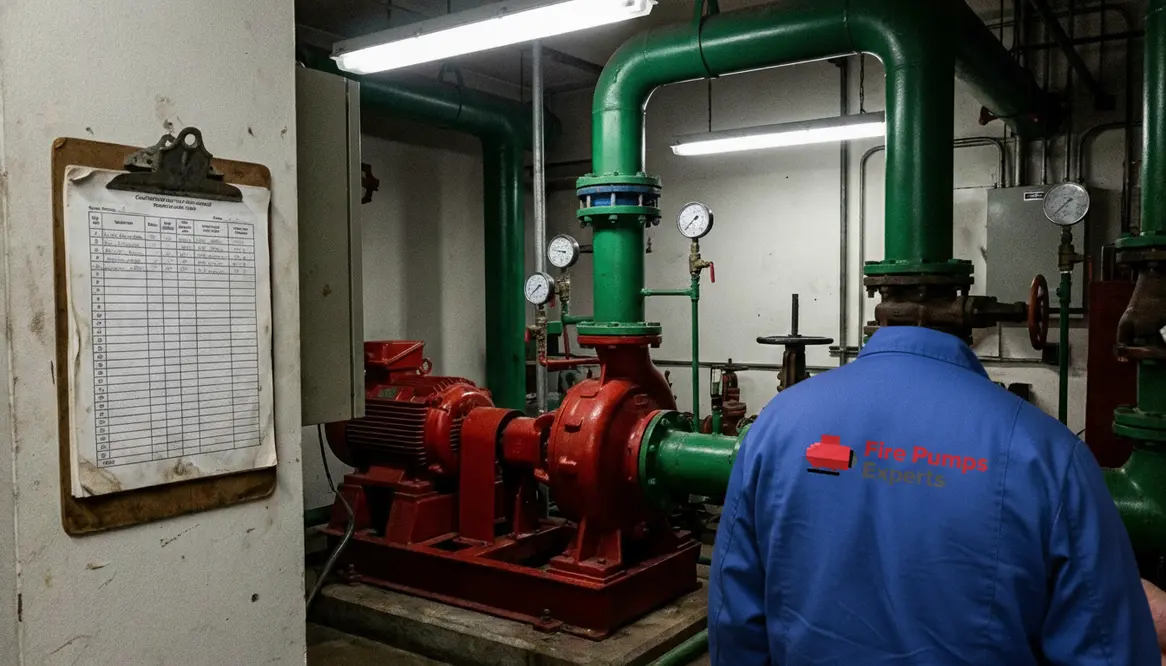
When I inspect a fire pump, I look beyond the surface. A clean room is nice, but the real story lives in the details. I check the pump casing, driver, suction line, discharge line, valves, controls, power supply, and the test setup. I also listen for unusual sound because pumps often speak before they fail. Not in words, of course, but in the mechanical equivalent of a cry for help.
I also verify that:
- AS 1851 maintenance records stay current and easy to trace
- The pump starts automatically when required
- The driver maintains stable operation during test runs
- The pressure relief and control components perform as designed
- Any corrosion, wear, or seepage gets addressed quickly
For industrial and commercial facilities, I pay special attention to access, ventilation, and environmental conditions in the pump room. Heat, dust, poor drainage, and blocked access can reduce reliability over time. In other words, the pump room should not look like a forgotten storage closet with heroic aspirations.
AS 1851 maintenance records and compliance evidence
Good records matter just as much as the test itself. If I cannot prove the pump was checked, serviced, and found ready, then the work has a weak trail. AS 1851 expects clear logs that show dates, results, faults, corrective actions, and follow up checks. I keep the paper trail sharp because audits, insurers, and facility managers all want the same thing: proof.
I also make sure each entry names the equipment, the test outcome, and the person who carried out the work. If a fault needs repair, I track it until closure. That matters because unresolved faults can sit quietly in the background, looking harmless, until the moment they are most unwelcome. Sort of like a sequel nobody asked for.
When to bring in a specialist for fire pump servicing
I bring in a specialist when a pump shows recurring faults, unstable pressure, starting trouble, or signs of wear that go beyond basic site checks. I also recommend specialist support when a facility has a complex fire system, multiple pumps, or critical operations that cannot afford guesswork.
For major properties, an expert service provider can help with testing, fault finding, repair planning, and long term maintenance strategy. This is where reliable support pays off. It keeps the system compliant, lowers the chance of surprise downtime, and gives facility managers a clear path forward. If you want a useful next step, review commercial fire pump servicing for AS 1851 compliance and make sure your site stays ready for the real thing.
AS 1851 maintenance in everyday facility management
Integrating checks with operations
In a live site, AS 1851 maintenance works best when it sits inside normal operations instead of sitting on top of them. I align pump testing with existing safety meetings, contractor visits, and planned shutdowns. That way, the pump gets the attention it needs without turning every test into a production.
Training and simple habits
I also make sure frontline staff know the basics: what normal sounds like, which indicators matter, and who to call when something feels off. Small habits such as checking for puddles, listening for new rattles, or noticing heat in the pump room turn AS 1851 maintenance from a document into a living practice.
FAQ
Conclusion
Need help keeping your fire pump compliant? I recommend acting before a fault turns into a costly outage. If your commercial or industrial site needs a clear maintenance plan, I can help you map out the checks, fix the weak spots, and keep your fire system ready for the day it is needed most. AS 1851 maintenance feels much better when it is calm, simple, and already done.