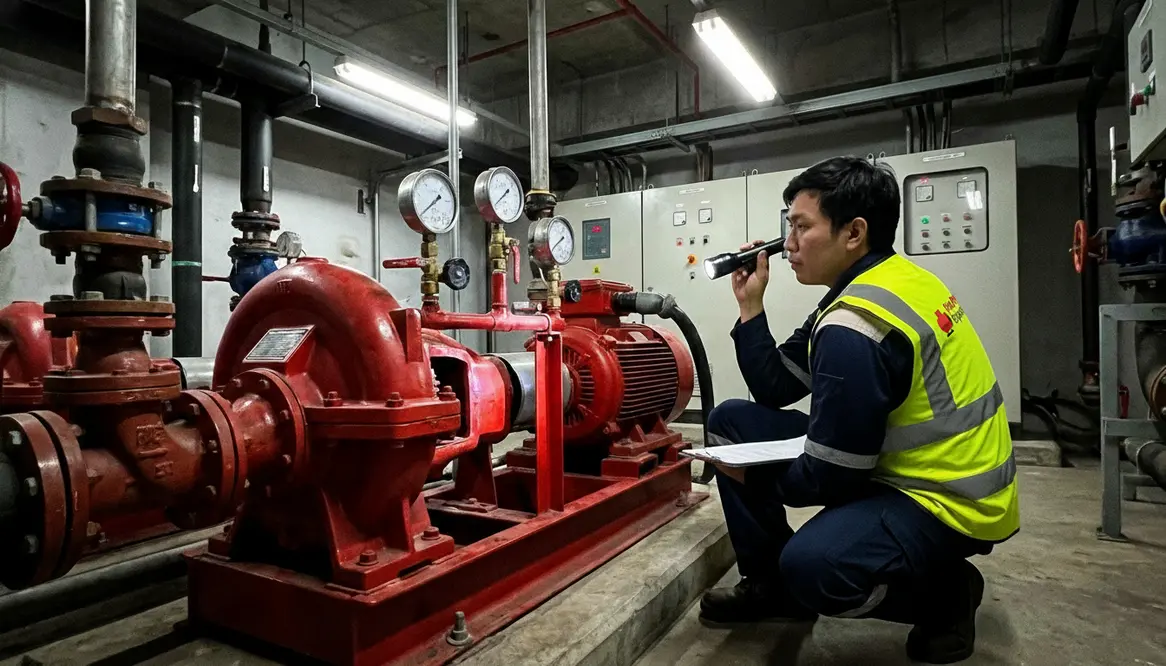
AS 1851 Fire Pump Routine Service and Testing Guide
AS 1851 Fire Pump Routine Service Guide
When I look at an AS 1851 fire pump, I do not see a metal box in a plant room. I see a quiet promise. It waits there, ready to move water when a fire alarm turns a normal day into a very bad episode of live theater. And because commercial and industrial facilities carry real risk, routine service matters. It protects people, property, and business continuity. It also keeps the system ready for the day nobody wants to think about, but everybody needs to respect.
In this guide, I will walk through the routine service process in plain language. I will show what gets checked, why it matters, and how a proper service plan keeps your fire pump doing its job without drama. No fluff. No mystery. Just the kind of clear direction that helps facility managers sleep better at night.
What routine service really means
Routine service is not just a quick look and a signature on a form. It is a planned set of checks that confirms the fire pump can perform under pressure. In a commercial or industrial building, that matters because these systems support life safety and asset protection. So, I always treat service as a full health check, not a box ticking exercise.
During service, I verify the pump condition, test operation, inspect controls, and look for signs of wear or trouble. I also confirm that the system can start, run, and deliver water as expected. If I spot weak flow, odd noise, leaks, vibration, or control faults, I treat them as warning signs. That is the fire pump version of a cough that says, “Maybe I need a doctor, not another cup of coffee.”
Why routine service matters for compliance and safety
Routine service helps maintain compliance with AS 1851 requirements for fire protection systems. More importantly, it helps reduce the chance of failure during an emergency. A pump that sits unused for long periods can hide problems. Therefore, planned service keeps issues from growing in the dark like a bad sequel nobody asked for.
If you are working with an AS 1851 fire pump in a large commercial or industrial facility, that routine service is the difference between a system that is technically installed and one that is genuinely ready. It is one thing to own the equipment; it is another thing entirely to know, with confidence, that it will respond at full strength when the alarm sounds.
How I inspect the fire pump system
When I inspect a fire pump system, I work through it in a steady order. That keeps the process clean and helps me catch faults early. I start with the site conditions, then move to the pump set, power source, controls, and test results. Since these systems protect major properties, I focus on both the pump itself and everything around it.
Typical service checks
- Visual inspection of the pump room and equipment
- Checking for leaks, corrosion, loose fittings, or damaged parts
- Confirming suction and discharge valve positions
- Testing control panels, alarms, and start functions
- Reviewing batteries, fuel, or power supply where fitted
- Measuring pressure, flow, vibration, and run performance
- Recording faults, repairs, and service results
I also check whether the pump responds properly in auto and manual modes. That matters because a system that only works when someone is standing beside it is not much help in a real fire. And that would be a very expensive wall ornament.
Quick mechanical vs electrical focus
Mechanical
Check seals, bearings, couplings, alignment, and signs of wear. Look for any heat build-up, rubbing, or misalignment that might turn your AS 1851 fire pump from a reliable asset into an unpredictable problem.
Electrical
Confirm supply, controller status, alarms, starts, and battery health. A fire pump that cannot receive or hold power is just a nicely painted sculpture.
This split view helps me keep the service balanced. The pump must work as a whole, not as separate parts with different ideas about teamwork.
What I check during operational testing
Operational testing tells me how the fire pump behaves under real working conditions. I do not rely on appearance alone. A clean pump can still fail, just like a polished villain in a movie can still cause chaos. So, I test the system under conditions that show whether it can perform when needed.
First, I confirm the pump starts correctly. Then I watch the pressure response and flow behavior. After that, I listen for abnormal noise and feel for excess vibration. Those signs often point to air in the line, worn parts, poor alignment, blocked strainers, or a control issue. I also check for stable operation during the test run, because unstable pressure can create serious risk in a fire event.
Diesel vs electric driven pumps
If the pump is diesel driven, I pay close attention to fuel level, engine condition, cooling, and starting reliability. If it is electrically driven, I check the supply, controller, and fault indicators. Either way, I want a pump that starts fast and runs with confidence. Calm under pressure, like a veteran actor hitting every line.
For an AS 1851 fire pump, operational testing is where theory meets reality. It is where all the tidy labels, paperwork, and panel lights either prove their worth or reveal a nasty surprise.
How I manage faults, records, and repairs
Good service does not stop at inspection. It includes clear records and fast action when I find a problem. I document every test result, defect, repair, and follow up step. That record helps building owners, facility teams, and service providers see patterns and plan future work. It also gives strong proof that the system received proper attention.
If I find a fault, I rank it by risk. Some issues need urgent repair right away. Others can wait for a planned shutdown, as long as they do not compromise fire safety. I never leave a serious fault sitting around like an unpaid extra in a blockbuster. I also recommend replacement when parts become too old, weak, or unreliable to support safe operation.
In large facilities, record keeping matters just as much as the test itself. A well kept history helps me spot repeat failures, track service gaps, and protect compliance over time. It also makes audits far less painful, which is always a welcome gift.
Making the most of AS 1851 maintenance
When you treat your AS 1851 fire pump as a living asset, not a forgotten fixture, you gain more than compliance. You gain predictability. You know when the next service is due, how the pump has been behaving, and which parts are likely to need attention before they fail at the worst possible moment.
FAQ
Keep your fire pump ready before trouble starts
If you manage a commercial or industrial site, now is the time to treat fire pump care as a priority, not an afterthought. I recommend a routine service plan that fits your building, your risk, and your compliance needs. Do not wait for a fault to make the first move. Reach out to a qualified fire protection team, schedule your inspection, and keep your system ready to perform when it counts most.
Whether you are responsible for a small plant room or a sprawling industrial site, your AS 1851 fire pump is one of the quiet heroes of the building. Give it the service, testing, and records it needs, and it will be ready to return the favor on the day everything else goes wrong.