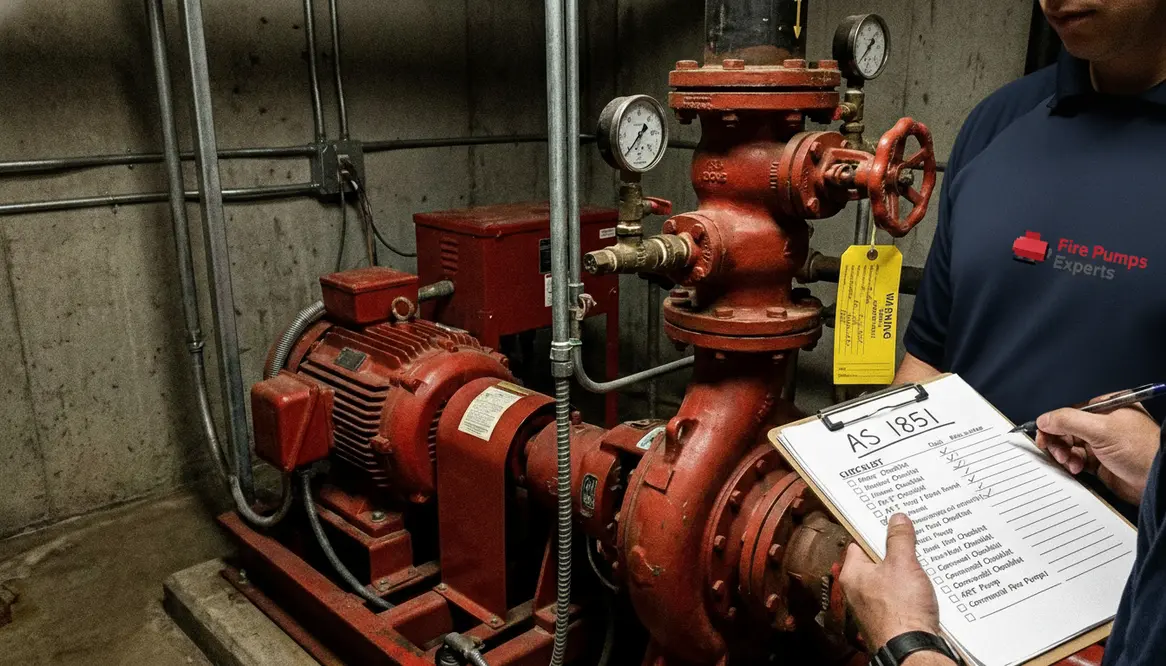
AS 1851 Fire Pump Service Checklist Guide for Sites
When I look at a commercial fire pump, I do not see a box of bolts and wires. I see the quiet hero that waits for the worst day. That is why I use an AS 1851 checklist to keep the system ready, steady, and legal. For industrial sites, major property buildings, and large commercial facilities, this service is not a nice extra. It is a core part of fire safety, and it deserves proper attention. A rushed check can miss the small faults that become big headaches later. And as we all know, fire protection does not enjoy surprises. It likes clean records, solid testing, and a pump that starts when it should.
If you manage a plant, tower, warehouse, or large complex, this guide will walk you through the key checks I focus on during AS 1851 fire pump service.
What I check first on an AS 1851 fire pump service
I always begin with the basics, because the basics tell the truth. First, I inspect the pump room for access, lighting, ventilation, leaks, and clear space around the unit. Then I check the nameplate details, control panels, gauges, and power supply. If the pump room looks like a storage closet that lost a fight with a broom cupboard, I already know trouble may be close.
Next, I confirm the pump type, duty point, and service records. This matters because the service standard depends on the system being matched to the building and its risk. I also look for signs of rust, damage, loose fittings, or any odd noise from the driver. A good first pass often reveals the real story before testing even starts.
AS 1851 checklist for mechanical and electrical inspection
Once I confirm the pump is physically sound, I move into the detailed mechanical and electrical review. This is where the work gets serious, because small faults can hide in plain sight. I inspect bearings, seals, couplings, belts, alignment, valves, and suction and discharge lines. I also check for vibration, overheating, water hammer risk, and any signs of wear that could affect performance.
Mechanical checks
These help me find wear, leaks, poor alignment, and flow issues before they affect pump output.
On the electrical side, I review starters, batteries, chargers, isolators, alarms, wiring, and controller settings. For diesel units, I also inspect fuel levels, coolant, oil, and battery condition. For electric units, I verify supply health and controller readiness. I treat this step like a band sound check before the stadium show. If one part is off, the whole performance can stumble.
Electrical checks
These help me confirm the pump will start, run, and signal faults the way it should during an emergency.
Here is a simple dual view of what I inspect and why it matters: the mechanical side protects performance, and the electrical side protects starting, running, and fault signalling. Both halves need to be covered thoroughly in any AS 1851 checklist so nothing falls through the cracks.
How I test pump performance during service
After inspection, I test the pump under real working conditions. This is the moment that tells me whether the system can actually do its job. I measure suction pressure, discharge pressure, flow, and operating speed. Then I compare the results with the required performance data and service records.
I also watch the start sequence, run time, and any pressure drop or delay. If the pump hesitates, I do not shrug and call it “character.” I investigate. A pump that struggles today may fail when a fire puts pressure on the whole building. I also confirm automatic start functions and alarm responses, because in an emergency, no one wants a system that acts like it needs a coffee break.
For larger commercial sites, I pay close attention to duty and standby arrangements. If the main pump fails, the backup needs to step up without drama. That is the whole point of redundancy. It is the fire safety version of having a reliable understudy who knows all the lines.
Why records matter for commercial and industrial facilities
Good service is not only about tools and testing. It is also about records. I keep clear notes on test results, faults, repairs, and follow up actions. This helps building owners, facility managers, and compliance teams track the health of the system over time. It also supports audits, inspections, and insurance checks.
Under AS 1851, documentation gives proof that the fire pump system has been inspected and serviced on schedule. That matters a lot in major buildings, where risk is higher and downtime can hit hard. A missing service record can cause more stress than a printer on a Monday morning. So I make sure the paperwork tells the same story as the pump.
I also recommend linking the pump service to the wider fire protection plan. When the pump, valves, alarms, and hydrants all work together, the site stays stronger and safer. You can also review trusted industry guidance through this commercial fire pump service resource for site focused support on major properties and industrial facilities.
Treat your AS 1851 checklist as the backbone of those records. It keeps inspections consistent, proof of work clear, and the story of the system’s health easy to follow when auditors, insurers, or regulators start asking questions.
How often I recommend service and follow up actions
I follow the required service intervals and adjust the plan based on site risk, age of equipment, and past faults. However, a schedule alone is not enough. If I find a problem, I fix it fast or arrange the repair without delay. That may include seal replacement, controller repair, battery change, alignment work, or cleaning of strainers and valves.
After any repair, I retest the pump. I do not assume the problem is gone just because someone said, “It should be fine now.” In fire protection, should is not a strategy. A proper retest confirms the system is ready for real duty, not just good manners.
Over time, an AS 1851 checklist also shows which parts of the system keep causing trouble. That pattern helps plan smarter upgrades, target higher risk components, and justify budget requests with hard evidence rather than vague worry.
FAQ
Final CTA
If you manage a commercial or industrial property, I recommend treating your AS 1851 fire pump checklist as a serious part of daily risk control. Keep the inspections regular, the records clear, and the faults fixed fast. When you want confidence in your fire pump system, bring in a team that understands major buildings, tough site demands, and compliance without the drama. Ready to keep your fire protection sharp, reliable, and inspection ready? Then it is time to act now.