AS 2419 Fire Pump Guide for Multi Storey Buildings
AS 2419 Fire Pump Requirements for Multi Storey Buildings
When I look at AS 2419 requirements for multi storey buildings, I see more than a rulebook. I see the part of the fire system that has to wake up fast, stay steady, and do its job without drama. In tall commercial and industrial buildings, the fire pump is not a nice extra. It is the muscle behind the fire protection plan. And yes, in a real emergency, you want the pump to behave better than most people do on a Monday morning.
In this guide, I walk through the key fire pump duties, the design ideas that matter, and the practical points that help owners, builders, and facility teams stay aligned with AS 2419 requirements. I will keep it clear, direct, and useful, because no one needs a fire safety lesson that sounds like a tax seminar.
What AS 2419 means for multi storey buildings
For multi storey commercial and industrial buildings, AS 2419 requirements set the base for fire hydrant pump systems. The main goal is simple. The system must deliver enough water, at the right pressure and flow, to the highest and most remote point of the building. That matters because gravity does not care about your floor count, and fire certainly does not.
I treat the standard as a design check, an installation guide, and a performance test all in one. It helps ensure the pump supports the hydrant system during a fire event, especially where the building height or layout makes normal mains pressure fall short. In practice, this means the fire pump must suit the building demand, the water source, and the site risk.
Why this standard matters
In a low-rise building, the town main might be enough. In a twenty-storey tower, that same pressure can feel like trying to water the rooftop garden with a leaky garden hose. The standard exists so the fire brigade and on-site teams can count on consistent water supply, no matter which floor is in trouble.
Who should care
Owners, builders, fire engineers, and facility managers all sit in this boat together. If any one of them ignores the pump system, the others inherit both the risk and the headache when something goes wrong or the inspector starts asking difficult questions.
If the pump cannot sustain the required flow and pressure to the top and most remote hydrant, the whole hydrant system might as well be decorative plumbing.
AS 2419 requirements for pump selection and location
Start with the building, not the brochure
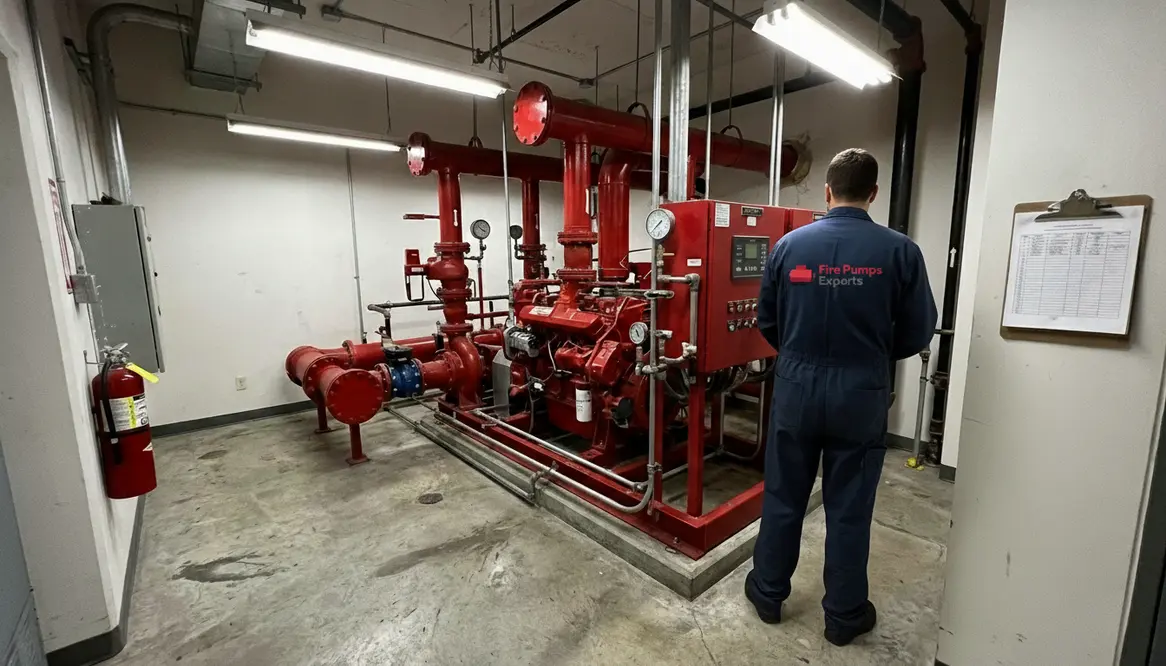
When I plan a fire pump setup, I start with the building itself. The pump must match the system load, and the pump room must support safe access, good ventilation, and reliable operation. In other words, I do not want the pump tucked away like a forgotten prop in a storage closet.
The pump choice often depends on the water supply and site conditions. For example, a commercial tower with weak town pressure may need a different setup than a large warehouse with a boosted tank supply. Also, the pump must be placed so maintenance crews can reach it quickly. After all, if people cannot inspect it, service it, or test it without a treasure map, the design has already lost some of its shine.
Location rules that make life easier
- Enough clear floor space around the pump and control panel so technicians are not performing acrobatics to reach valves.
- Direct, unobstructed access from outside or common plant areas so emergency crews can find it quickly.
- Ventilation that suits the pump driver type, especially diesel, so heat and exhaust do not turn the room into a sauna.
- Drainage that can handle test flows, leaks, and the occasional “why is that pipe dripping?” moment.
- Security that keeps casual visitors out but does not lock out the very people who need to be there during testing or a fire event.
Key points I check in a compliant fire pump layout
Here is the part I always like to keep practical. A good layout protects performance, reduces downtime, and makes testing less painful. I look for:
- the right pump capacity for the building demand
- a reliable water source with enough reserve
- clear access for maintenance and emergency use
- proper ventilation and drainage in the pump room
- safe electrical or diesel backup support where needed
- controls and alarms that staff can understand fast
These points may sound basic, but they carry real weight. A pump system can only do its job if every linked part supports it. That is why I always treat the room, the controls, and the water supply as one living system, not separate boxes to tick like a streaming service subscription you forgot to cancel.
How I check performance, testing, and backup support
Once the design is in place, I focus on performance. AS 2419 requirements expect the fire pump to deliver the required pressure and flow during fire conditions. Therefore, routine testing matters just as much as installation. A pump that looks fine on paper but fails under load is about as useful as a superhero who only works in rehearsals.
What a meaningful test should prove
- Startup happens quickly and reliably from all required start signals.
- Running pressure stays within the required range throughout the test.
- Flow delivery matches the design duty at the test points.
- Alarms and indication lights actually tell the truth about what is going on.
- Automatic changeover or backup arrangements behave as planned when simulated.
Backup power: the unsung hero
Testing should confirm startup, running pressure, flow delivery, and alarm response. I also look at the backup supply, because power loss should not end the system story. If the pump uses a diesel driver, I check fuel, cooling, and ventilation. If it uses electric power, I make sure the supply and controls stay dependable. In both cases, the goal is the same: keep the system ready when the stakes are high.
Compliance checklist for building owners and facility teams
For busy commercial and industrial sites, I like to keep compliance thinking simple. The big idea is not just to install the pump and walk away. Instead, I keep an eye on the full life cycle. That means design, installation, commissioning, inspection, testing, and maintenance all matter.
| Design stage | Operations stage |
| Confirm building demand, pump duty, water source, and room layout | Run regular tests, inspect controls, and record results |
| Align the system with AS 2419 requirements | Fix faults quickly and keep service logs current |
| Allow space for access, ventilation, and safe maintenance | Train staff so they know what normal looks like |
This is where many properties slip. The system may pass day one, but poor upkeep can quietly weaken it over time. So I always recommend a simple routine review. It keeps the pump honest, and honestly, that is a healthy relationship for any machine.
Frequently asked questions about AS 2419 fire pumps
Owners and managers often circle around the same practical questions on AS 2419 requirements, especially in multi storey buildings where pumps become non‑negotiable. The answers below keep things straightforward so you can act on them instead of collecting more paperwork.
Need help meeting AS 2419 requirements?
If you manage a multi storey commercial or industrial property, now is the time to review your fire pump system with care. I would not wait for a failure to become the lesson. Instead, get the design checked, the tests recorded, and the maintenance plan tightened up. That way, your building stays ready, your team stays safer, and your compliance burden stays far more manageable. If you want expert support, reach out and take the next step today.