AS 2941 Fire Pump Compliance for Building Owners
AS 2941 Fire Pump Compliance for Building Owners: What I Check, Why It Matters, and How I Keep a Site Ready
When I talk about AS 2941 compliance, I am talking about one of those building issues that sleeps quietly until the day it does not. For commercial and industrial properties, a fire pump is not decoration. It is part of the life safety system, and when it has to work, it has to work fast. That is why I take this topic seriously, even if the pump room looks about as exciting as a tax file on a rainy Friday. In this guide, I will walk through what I check, what usually goes wrong, and how I keep a building owner ready without turning the whole thing into a drama fit for a streaming series.
AS 2941 compliance sits quietly in the background of most major properties, but insurers, auditors, and fire brigades pay close attention to it. A well-run fire pump gives you three advantages: stronger protection for people, less damage if something goes wrong, and a far smoother conversation with anyone reviewing your building’s fire safety performance.
The way I see it, a fire pump is like a specialist you hope never has to work overtime. You still want it trained, tested, and ready to step up at a moment’s notice. That is where methodical inspections, realistic testing, and simple documentation make all the difference between a system that only looks compliant and one that actually performs when it counts.
What I check first when I review a fire pump system
Starting with the fundamentals
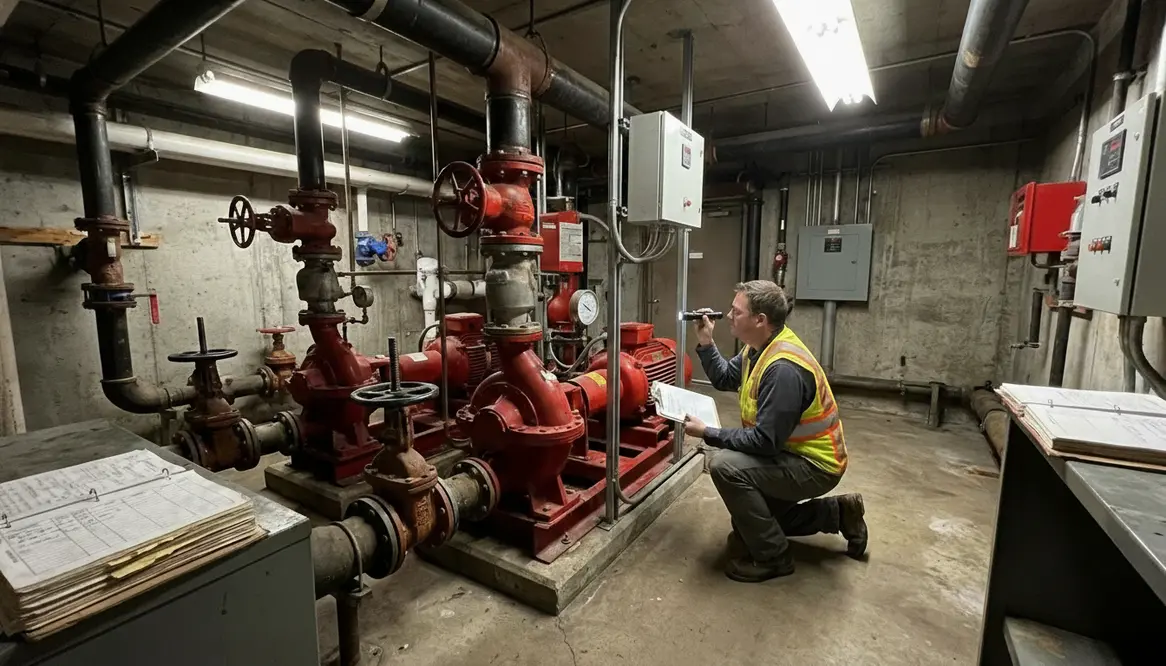
I start with the basics, because the basics tell the truth. I look at the pump type, power source, control setup, suction and discharge condition, and the room around the equipment. Then I check whether the system matches the building’s size, use, and fire risk. A pump can pass a quick glance and still fail under pressure, and pressure is, well, kind of the whole point.
I also look for clear access. If staff need a map and a miracle just to reach the unit, that tells me something. In commercial and industrial facilities, delays cost time, money, and sometimes far more. So I verify that doors open properly, labels stay readable, and the area stays dry, clean, and free from storage creep. You know how storage works. One box becomes five, then suddenly the fire pump room looks like an episode of “Hoarders: Industrial Edition.”
Matching the pump to the actual building risk
An early question I ask is whether the pump and its configuration make sense for the way the building operates today. It is easy to inherit equipment that looked fine on paper ten years ago but no longer lines up with the current tenant mix, storage heights, or production load. That is why I treat AS 2941 compliance as a living requirement, not something that was “ticked off” when the building first opened.
Simple checks like available suction pressure, realistic flows, and how the pump interacts with the rest of the fire system give a fast sense of whether the design still holds up under modern expectations and current operational risks.
Why AS 2941 compliance matters for major property buildings
Beyond box-ticking: real-world consequences
I treat AS 2941 compliance as a protection plan, not just a rulebook. The standard helps ensure the pump can support the fire system when demand rises fast. That matters in office towers, warehouses, logistics sites, factories, and large mixed use assets where a weak system can put the whole operation at risk.
Here is the simple truth. If the pump fails, the sprinkler system and fire response plan can lose their edge. That can mean more damage, longer downtime, and more stress for everyone involved. And nobody wants that kind of surprise, especially not the kind that turns a normal workday into a very expensive plot twist.
Strong AS 2941 compliance also supports insurance positions, helps satisfy regulators, and reassures tenants who rely on your fire protection as part of their own business continuity planning. A pump that performs properly in a fire can be the difference between a frustrating interruption and a long, very public shutdown.
Key checks I use to keep fire pumps ready
The practical review path
I follow a practical review path, and I keep it grounded in the building’s real use.
- Power supply: I confirm the main and backup power sources stay reliable and ready.
- Controller condition: I inspect alarms, settings, and signs of wear or fault.
- Pump performance: I check if the unit can deliver the flow and pressure the site needs.
- Valves and pipework: I look for leaks, damage, and poor valve positions.
- Room conditions: I make sure heat, dust, water, and access issues do not threaten the system.
- Records: I review logs, test history, and maintenance notes so I can spot patterns early.
Alongside that, I like to compare the building’s current use with the original fire design. A site can change over time. Tenants shift. Stock loads grow. Production areas expand. Therefore, a pump that once looked adequate can become underpowered without anyone noticing. That is why I never assume the system still fits just because it once did. The building may have had a glow up, but the pump must keep up too.
How I handle testing, maintenance, and records
Routine testing, not guesswork
I do not rely on guesswork. I rely on routine testing and solid records. Regular inspection helps me catch slow problems before they become loud ones. For example, I watch for unusual noise, vibration, poor start up, warning lights, and signs that the pump struggles during testing. Those clues often show up before a major fault, and they are easier to fix early.
Record-keeping with a purpose
I also keep a clean paper trail. Good records help me prove what was checked, when it was checked, and what action followed. That matters for owners, facility teams, insurers, and compliance audits. If a system has a service gap, I want to know that gap before someone else finds it the hard way. In the world of building safety, paperwork may not have glamour, but it does have power.
Reliable records are a major support for AS 2941 compliance. They help demonstrate that the pump is not just working today, but has been maintained consistently and thoughtfully over time.
Common problems I find during compliance checks
In practice, I see the same trouble spots again and again. Some are minor, while others need quick action.
| Problem | What it can lead to |
|---|---|
| Poor access to the pump room | Slower response and harder servicing |
| Blocked vents or heat buildup | Stress on equipment and higher fault risk |
| Leaking valves or pipe joints | Water loss and pressure issues |
| Outdated test records | Gaps in proof of compliance |
| Pump not matched to building changes | Weak fire response during an event |
Because many problems build slowly, I tell owners to treat small warning signs with respect. A pump that sounds odd today can become a full stop tomorrow. And let us be honest, nobody wants a crisis to begin with a weird humming noise and a “we will look at it next month” attitude.
How I plan a practical compliance path for owners
From site review to clear actions
I keep the process simple, but I do not keep it shallow. First, I assess the system against the building’s needs. Next, I review service history and test results. Then I identify risk points and set a repair plan. After that, I help the owner decide what needs urgent action and what can go into routine maintenance.
For owners of commercial and industrial facilities, that approach saves time and helps reduce disruption. It also keeps the site in a stronger position for audits and inspections. If you want a useful reference point, I recommend reviewing the AS 2941 fire pump standard guide alongside your site records so you can stay aligned with the right expectations. A helpful starting point is visiting https://firepumps.org to understand how dedicated fire pump guidance can support your broader safety strategy and AS 2941 compliance planning.
FAQ
Conclusion
If you own or manage a commercial or industrial property, I suggest you treat fire pump care as a core building task, not a side note. I can help you review the system, spot weak points, and keep your site ready for inspection and emergency use. So, if you want clearer risk control and stronger compliance, now is the time to act. A good fire pump does not need applause. It just needs attention, and I am ready to help you give it exactly that.