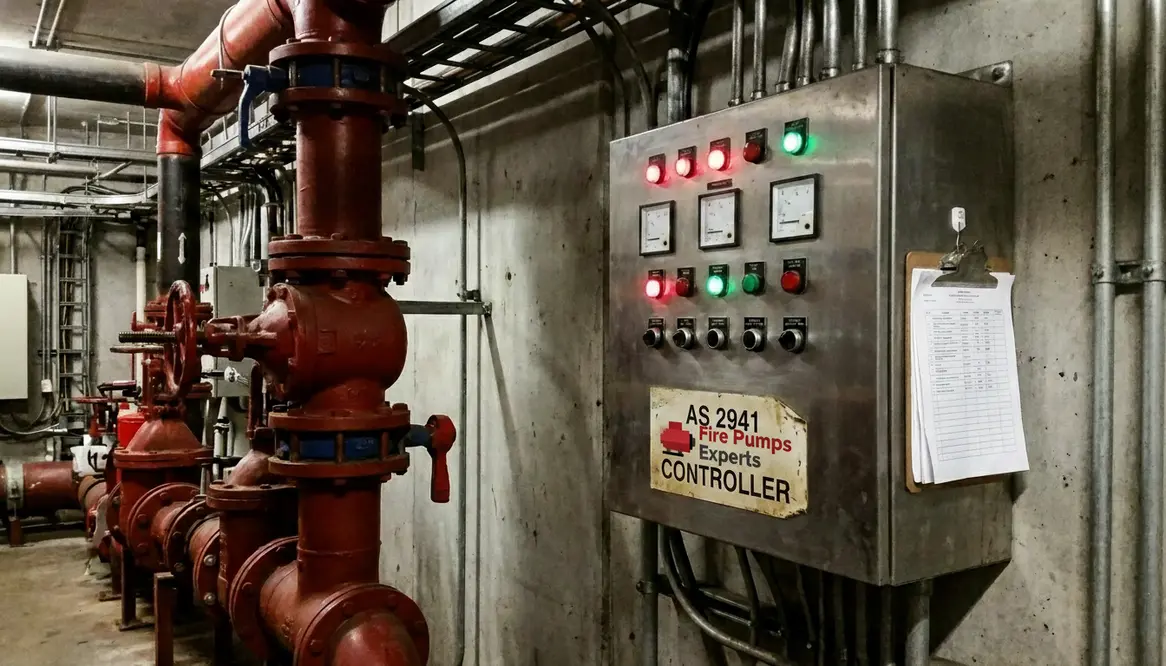
AS 2941 Fire Pump Controller Requirements Guide
AS 2941 Fire Pump Controller Requirements: What I Look For in Commercial and Industrial Sites
When I review a fire system for a major property, I always start with the AS 2941 controller, because this piece of gear decides how a fire pump behaves when the pressure drops and the stakes get very real. In a commercial or industrial building, that means less drama, more control, and a better shot at keeping the system ready when it matters. The rules around these controllers are not there for decoration. They shape how the pump starts, runs, reports faults, and protects the site. In other words, this is not the place to improvise. Even Batman would want the manual for this one.
In this article, I break down the key requirements in plain language, so you can see what matters for compliance, performance, and long term reliability. I will keep it practical, because nobody needs a fire safety lecture that sounds like it was written by a sleepy toaster.
What the AS 2941 fire pump controller must do
The controller must start the fire pump fast, and it must do that without hesitation. That is the core job. In a commercial or industrial setting, the controller has to respond when the system pressure falls below the set point. Then it must bring the pump online in a controlled way. I look for clear start logic, solid monitoring, and dependable operation under load.
The controller also needs to handle manual and automatic functions in a sensible way. Automatic start matters because a fire does not wait for a human to press the right button. Still, manual control matters too, since maintenance teams need a safe way to test and service the equipment. So, the controller has to balance both needs without creating confusion.
Another key point is fault detection. A good fire pump controller should tell you when power fails, when the pump does not start, or when a component has trouble. That warning system gives building teams time to act before a small issue turns into a very bad day. And yes, a silent fault is about as useful as a smoke alarm with stage fright.
AS 2941 controller installation details I check first
Installation plays a huge role in compliance. First, I check that the controller sits in a suitable location with enough access for inspection and maintenance. It should not be blocked by storage, awkward piping, or the kind of clutter that seems to breed in plant rooms. Also, the mounting must support stable operation and easy wiring access.
Next, I check the electrical supply. The controller must connect to the correct source, and the wiring must match the system design. Because these sites often rely on large loads and critical services, the power setup needs careful planning. If the supply is wrong, the controller cannot do its job, and that is not a plot twist anyone wants.
I also look at labeling and identification. Operators should know exactly what each switch, lamp, and alarm means. Clear labels reduce mistakes during tests and emergencies. Furthermore, good identification helps maintenance crews work faster, which saves time and limits risk.
Dual view of the AS 2941 controller in real site use
Compliance focus
- Correct start and stop behavior
- Proper alarm and fault reporting
- Safe access for testing and service
- Reliable electrical connection
Site manager focus
- Simple operation during inspections
- Fast fault notice when something changes
- Less downtime for the pump system
- Better confidence during audits
This side by side view matters because compliance and daily use must work together. A controller can meet the rule on paper, yet still frustrate staff if it feels clumsy in the field. Therefore, I always think about both the standard and the people who must live with the system every day.
How I assess performance and fault alarms
Performance checks tell me whether the controller will actually protect the building. I test whether it responds quickly and whether it keeps the pump running as designed. I also verify that the controller handles pressure changes without random behavior. In a busy industrial plant, random behavior is not quirky. It is expensive.
Fault alarms deserve close attention too. The controller should show clear signals for supply issues, control faults, and pump problems. Those signals help operators act before the system slips out of service. Moreover, alarms must be easy to understand. If a message needs a decoder ring, then the design has missed the mark.
Testing also matters after installation. I want proof that the controller performs under real conditions, not just in a neat brochure. So, routine checks, service records, and planned testing all support long term reliability. This is where many major properties win or lose the game. Think of it as the difference between a trailer cut and the full movie.
Why compliance matters for major property owners
For owners and facility teams, compliance is not just about meeting a code. It also supports insurance, reduces risk, and protects people, assets, and operations. A well set up fire pump controller gives the site a better chance to stay ready during an emergency. That matters even more in large commercial and industrial buildings, where a system failure can ripple through production, tenants, or critical services.
In addition, proper compliance makes audits smoother. It also helps maintenance teams track issues before they grow. When the controller works as intended, the whole fire pump system feels less like a mystery box and more like a trusted part of the building’s safety plan.
In many major properties, I recommend specifying an AS 2941 controller early in the design phase and checking that every change in the fire system still makes sense with that controller logic. When upgrades or extensions happen, the AS 2941 controller should be rechecked so that performance, alarms, and reporting stay aligned with the current site risk profile.
Where the AS 2941 controller fits in your broader fire strategy
The AS 2941 controller is only one part of the fire protection picture, but it is the part that actually tells the pump when to wake up and how to behave under pressure. If hydrants, sprinklers, and tanks are the cast, the controller is the director yelling “action” when the pressure drops.
That means the fire strategy for a major property should always connect the alarm system, monitoring, power supply, and water storage with the logic in the AS 2941 controller. When these pieces line up, the site gets smoother testing, cleaner fault reporting, and less confusion when something actually goes wrong.
Conclusion
If you manage a commercial or industrial site, I recommend treating your fire pump controller as a serious part of your risk plan, not just another box on the wall. Review the installation, test the alarms, check the labels, and keep records current. Better yet, work with a team that understands major property systems and the AS 2941 standard from the ground up. If you want a safer, cleaner, more reliable fire pump setup, now is the time to act.