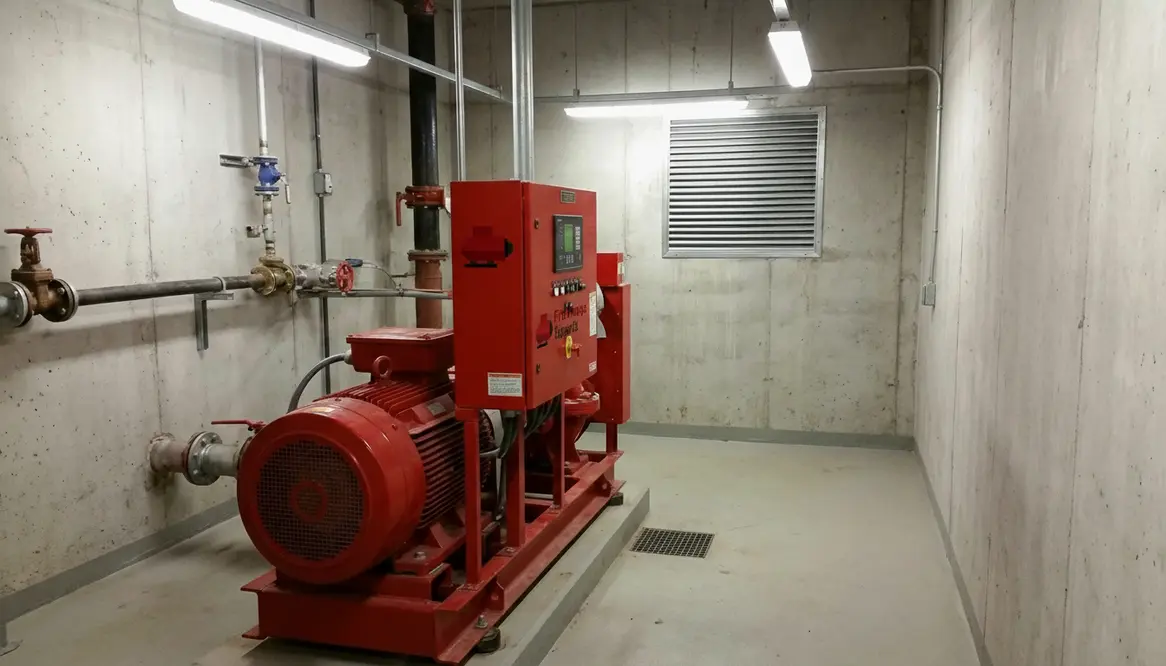
AS 2941 Fire Pump Room Requirements Guide
AS 2941 Fire Pump Room Requirements: What I Focus on for Commercial and Industrial Sites
When I look at an AS 2941 room, I do not see just a space with a pump in it. I see the heartbeat of a fire protection system, tucked away like a backstage crew member in a movie who does all the hard work while nobody claps. For commercial and industrial buildings, the room must support fast pump operation, safe access, and dependable performance when the pressure is on, quite literally. So, if you manage a plant, a warehouse, a high rise, or another major property, these requirements matter more than the coffee in the site office, and that is saying something.
In this guide, I will walk through the core AS 2941 fire pump room requirements, explain what I check first, and show how the room should support both safety and compliance.
What I check first in an AS 2941 room
I always start with location, access, and protection. The room must sit in a place that gives reliable access for staff, emergency crews, and maintenance teams. At the same time, it must protect the pump set from fire, flooding, damage, and unwanted tampering. If a fire pump room feels like a maze, something has already gone sideways.
Space, equipment and day-to-day reality
The room also needs enough space for the pump, controller, valves, pipework, and service access. I want clear movement around equipment, because maintenance should not feel like a game of Twister. In commercial and industrial facilities, this matters even more since these sites often carry higher loads, bigger systems, and tighter uptime demands.
AS 2941 room layout and access rules
Now I look at the layout. The room should let people reach the pump, controller, and fittings without obstruction. Doors must open easily, and access paths should stay clear. I also pay close attention to ventilation, drainage, and lighting. A pump room can only do its job if the environment supports it, and that is the plain truth.
Key layout checks I make
Access and space
- Clear entry path
- Adequate working room
- Good lighting
- Ventilation
- Drainage control
Why it matters
- Clear entry path – lets crews respond fast
- Adequate working room – supports inspection and repair
- Good lighting – helps safe operation and service
- Ventilation – reduces heat and equipment stress
- Drainage control – helps protect the pump set from water buildup
Next, I check whether the room supports the fire pump in all normal and emergency conditions. That means I want no clutter, no storage of unrelated gear, and no casual “just put it in the pump room for now” behavior. That phrase has caused more compliance headaches than a bad sequel.
Why power, ventilation, and drainage matter
Power supply is a big deal, because the pump must start and keep running when needed. Therefore, I look for reliable electrical supply, correct controller setup, and proper separation from risks that could knock the system out. The room should also allow safe inspection and servicing of the electrical parts. A pump without dependable power is like a superhero without a cape and a schedule.
Ventilation matters too. Fire pumps create heat, and the room must handle it. If the space traps heat, equipment life drops and performance can suffer. So I always treat ventilation as a core compliance item, not a nice extra. Likewise, drainage helps keep the room dry. Water on the floor can create slip risks and damage equipment, which means one small issue can turn into a very expensive lesson.
Keeping the AS 2941 room reliable under pressure
For any AS 2941 room on a commercial or industrial site, I want to see power, ventilation, and drainage working together. Poor planning in any of those areas tends to show up the moment the system is tested under real load, which is exactly when you do not want surprises.
How I manage safety, signs, and maintenance access
I also focus on safety features that support day to day operation. The room should be clearly identified, and the equipment should carry proper labels. People need to know what lives in that space and why it matters. In larger facilities, I also want the room tied into the site’s broader fire safety plan, so staff know who checks it, who services it, and who responds if something goes wrong.
AS 2941 fire pump room requirements also connect closely with maintenance planning. I do not just want the room to pass an inspection today. I want it to stay compliant six months from now, and then again after that. That means I check that the layout supports testing, that service crews can reach key parts, and that there is a clear path for repairs or replacement if needed. In other words, the room should not make routine work feel like breaking into Fort Knox.
Connecting the AS 2941 room to the wider fire strategy
An AS 2941 room should not sit in isolation. It needs to line up with hydrant, sprinkler, and alarm strategies across the property and be reflected in site procedures and training. That is how the space goes from being just a technical room to being a reliable part of the building’s fire protection backbone.
Real-world habits that make or break the pump room
Once the drawings are done and the pump is installed, daily habits decide whether an AS 2941 room stays compliant. A few casual choices can slowly turn a neat space into a problem waiting for an audit, or worse, an emergency.
Good habits
- Keeping access paths clear
- Logging tests and inspections
- Fixing minor leaks and defects early
- Training staff on who can enter the room
Bad habits
- Using the space for random storage
- Blocking panels and valves with boxes
- Ignoring obvious corrosion and dampness
- Letting signage fade or fall off
When an AS 2941 room is treated as a shared storeroom, all the design work that went into the fire protection system starts to unravel. That is why I pay as much attention to how the space is being used today as to how it was built on day one.
FAQs about AS 2941 fire pump rooms
Conclusion: make the room work before the emergency does
When I review an AS 2941 room, I look beyond the pump itself. I check access, space, power, ventilation, drainage, and safe upkeep, because every one of those details affects performance. For commercial and industrial properties, the room must stay ready without drama. If you want your fire pump setup to support compliance and real world reliability, now is the time to assess it, fix the gaps, and get expert help where needed.