AS 2941 Fire Pump Standard Guide for Buildings
AS 2941 Fire Pump Standard Explained
When I talk about fire protection in commercial and industrial buildings, I always come back to one thing: reliability. A system can look polished on paper, but if it cannot deliver water when the heat turns nasty, it is just fancy metal with a badge. That is where the AS 2941 fire pump standard steps in. It sets the rules for how fire pumps should be designed, installed, and maintained so they perform when a major property or large facility needs them most. In other words, it helps keep the system from acting like a dramatic extra in a disaster movie.
For business owners, facility managers, and developers, this standard is not just paperwork. It shapes safety, compliance, and operational trust. So, let me walk you through the parts that matter most, in plain language and with no fluff.
What AS 2941 Means for Commercial and Industrial Buildings
AS 2941 focuses on fire pump sets used in larger buildings and sites where a strong water supply is essential. I see it as a practical rulebook for making sure the pump starts fast, moves enough water, and keeps doing its job under pressure. Because commercial and industrial properties often carry higher fire risk, the standard helps match the pump system to the building’s real demand.
It covers the full setup, including the pump, driver, controls, fuel source, fittings, and alarms. It also helps the design align with the site’s fire strategy. That matters because a warehouse, hospital, plant, or high rise does not need guesswork. It needs a system that can handle a serious event without turning into a costly guessing game worthy of a bad sequel.
How I Read the Main Requirements
When I review an AS 2941 fire pump setup, I look at a few key points first. These are the areas that usually decide whether the system will pass muster or cause trouble later.
Design and performance
The pump must meet the needed flow and pressure for the building. If it cannot, the whole fire system weakens.
Power and drive method
The standard covers different drivers such as electric motors and diesel engines. Each one must start and run in a dependable way.
Controls and monitoring
The system needs proper control gear, alarms, and fault signals so issues do not hide in the dark like a plot twist in a thriller.
Installation quality
The pump room, layout, pipework, ventilation, and access all matter because even strong equipment struggles in a poor setup.
These points work together. For example, a strong pump with weak controls can still create risk. Likewise, good controls cannot save a bad pump selection. So, I always treat the standard as a full system, not a single item.
What I Check During Installation and Maintenance
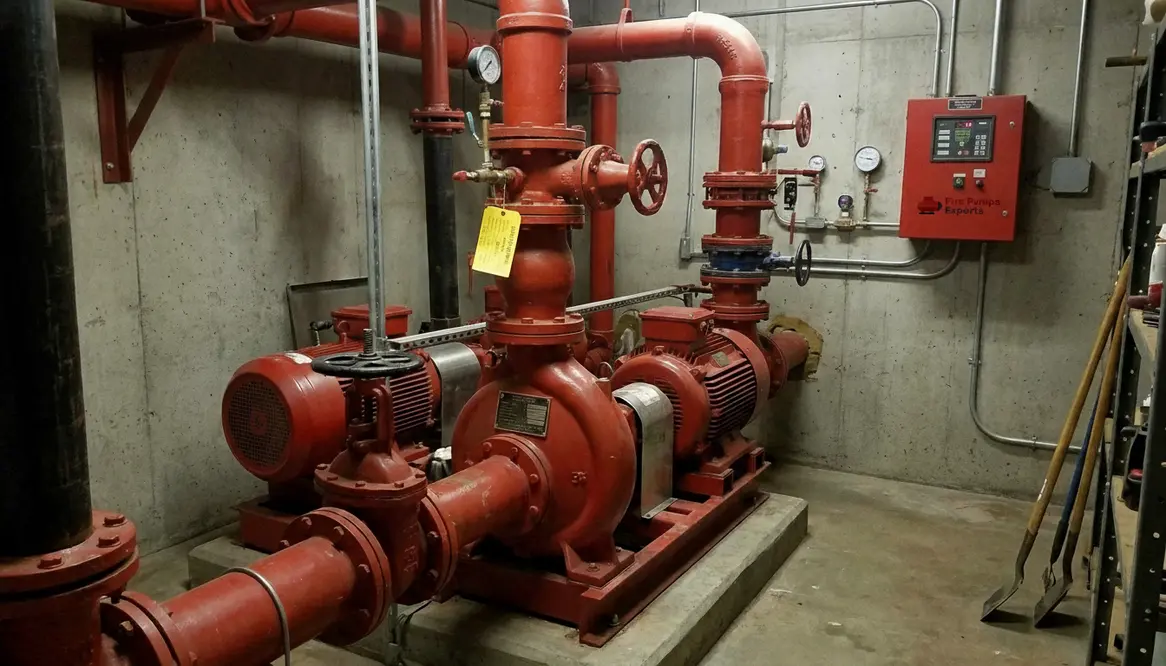
Installation is where good plans prove their worth. First, I check that the pump set sits in the right environment. Then, I make sure the room allows for access, testing, service, and safe operation. Heat, ventilation, drainage, and noise control all matter more than people expect. A fire pump room should not feel like a forgotten storage closet with ambition.
After that, I look at maintenance. The standard expects regular checks so the pump stays ready. That includes test runs, inspection of fuel or power supply, valve checks, and alarm verification. In addition, records matter. If a facility cannot prove maintenance, it may struggle during audits or after an incident. And nobody wants to explain to an insurer why the paperwork vanished like a magician at a school fair.
Why Proper Compliance Protects Major Properties
Compliance does more than satisfy regulators. It protects people, assets, and business continuity. Large buildings and industrial sites often carry high occupancy, expensive equipment, and critical operations. Therefore, a dependable fire pump system can reduce damage, limit downtime, and support a safer evacuation and response.
Here, I also find it useful to compare the fire pump with the rest of the fire protection package. It does not act alone. It supports sprinklers, hydrants, and other water based systems that may need strong pressure during an emergency. If one part fails, the rest can suffer. That is why a coordinated design matters so much.
Quick Comparison of Common Fire Pump Focus Areas
| Area | What I Look For |
| Pump capacity | Enough flow and pressure for the site |
| Power source | Reliable startup and steady operation |
| Room setup | Access, ventilation, and safe clearances |
| Maintenance | Tests, records, and fault checks |
Where to Learn More and Get the Right Support
If I want deeper guidance, I start with a trusted source that understands commercial and industrial fire pump systems. A helpful reference is this AS 2941 fire pump standard guide, which can support planning, review, and compliance discussions for major properties. It helps connect the standard to real site needs instead of leaving everyone to decode technical language like it is an ancient script.
In practice, the best results come from combining the standard with the building’s actual risk profile. That means reviewing water demand, building use, pump room conditions, and inspection needs as one package. When I take that approach, the system becomes easier to manage and far more dependable over time.
Understanding AS 2941 Fire Pump Use in the Real World
Matching the pump to the property
An AS 2941 fire pump in a distribution warehouse has a very different workload to one in a hospital or data centre. Storage heights, fuel loads, and occupancy patterns all shift the water demand. If the pump is chosen on guesswork rather than evidence, the entire protection strategy leans on luck, which is not exactly a comforting policy.
Thinking beyond the pump room door
The performance of an AS 2941 fire pump also depends on the rest of the network. Suction supply, valves, and downstream pipework all need to support the flow without turning the system into a high-friction obstacle course. When the layout is planned as one connected system rather than a set of parts, the result is smoother operation and fewer nasty surprises during testing.
In many major properties, the fire strategy leans heavily on a single AS 2941 fire pump to feed sprinklers, hydrants, or both. That makes the pump set one of the quiet heroes of the building. It rarely gets attention when everything is working, but the moment it fails, everyone notices.
FAQ
Final Thoughts and Next Step
If you manage a commercial or industrial property, now is the time to treat fire pump compliance as a live priority, not a box to tick later. I recommend reviewing your current setup, checking your maintenance records, and comparing your system against AS 2941. If you need support, reach out to a fire protection specialist who understands major properties. A strong fire pump strategy does not just protect a building. It protects the people, the business, and the future inside it.