AS 2941 Maintenance Fire Pump Guide for Buildings
AS 2941 Fire Pump Maintenance Guide
When I talk about AS 2941 maintenance, I am talking about the quiet guardian of a commercial building that never asks for applause but absolutely demands respect. A fire pump can sit there looking calm, almost sleepy, and then one day it must wake up and perform like a lead actor in the final scene of a disaster movie. For commercial and industrial facilities, and for major property buildings, that performance can protect lives, reduce damage, and keep operations moving. So, I take this work seriously, even if the pump room itself sometimes feels about as glamorous as a storage closet with a badge.
In this guide, I will walk through how I approach maintenance, what I check, and why regular care matters so much under AS 2941 maintenance. I will keep it practical, clear, and focused on what building managers, owners, and safety teams need to know.
What AS 2941 maintenance means for commercial and industrial facilities
AS 2941 maintenance sets the standard for keeping fire pumps ready for emergency use in large buildings and industrial sites. I treat it as a working system, not a box to tick once a year while everyone hopes for the best. The goal is simple: make sure the pump starts, runs, and supplies water when the fire alarm system calls for backup.
For major properties, that means I look at the full setup, not just the pump itself. I check the driver, valves, suction supply, discharge line, controllers, batteries, power supply, and test records. If one part slips, the whole chain can weaken. And in fire protection, a weak chain is not a cute plot twist.
I also keep the site use in mind. A warehouse, hospital, shopping center, or high rise each creates different pressure on the pump system. Therefore, I do not use a one size fits all mindset. I build the maintenance plan around the actual risk, the building load, and the type of fire protection installed.
What I check during a fire pump inspection
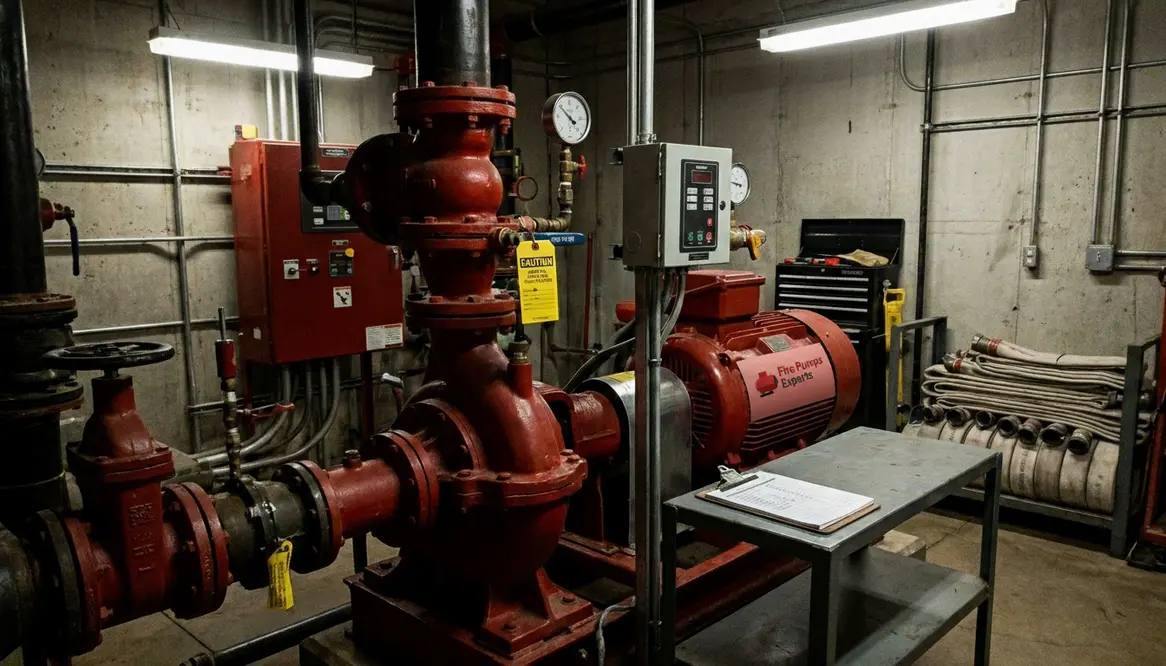
When I inspect a fire pump, I start with the basics and work toward the details. First, I confirm the pump room is clean, accessible, and free from blocked walkways. Then I check for leaks, rust, damage, unusual noise, and signs of wear. A pump can whisper trouble long before it shouts, so I listen closely.
I also test the starting system. If the pump uses electric power, I look at the controller, battery health, and supply status. If it uses a diesel driver, I check fuel, oil, coolant, belts, and engine condition. Next, I verify valves are in the right position and that pressure readings make sense. A strange reading is often the system waving a tiny red flag.
Finally, I review records from prior tests. A fire pump has a memory, and so should I. If pressure drops, starts become slow, or vibration increases, I investigate the cause before it grows into a real problem.
Quick inspection focus
Here is the short list I follow:
First column
Visual condition of the pump and controller
Fuel, power, and battery status
Valve position and water supply
Second column
Leaks, rust, and loose fittings
Test start performance
Pressure and flow stability
How I keep fire pump systems ready all year
Good maintenance does not happen by accident. It happens through routine. I schedule checks at regular intervals so small issues do not turn into expensive surprises. That is where AS 2941 maintenance proves its value. It gives structure to the work, and structure keeps the system reliable.
I usually focus on three layers of care. First, I handle routine visual checks and housekeeping. Second, I complete functional testing to confirm the pump can start and run as expected. Third, I arrange deeper service when parts show wear or test results drift from normal levels.
For industrial and commercial properties, I also watch for changes in building use. If storage loads rise, plant equipment changes, or the fire system expands, I reassess the pump’s workload. A pump that once handled a simple office tower may need a different level of attention after a fit out or expansion. Buildings grow, and systems must keep up. Even Batman needed upgrades to the Batmobile.
When I call for repairs, service, or replacement
I do not wait for complete failure before I act. If the pump struggles to start, loses pressure, overheats, vibrates too much, or shows repeated faults, I call for service right away. Fast action protects the building and often saves money too. That is the kind of math I enjoy.
Sometimes repair works well. For example, I may replace worn seals, fix wiring, clean strainers, adjust controls, or service the driver. However, if the pump has major damage, repeated breakdowns, or cannot meet performance needs, replacement may be the smarter move. I look at age, condition, compliance risk, and long term cost before I decide.
To support better site safety, I also recommend using a trusted resource such as commercial fire pump service for major properties when a building needs expert help with inspection, testing, or repair planning.
Across all of this work, AS 2941 maintenance gives me a consistent framework to measure performance, schedule testing, and decide when a pump needs more than just a quick fix. It is the thread that ties inspections, testing, and long term planning into a single, reliable approach.
AS 2941 maintenance in real building routines
In day to day building operations, it is easy for the pump room to fade into the background behind lifts, lighting, HVAC, and tenant requests. AS 2941 maintenance stops that from happening by setting clear expectations for testing intervals, documentation, and response when something is not quite right.
When I walk into a site that treats fire pump care as part of normal business, I usually see tidy logbooks, recent test sheets, and a team that knows who to call when readings drift. When I walk into a site that treats the pump like a forgotten prop, I see dust, old cobwebs, and pressure gauges that have not been checked in months. Only one of those sites will feel confident when the alarm panel lights up.
The difference is not fancy technology; it is discipline. A repeatable plan backed by AS 2941 maintenance keeps the pump from becoming an unknown. Instead, it becomes a familiar piece of plant that everyone expects to perform, because its condition is no mystery.
FAQ
Conclusion
I treat fire pump care as a serious duty, not a background task. With steady inspections, prompt repairs, and a clear maintenance plan, I help keep commercial and industrial properties safer and better prepared. If your building needs a stronger service routine, now is the time to act. Review your pump records, schedule the next test, and bring in expert support before a small issue becomes a large one. Your fire system should be ready long before anyone needs it.