AS NZS Fire Pump Installation Deficiencies Guide
AS/NZS Fire Pump Installation Deficiencies: what I see, why they matter, and how I handle them
When I inspect a commercial site, I often find that an AS/NZS installation looks fine at first glance, then starts peeling apart under pressure. A pump room may look tidy, the pipework may shine, and the paperwork may smile back like it has nothing to hide. However, the real story usually sits in the details. In major property buildings and industrial facilities, small faults in fire pump setup can turn into big problems fast. And in fire protection, fast is not the kind of excitement anyone wants.
In this article, I explain the most common deficiencies I see, why they happen, and how I approach them on site. I keep the focus on commercial and industrial facilities only, because that is where these systems earn their keep.
Why AS/NZS fire pump installation defects happen
I usually find defects for three simple reasons. First, the design gets value engineered until it barely resembles the original intent. Second, the install team works around space limits, which sounds practical until a critical valve ends up in a place only a contortionist could love. Third, maintenance gets delayed, and minor issues grow teeth.
In many buildings, I also see a gap between design drawings and real site conditions. The drawings may meet the standard, but the final install can drift during construction. As a result, the pump set may no longer perform as intended during a fire event. That is a quiet risk with loud consequences.
Common fire pump deficiencies I find on site
Here are the issues that show up again and again:
Poor access around the pump set
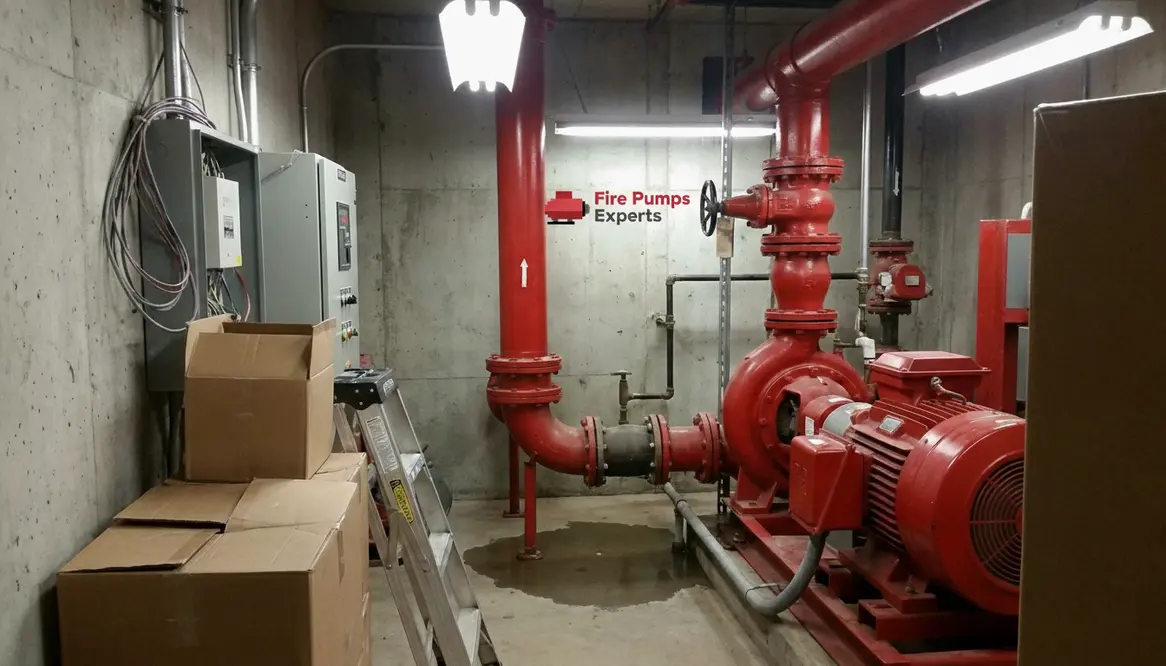
I often see cramped pump rooms where operators cannot reach valves, gauges, or controls without a full body twist. That sounds minor, yet it slows response time and makes routine checks harder. If staff cannot access the equipment, they will not inspect it properly, and that invites trouble.
Incorrect pipe support and vibration control
Pipework that shakes too much can loosen joints, damage fittings, and create leaks. Also, weak supports can place extra load on the pump casing. Over time, the system may move from “fine” to “why is there water on the floor?” faster than anyone expects.
Wrong pump room conditions
I check ventilation, drainage, lighting, and temperature control every time. If the room runs too hot, too damp, or too tight, the equipment suffers. Fire pumps do not enjoy sauna treatment, despite what some sites seem to believe.
Controls and power supply issues
Sometimes the biggest problem sits in the smallest panel. I find wiring faults, poor labeling, weak backup supply arrangements, or control gear placed where it is exposed to damage. Since fire pumps must start when needed, a control fault can become the whole story.
Testing gaps and missing records
A system can look compliant on paper while failing in practice. If the test history is thin, outdated, or inconsistent, I treat that as a warning sign. In a serious event, “we meant to test it” does not count for much.
How I assess an AS/NZS installation in a commercial building
I start with a full walk through of the plant room, then I compare the installed system against the approved design and the relevant standard requirements. After that, I check the obvious items first because, in my experience, the obvious items often hide the real issue. I review the following:
Inspection focus
What I check
Physical layout
Clear access, safe working space, and equipment placement
Mechanical condition
Pipe support, vibration, leaks, corrosion, and alignment
Electrical setup
Power supply, controls, alarms, isolation, and labeling
System readiness
Test logs, maintenance records, and start up reliability
Then I move to performance checks. I want to know whether the pump starts cleanly, builds pressure properly, and responds as designed. If it hesitates, surges, or behaves like it needs a coffee break, I dig deeper.
Why these defects matter for major properties
In a large commercial or industrial building, a weak fire pump system can put people, assets, and operations at risk. A fault may delay sprinkler performance, reduce water delivery, or trigger avoidable downtime. That matters because downtime in these settings does not politely wait outside the door. It barges in, takes a chair, and asks for a budget review.
Also, insurers, regulators, and facility managers all expect evidence that fire protection systems work as intended. So, when I find defects, I do not treat them as paperwork problems. I treat them as operational risk. The difference is important, because one lives in a file and the other lives in the real world.
How I fix problems before they grow
I do not believe in patching over a deeper fault and hoping it behaves. Instead, I follow a practical process. First, I identify the root cause. Next, I decide whether the issue needs repair, redesign, or replacement. Then I verify the result with proper testing and updated records.
I also push for regular inspections by people who understand fire pump systems in commercial settings. That means clear checks, clear logs, and clear action when something drifts out of tolerance. A good AS/NZS installation should not depend on luck, charm, or positive thinking from the building manager. It should depend on sound design, correct fit out, and steady maintenance.
If you are unsure how your system stacks up, start with the official guidance on fire pump standards and then compare it with expert resources such as https://firepumps.org. From there, you can decide whether your current AS/NZS installation still does what it was meant to do or whether it needs a serious tune up.
Keeping an AS/NZS installation reliable
A reliable AS/NZS installation does not appear by accident. It comes from clear design intent, disciplined construction, and maintenance that actually happens on schedule. On the sites I inspect most often, the teams who stay ahead of problems treat the pump room like core production equipment, not a forgotten back-of-house space.
That means budget for proper corrective work, time in the calendar for testing, and a simple rule: if something looks wrong, it probably is. When those habits exist, the AS/NZS installation tends to hold up when the building needs it most.
FAQ
Conclusion
If you manage a commercial or industrial property, now is the time to look closely at your fire pump system. I recommend a proper inspection, a clear defect list, and fast corrective action before a small issue grows teeth. Do not wait for an emergency to reveal what a routine check should have caught. If you want a reliable AS/NZS installation review, I suggest taking action now and booking a specialist assessment today.