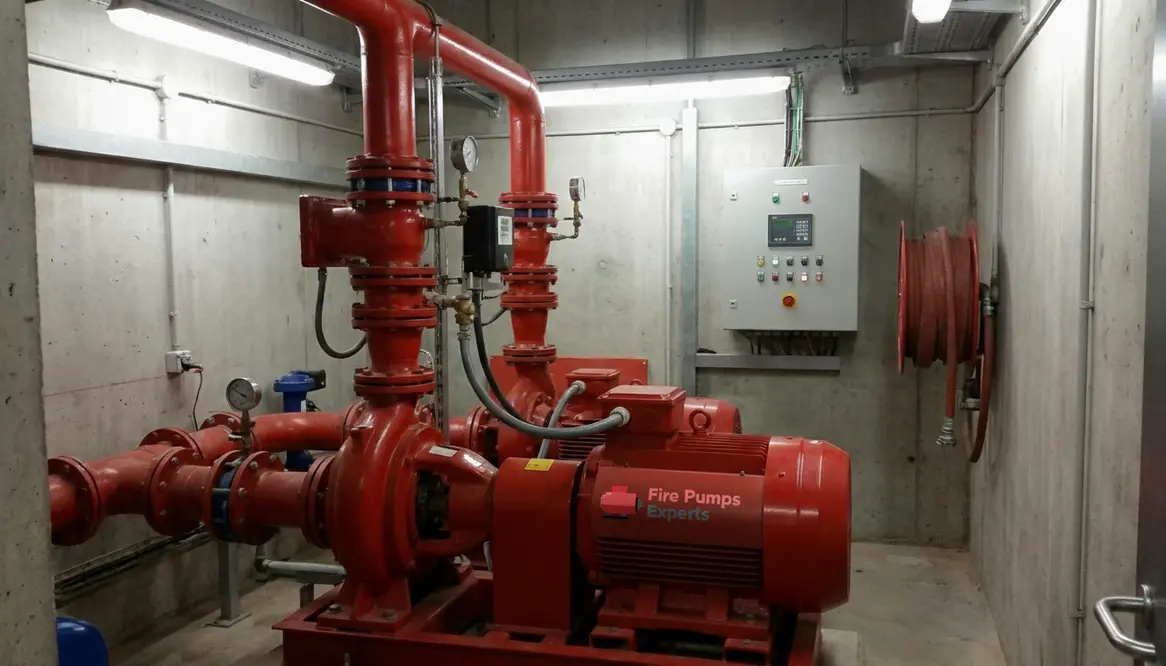
BS EN 12845 Electric Pump for Sprinkler Systems
BS EN 12845 Electric Pump Requirements for Sprinkler Systems matter because I do not want a fire pump to act like a diva when the alarm sounds. In a commercial or industrial building, the electric pump stands at the center of the sprinkler supply, ready to deliver steady pressure when life safety depends on it. I work with this standard because it sets clear rules for reliability, power, testing, and installation. And yes, that sounds dry at first, but it is the kind of dry that keeps a warehouse, office tower, or production site from becoming a very expensive campfire.
What BS EN 12845 requires from an electric pump
When I look at BS EN 12845 sprinkler requirements, I start with one simple idea: the pump must perform when called, every time. The electric pump has to provide enough water flow and pressure for the full sprinkler demand in the protected area. It must also start automatically when system pressure drops. No drama, no hesitation, no waiting for a coffee break.
In practical terms, I check the pump set, the motor, the controller, and the power supply as one system. The standard expects the pump to suit the building risk level and the water supply conditions. Therefore, the pump is not picked by guesswork. It must match the design flow, pressure needs, and the duty the system expects during a fire event.
Also, the pump room matters. I need enough space, safe access, ventilation, lighting, and drainage. If the room feels like a cramped storage closet from a low budget thriller, then the setup needs work. A solid installation supports a solid response.
Reading the standard like a design checklist
The BS EN 12845 sprinkler guidance is not just a book of rules; it is a performance checklist. I use it to confirm that the pump’s duty aligns with the hydraulic calculations, that the starting method is robust, and that the entire assembly is set up for the worst day in the building’s life, not the best one.
On paper, that means confirming rated speed, head, and flow, along with acceptable tolerances. On site, it means standing in front of the pump set and asking one blunt question: “If the sprinklers call for water right now, can this thing perform exactly as promised?” If the answer is anything other than “yes,” the design or installation still needs work.
How I check power supply and controller needs
The electric pump only helps if power reaches it, so I always treat the supply as critical. BS EN 12845 expects a reliable source of electricity with proper protection and controls. I verify that the main supply can run the pump without unwanted trips. Then I check the controller so it can start the pump on demand and show clear fault signals.
In a commercial or industrial site, I also look at continuity. If the electrical system has a backup source or emergency arrangement, it should support the fire pump plan as designed. The point is simple: a sprinkler pump that cannot get power is just a very expensive paperweight with a motor.
Power and control in one frame
Power side
- Stable supply to the pump controller
- Correct cable sizing and protection
- Clear fault and run status signals
Control side
- Automatic start on pressure drop
- Manual test and stop functions
- Visible alarms for loss of supply or fault
Because fire does not wait for office hours, I want the controls to work fast and cleanly. That keeps the system ready without extra guesswork from the building team.
Why installation and room layout affect performance
I never treat installation as a side note. The electric pump needs a room that supports safe operation and easy maintenance. If the access is blocked, the heat builds up, or the area floods, then the system can lose value before it ever fights a fire.
The standard supports a proper layout for the pump set, suction and discharge pipework, and controller location. I want short, direct runs where possible, with supports that keep the pipe stable. I also want room for inspection and testing. If I cannot reach the pump to maintain it, then the design fails the real world test.
Treating the pump room like an engine bay
Moreover, I check that the pump room stays above freezing and stays free from hazards that could damage the equipment. In industrial buildings, that matters a lot. Dust, heat, vibration, and impact can all hurt long term reliability. So, I treat the pump room like the engine bay of a serious machine, because that is exactly what it is.
Why testing and maintenance keep the system ready
A fire pump should not behave like a character who only shows up in the last ten minutes of a movie. I want regular testing, recorded results, and a clear maintenance plan. BS EN 12845 supports routine checks so faults appear early, not during an emergency.
I usually focus on start tests, pressure checks, controller checks, and visual inspection of the entire set. If the pump runs rough, if the alarms fail, or if the pressure does not match the design, I want that caught fast. Small faults become big faults when nobody watches them.
Keeping the whole BS EN 12845 sprinkler system healthy
Routine maintenance also protects the rest of the sprinkler system. A strong pump supports the heads, the valves, and the pipe network. So, when I keep the pump healthy, I keep the whole fire protection system in better shape. That is where the BS EN 12845 sprinkler principles become very real: a reliable pump underpins every nozzle that opens when heat builds where it should not.
How I apply the standard in commercial and industrial buildings
For large properties, I use BS EN 12845 as a practical guide, not a wall ornament. The right pump choice depends on the building type, fire risk, occupancy, and water demand. A logistics hub, a data-rich office block, and a manufacturing plant all need careful design, but each site brings its own load and risks.
That is why I always start with the building use, then the water supply, and then the pump arrangement. I also make sure the design team, installer, and maintenance crew understand their roles. When everyone works from the same standard, the system stays stronger and the process stays smoother.
If I need a deeper technical reference, I like to review fire pump system guidance for commercial sprinkler projects alongside the standard. That helps me keep the design grounded in real site needs rather than theory alone.
Seeing BS EN 12845 sprinkler rules on the floor
On a real project, those neat BS EN 12845 sprinkler diagrams translate into pump foundations, cable routes, test headers, and control panels that maintenance teams can actually use. I pay attention to labelling, access routes, and sight lines to ensure that when alarms sound, nobody has to guess which pump is running or whether the controller is in the correct mode.
FAQ
These are the questions I hear most often when someone first meets an electric fire pump built to BS EN 12845 sprinkler requirements and wonders what exactly it is expected to do when the heat is on.
Conclusion
If I want a sprinkler system that truly earns its keep, I start with the electric pump and I follow BS EN 12845 with care. I check power, controls, installation, and maintenance as one complete picture. That is how I protect large buildings with confidence, not hope. When a BS EN 12845 sprinkler installation is treated as a living system rather than a one-time project, the pump room stops being a forgotten corner and becomes the heart of the building’s fire strategy.
If you manage a commercial or industrial site, now is the right time to review your pump setup, tighten the weak points, and make sure your fire protection can do its job when it matters most. A calm electric pump that starts on cue, backed by a solid BS EN 12845 sprinkler design, is far better than any dramatic fire scene that ends with people asking why the system did not perform when it had the one job that truly counted.