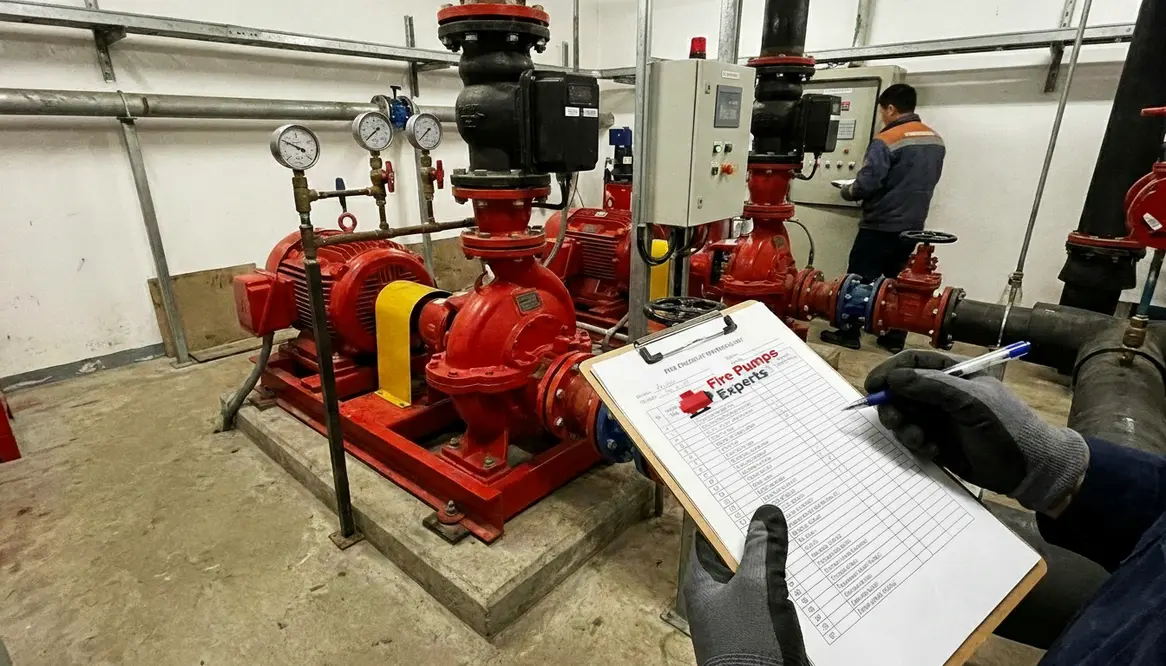
BS EN 12845 Fire Pump Inspection Checklist Guide
When I talk about a BS EN 12845 fire pump inspection checklist, I am talking about the kind of routine care that keeps a commercial or industrial fire system ready when it matters most. In a major property, a pump failure is not a small headache. It can turn a normal day into a very expensive scene, and nobody wants that kind of plot twist. So, I will walk through the checks I use, why they matter, and how they help protect large buildings, warehouses, plants, and other serious facilities.
What I check first in a BS EN 12845 inspection
I always start with the basics, because the basics are usually where the truth lives. First, I confirm that the pump room is clean, dry, secure, and easy to access. Then I check for leaks, damage, or anything that looks out of place. A well kept pump room tells me a lot before I even touch a gauge.
Next, I review the pump status. I look at power supply, controller lights, alarms, fuel levels for diesel units, and signs of fault or standby mode issues. If the pump cannot start fast, it is not doing its job. And in fire protection, “almost working” is just a fancy way of saying “not enough.”
I also check valves, pipework, and pressure readings. These small details help me spot trouble early. A stable pressure system means the pump can support the sprinkler network when demand rises. If the reading drifts, I treat it like a warning, not a mood swing.
BS EN 12845 inspection checklist for daily and weekly checks
For commercial and industrial sites, I keep the routine checks simple but strict. Daily and weekly checks help me catch slow problems before they become expensive ones. I focus on the items that can drift without making a scene.
Daily checks
- Confirm the pump controller shows normal status
- Check for alarms or fault lights
- Inspect the pump room for leaks, heat, or damage
- Make sure access stays clear
Weekly checks
- Test start conditions for the pump
- Check pressure and tank levels
- Inspect engine oil, coolant, and fuel where needed
- Review batteries and charger condition on diesel systems
- Listen for unusual noise or vibration during test runs
These checks may sound plain, but they carry real weight. A fire pump does not need drama. It needs reliability, like a side character in a good film who quietly saves the day.
How I inspect pump components and controls
Once the routine checks look good, I move into the parts that do the heavy lifting. I inspect the pump casing, impeller area, seals, bearings, and drive arrangement. I also check the motor or engine mount, because movement or wear can create hidden faults. If a part feels loose, hot, noisy, or tired, I treat it as a signal.
Then I test the control system. I confirm that the start command works, the automatic mode stays active, and the alarm signals reach the right place. If the system cannot communicate trouble, the site loses time. In a large building, time is the one thing you never want to waste during an emergency.
The often overlooked jockey pump
I also verify the jockey pump, because it helps hold system pressure and reduces unnecessary main pump starts. That little unit often gets less attention than it deserves. Still, it works like the quiet intern who keeps the whole office from falling apart.
During a BS EN 12845 inspection this smaller pump tells me a lot about how the system is treated between major tests. If it is noisy, short cycling, or failing to maintain pressure, I know the rest of the installation needs a closer look.
Why pressure, flow, and run tests matter for BS EN 12845 inspection
This is where the inspection gets real. A visual check tells me the pump looks fine. A performance test tells me whether it can actually do the job. So, I review pressure, flow, and run time to confirm the pump meets the needs of the sprinkler system.
I check that the pump starts at the right pressure drop and maintains output under test. I also watch for a steady response, because weak flow or a slow start can point to wear, blockage, or control trouble. If the pump stumbles, I do not shrug and hope for the best. That strategy works about as well as a paper umbrella in a storm.
| Inspection Area | What I Look For |
| Pressure | Stable readings and correct start point |
| Flow | Strong output with no drop off |
| Run Test | Clean start, steady operation, proper stop |
| Controls | Normal signals, no faults, full auto mode |
These tests matter most in warehouses, plants, logistics hubs, and high value commercial sites. In those places, the fire pump is not a backup plan. It is part of the core defense system, and a thorough BS EN 12845 inspection is one of the few times anyone asks it to prove what it can really do.
How I document findings and fix issues fast
Good records make the whole process stronger. I note every reading, fault, repair, and test result so I can track change over time. That record helps me spot patterns, plan repairs, and prove the system stayed in service. For owners and facility managers, that paper trail matters just as much as the equipment itself.
When I find a problem, I act fast. I do not let a minor leak become a major outage. I also recommend repairs and retesting after any fix, because an untested repair is just wishful thinking with a wrench in hand. For large facilities, I keep the goal simple: protect uptime, protect people, and protect property.
Planning beyond the checklist
If you want a deeper technical guide for commercial systems, I recommend reviewing commercial fire pump inspection guidance as part of your planning process. Pair that with a solid BS EN 12845 inspection routine and the fire pump stops being a mystery box in the basement and becomes a predictable, dependable asset.
FAQ
Conclusion
I treat every BS EN 12845 fire pump inspection checklist as a working shield for commercial and industrial properties. When I check the pump room, controls, pressure, flow, and records, I help keep the whole fire system honest. A solid BS EN 12845 inspection is not paperwork for its own sake; it is a practical way to keep water moving, alarms talking, and people walking out safely if the worst happens.
If you manage a major building, do not wait for a problem to introduce itself. Review your inspection plan now, tighten your routine, and keep your fire pump ready for the day it is needed most. When that day comes, the quiet work you put into each BS EN 12845 inspection will be the reason the story ends with damage controlled instead of headlines made.