BS EN 12845 Sprinkler Pump Design Guide UK
BS EN 12845 Sprinkler Pump Design Guide for UK Buildings
When I look at a BS EN 12845 sprinkler system, I see more than pipes, valves, and steel. I see a building with a plan, a risk profile, and a duty to stay standing when things go wrong. In the UK, commercial and industrial sites cannot afford guesswork here. A sprinkler pump must deliver the right flow, the right pressure, and the right reliability, because fire does not wait for a convenient moment. It shows up like a bad sequel, unwanted and loud. So, in this guide, I will walk through the key design points that shape a proper pump setup for major properties.
What BS EN 12845 means for sprinkler pump design
BS EN 12845 sets the design and installation rules for automatic sprinkler systems in buildings. For pump design, I focus on one main goal: keep water supply steady under fire conditions. That sounds simple, but the real work sits in the details. I must confirm the hazard class, water demand, pressure need, and duration of supply. Then I match the pump to those values. If I miss the mark, the system may look fine on paper and fail when it matters most. And that, frankly, is a plot twist nobody wants.
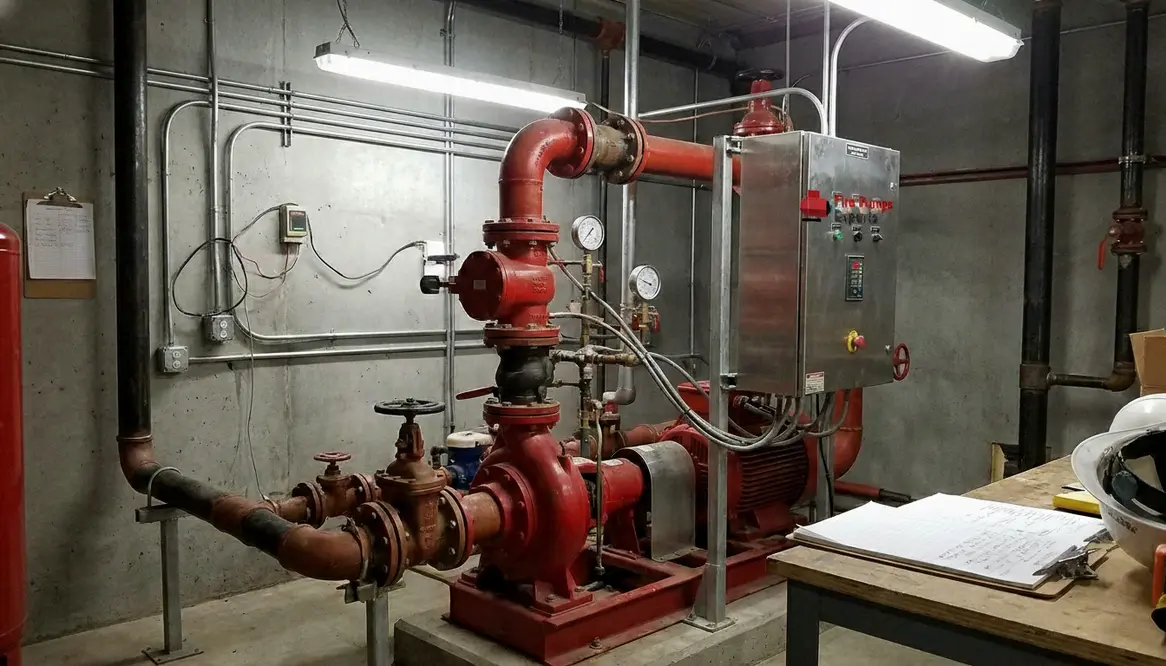
The standard also pushes me to think about redundancy, supervision, and testability. For larger UK buildings, I treat the pump room as a critical space, not a storage cupboard with a heroic label. A BS EN 12845 sprinkler installation deserves a location that respects both the risk and the equipment that carries the load when the heat arrives.
How I size the pump for a UK commercial building
Starting from the sprinkler demand curve
I start with the sprinkler demand curve. First, I identify the most severe design area for the building. Then I calculate the required flow and pressure at the most remote sprinkler heads. After that, I add the losses from pipework, valves, fittings, and any backflow devices. This gives me the pump duty point, the beating heart of a BS EN 12845 sprinkler system that actually behaves when called upon.
Translating theory into reliable duty
In simple terms, the pump must meet demand at the right pressure while also handling real world losses. I also check the water source. A tank, boosted supply, or reliable town main all change the design path. For industrial sites, I often see high demand and long running times, so I pay close attention to storage volume and replenishment. A pump that looks powerful but cannot sustain supply is like a superhero with a flat battery.
For UK sites with mixed uses, I sometimes balance multiple design areas: warehouses, office zones, or production lines may all share the same water source. The pump must cope with the worst credible fire scenario, not the average Tuesday afternoon.
Key pump parts I always check
Hydraulic side
- Pump duty point
- Flow rate and pressure
- Net positive suction head li>Pipe losses and valve losses
Control side
- Automatic start logic
- Alarm signals
- Power supply and backup
- Weekly test set up
BS EN 12845 sprinkler pump room rules for reliable operation
Creating a room that protects the system
The pump room must support safe, steady operation. Therefore, I look at access, ventilation, drainage, heat control, and fire separation. If the room gets too hot, the pump and controls suffer. If the room floods, the system becomes expensive decoration. Neither helps.
Maintaining space, clarity, and status visibility
I also want clear access for maintenance crews. They need space to test, inspect, and repair equipment without squeezing past boxes or old pallets. The room should stay clean, dry, and secure. In busy commercial and industrial properties, that is not a luxury. It is basic care. I also check that the control panel has clear status indicators and that the arrangement allows quick fault finding. Time matters during an incident, but it also matters during a test on a rainy Tuesday.
When a BS EN 12845 sprinkler project reaches the commissioning stage, the pump room layout often decides whether routine testing is painless or a monthly headache. Good layout means fewer excuses for missed checks and more confidence that the system will behave when the alarm sounds.
How I design for redundancy and backup
Avoiding single points of failure
For many major buildings, I do not trust a single point of failure. I prefer a design that reflects the risk. That may include a duty pump and standby pump, plus a reliable power arrangement. If the site depends on electricity, I confirm the backup supply and switching method. If the water source depends on storage, I verify that the tank supports the required fire duration. In some projects, I also review diesel driven pump options for added resilience.
Keeping the system predictable under pressure
Here is the calm truth: fire systems should not behave like a drama series. No cliffhangers. No surprise exits. The system must start when called, keep running, and tell me if anything goes wrong. That is why I test alarms, pressure switches, controllers, and fail safe logic as part of the wider design.
A BS EN 12845 sprinkler arrangement with well planned redundancy turns a chaotic event into a managed one. The fire may be noisy, but the pump response should feel uneventful, almost boring: it starts, it delivers, it keeps going until the job is done.
Where I use trusted guidance and site checks
Balancing standards with real buildings
For larger UK facilities, I always tie the design back to site risk and current standards. I also review practical guidance from specialist sources so the final setup fits real life, not just a neat drawing. For example, I may use this commercial fire pump design resource when checking pump selection, system layout, and building needs for industrial and major property projects.
Matching system performance to site reality
That extra check helps me stay honest about performance. It also helps when I compare the system to the site layout, water supply, and operational demand. A warehouse, data hall, or high value commercial block can each need a different approach, even when the standard stays the same. A BS EN 12845 sprinkler design that works beautifully in a low rise building may need serious adaptation for a tall, complex site with tight access and deep basements.
Site walks often expose details that drawings politely ignore: awkward pipe routes, hidden heat sources, access doors that never open, or spaces turned into unofficial storage corners. All of these influence pump location, suction pipe runs, and test arrangements. The better the match between paper design and physical building, the more likely the pump will deliver when the fire gives its uninvited performance.
FAQ
Conclusion
If you want a sprinkler pump design that works in the real world, not just on drawings, I suggest a full BS EN 12845 review before installation starts. For commercial and industrial buildings, that step protects people, assets, and operations. It also saves time later, which is always welcome. If you are planning a project or upgrading an existing system, now is the time to check the pump duty, room setup, and backup plan with care. Treat the BS EN 12845 sprinkler rules as a framework, then apply them with a clear eye on your specific building so that, when fire turns up uninvited, your pump and pipework quietly steal the show.