Chile Fire Pump Requirements for Buildings
A practical guide to making sure large commercial and industrial buildings in Chile have the fire pump “muscle” they need when it counts.
Chile Fire Pump Requirements Explained
When I look at Chile requirements for fire pumps, I see one clear goal: keep large commercial and industrial buildings ready when fire hits. That includes factories, warehouses, malls, towers, and other major properties where water pressure alone may not be enough. In plain terms, the fire pump becomes the building’s muscle. It pushes water where gravity and weak mains cannot. And yes, that matters a lot when the clock is doing its usual dramatic countdown.
In this article, I will break down the main rules, the design logic, and the points that owners, engineers, and facility teams should watch. I will keep it simple, but I will not water it down. Pun intended. Because when it comes to fire protection, “close enough” is about as useful as a chocolate helmet.
Why Chile requirements matter
Chile fire pump requirements exist to make sure that when a serious fire breaks out, the system has enough pressure and flow to feed sprinklers, hydrants, and standpipes throughout the building. Gravity and city mains are helpful, but in many large facilities they simply cannot keep up under real fire conditions.
That is where properly designed fire pumps step in: they are the silent engines that turn water storage and weak mains into a force strong enough to protect people, contents, and structures.
What Chile Requires for Fire Pumps in Major Buildings
Chile fire pump rules focus on reliable water delivery for systems like sprinklers, hydrants, and standpipes in commercial and industrial buildings. First, the pump must match the system demand. That means it must provide enough flow and pressure for the worst case fire condition the site may face. Also, the pump must support the full protection system, not just one area that looks important on paper.
In many projects, the design follows the local fire code, the building use, and the risk level. Therefore, the pump size, driver type, and water source must all fit together. If one piece fails, the whole setup starts acting like a band with bad timing. Nobody wants that in an emergency.
Core intent of Chile requirements
The Chile requirements for fire pumps boil down to dependable performance during a real fire, not just on paper. The system must:
- Deliver the design flow and pressure to the most demanding point in the system
- Work for the full duration required by code and risk profile
- Stay operational even when utility power or pressure drops
Typical buildings affected
These rules mainly affect:
- Factories and industrial plants
- Large warehouses and logistics centers
- Shopping malls and retail complexes
- High-rise towers and mixed-use buildings
- Major property sites with high fire load or weak mains
How I Check Chile Fire Pump Design Basics
Here is the simple way I think about the design process. The pump must start fast, deliver steady pressure, and keep running during the fire event. However, it also needs a strong water supply, proper controls, and a clean pump room. A weak supply with a strong pump is like putting race tires on a bicycle. It looks impressive, but it does not help much.
Key design checks for major properties
For commercial and industrial properties, I look at these core items:
- Water source capacity and refill rate
- Required pressure at the most remote outlet
- Total flow demand from sprinklers and fire lines
- Electric or diesel driver choice
- Backup power and starting reliability
- Valve layout, test piping, and maintenance access
Also, the system should allow easy testing. If staff cannot test it without turning the room into a maze, then the design needs work. Good fire systems should feel boring during normal days. That is actually a compliment.
Chile Fire Pump Requirements for Equipment and Installation
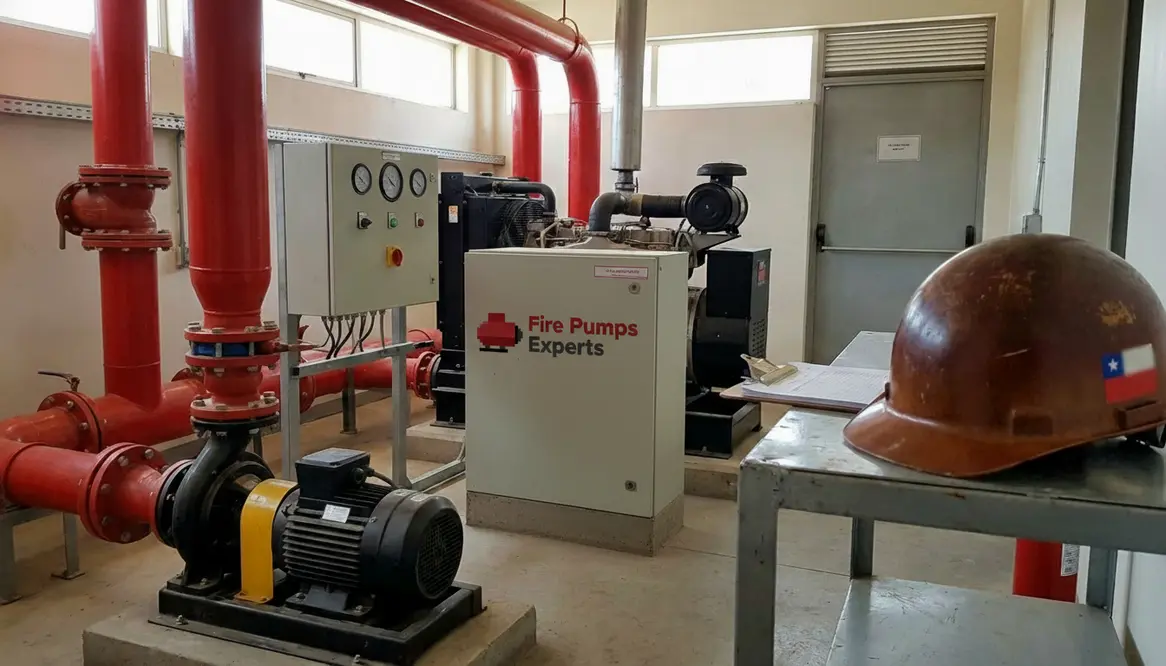
Now let me get into the hardware side. The pump itself must suit the building risk and the local standard. For major properties, the installation usually includes a main fire pump, a jockey pump, control panels, isolation valves, and pressure gauges. Together, these parts keep the system ready and help reduce false starts.
The pump room matters as much as the pump. It should stay dry, safe, and easy to access. In addition, it should have enough space for service, heat control, and clear labeling. I always say a fire pump room should not feel like the storage closet from a horror movie. Clean access saves time, and time matters more than any fancy brochure ever will.
Side by Side View of Common Chile Fire Pump Factors
| Item | What I Look For |
| Water supply | Enough volume and steady refill |
| Pump size | Matches full fire demand |
| Driver type | Electric or diesel based on site risk |
| Controls | Fast, reliable, and easy to test |
| Room setup | Safe access, ventilation, and service space |
How I Handle Testing, Maintenance, and Compliance
Testing is where the truth comes out. A pump can look perfect in a drawing, yet still fail under real conditions if nobody checks it. So, I recommend scheduled flow tests, pressure checks, starter tests, and visual inspections. Also, teams should log every result. Paperwork may not save a building from fire, but it can save a project from a compliance headache, and those can be nearly as annoying.
Maintenance should stay regular and simple. For example, crews should inspect bearings, couplings, batteries, fuel supply, and control settings. They should also confirm that valves stay open and that no one has “temporarily” locked the system in a strange state for six months. Yes, that happens. Human beings are inventive in the worst moments.
Compliance also means the system should stay aligned with the latest local rules and accepted fire protection standards. Because codes change, and buildings change too. If a site expands, adds storage, or changes use, I always treat the fire pump design as something that needs a fresh look.
How FirePumps.org Helps Commercial and Industrial Sites in Chile
For owners and facility teams, this is where a focused partner matters. FirePumps.org works with commercial and industrial facilities, plus major property buildings, so the advice stays practical and site specific. That focus helps because a warehouse does not need the same thinking as a small retail shop, and a high rise does not play by the same rules as a light use building.
If you want deeper guidance, I suggest reviewing commercial fire pump solutions for Chile to understand how the right system fits a large property from start to finish. A solid pump strategy protects the building, supports the code path, and keeps the operation calm when the pressure rises, which is the whole point.
Connecting back to Chile requirements
The most effective way to meet Chile requirements is to see them not as a paperwork hurdle but as a design checklist. When pump capacity, water storage, controls, and testing all line up with Chile requirements, the system becomes predictable. That predictability is what keeps people safe, satisfies insurers, and lets facility teams sleep at night instead of wondering whether the system will work.
FAQ: Chile Fire Pump Requirements for Buildings
Conclusion
Chile fire pump requirements can feel technical, but I see them as a practical map for protecting major buildings. If you manage a commercial or industrial site, now is the time to review your system, confirm your compliance, and fix weak points before they become real problems. I encourage you to speak with a fire protection specialist who understands large properties and can help you choose, test, or improve the right pump solution for your site.