China Fire Pump Requirements for Industrial Sites
How code, water, and smart layout decisions keep major facilities standing when everything gets hot and messy.
China Fire Pump Requirements for Industrial Facilities
When I look at fire protection in a China industrial setting, I do not see just a box to check. I see the quiet muscle behind a building’s safety plan. A fire pump steps in when pressure drops, and in a large plant, warehouse, or major property, that moment can decide whether the day ends with a small incident or a full blown disaster. So yes, this topic sounds dry at first. But like an unsung hero in a movie, the fire pump does the heavy lifting while everyone else gets the credit.
In industrial facilities, China fire pump requirements shape how water moves, how fast it moves, and whether it arrives with enough force to do the job. I want to break that down in plain language, because this is not just about equipment. It is about code, layout, reliability, and the kind of planning that keeps a business standing when the heat turns real.
Why China industrial fire pump rules matter
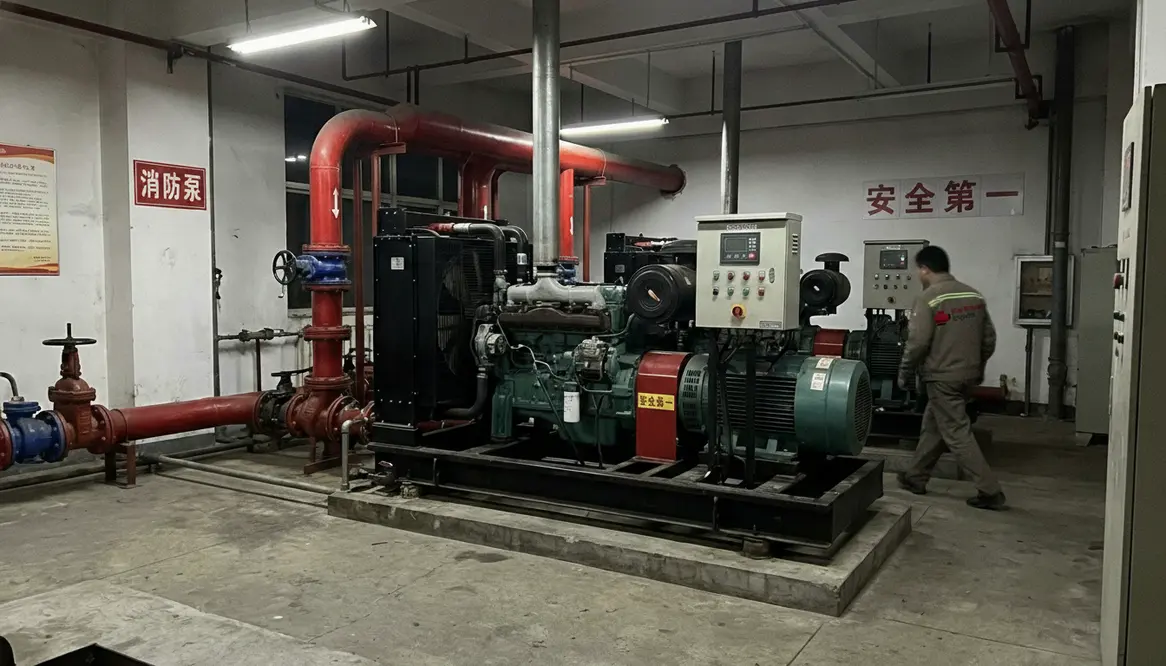
Behind every high-bay warehouse, chemical line, or logistics hub, there is a pump room expected to perform on command. The better the planning, the shorter the incident, the faster the restart.
That is where clear China fire pump requirements, tight hydraulic calculations, and honest testing keep production schedules from turning into smoky headlines.
What I check first in a China industrial fire pump plan
I always start with the facility itself. A factory, logistics center, or large commercial plant has special risks because of size, height, storage loads, and process equipment. Therefore, the pump must match the actual demand, not a guess made over coffee at 4 p.m.
In China industrial projects, I look at these core points:
Water demand: The system must supply enough flow and pressure for sprinklers, hydrants, and hose reels where required.
Pressure loss: Long pipe runs, elevation changes, and valves reduce pressure, so the pump must make up for that loss.
Duty and standby setup: Many sites need a main pump plus a backup pump, because fire protection does not get to take a sick day.
Power source: Electric and diesel options both play roles, and the design must fit site risk and local code rules.
Because every industrial site works differently, I never treat one pump plan as a copy paste solution. That is how trouble sneaks in wearing a fake mustache.
How I size fire pumps for major properties in China industrial sites
Proper sizing sits at the center of the whole job. If the pump is too small, the system fails when it matters most. If it is too large, the design can become wasteful and harder to control. So I base the selection on the required flow rate, the needed discharge pressure, and the highest system demand point.
I also check the water source. Sometimes the supply comes from a municipal line, a tank, or a dedicated reservoir. However, if the source cannot support the full demand, the pump system must fill that gap. That is why testing matters. Theory is nice, but water pressure cares more about facts than feelings.
Simple sizing logic I actually use
- First, identify the fire risk and building use.
- Then, calculate total system demand.
- After that, confirm the water source can support the plan.
- Finally, choose the pump type and backup setup.
For industrial and major property buildings, I also check whether the facility needs zone based pressure control. Large sites often need different pressure levels across different areas, and one pump cannot always serve every corner with equal grace.
Which code and inspection points matter most?
The code side can feel like a maze, but I keep it simple. In China fire pump projects, local fire protection rules, project specs, and inspection standards guide the design, installation, and acceptance process. Therefore, I always make sure the pump room, controls, piping, valves, and alarms all match the approved plan.
Core inspection checklist
- Pump room access and protection
- Control panel function and power supply
- Automatic start performance
- Manual start backup
- Jockey pump support for pressure stability
- Test flow and pressure results
- Alarm and monitoring connection
Why routine testing is non‑negotiable
Also, I never ignore routine testing. A fire pump that looks fine on paper but fails during a test is like a superhero who forgets the cape. Not ideal. Regular checks keep seals, motors, controllers, and valves ready for action.
What I expect from a reliable fire pump system
A strong fire pump system does more than move water. It supports confidence across the facility. First, it must start quickly. Then, it must hold stable pressure without strange jumps or drops. Next, it must stay accessible for maintenance so crews can inspect it without turning the pump room into a puzzle game.
I also look for durability. Industrial sites face dust, heat, vibration, and long operating hours. So the pump materials, foundation, wiring, and enclosure need to stand up to the environment. If the site runs heavy production or stores high value inventory, I want a system that feels boring in the best way possible. Boring means dependable, and dependable pays the bills.
For firms that serve commercial and industrial buildings, a clear technical review helps reduce risk. If you want a useful reference, I suggest reviewing industrial fire pump solutions for major properties to better align system design with real project needs.
FAQ
Conclusion
If I am protecting a factory, warehouse, or major commercial site, I treat fire pump design like serious business, because it is. The right China fire pump setup supports safety, uptime, and peace of mind. So I always match the pump to the risk, the code, and the water source. If you need a system review, a design check, or a better plan for a China industrial property, now is the time to act and build it right.