Japan Fire Service Law Fire Pump Compliance Guide for Commercial and Industrial Buildings
A practical look at keeping fire pumps legal, reliable, and ready when your building needs them most.
I know fire safety can sound like the sort of topic that puts a room to sleep faster than a late night documentary, but Japan Fire Service Law compliance matters more than most people realize. For commercial and industrial facilities, plus major property buildings, fire pump rules can shape daily operations, insurance risk, and building safety. I have seen smart owners treat compliance like a box to tick, then act surprised when the system fails an inspection. That is a bad scene. In this guide, I will walk through the key points in plain language, so you can keep your fire pump system ready, legal, and not starring in its own disaster movie.
What Japan Fire Service Law compliance means for fire pumps
For me, compliance starts with one simple idea: the fire pump must work when the building needs it. The law expects fire protection systems to support safe evacuation and fast fire control. In large commercial and industrial spaces, that means the pump must deliver enough water pressure and flow to the sprinkler or standpipe system.
So, I do not look at compliance as paperwork alone. I treat it as proof that the pump, motor, piping, controls, and water supply all work together. If one part slips, the whole setup can fail. And yes, fire safety has a way of punishing small oversights with dramatic timing. Think of it like a superhero team. If one member stays home, the city notices.
Japan Fire Service Law compliance also ties to building size, use, and fire load. A warehouse, factory, data center, or high rise office all face different risk levels. Therefore, I always start by checking the building type before I talk equipment.
Why this matters for real buildings
A compliant fire pump is more than a legal checkbox. It protects evacuation routes, keeps sprinklers effective, and can decide whether a fire stays a small incident or becomes a headline. When you treat Japan Fire Service Law compliance as a living process, not a one-time project, your building is far more likely to stay safe and insurable.
How I check a commercial fire pump system
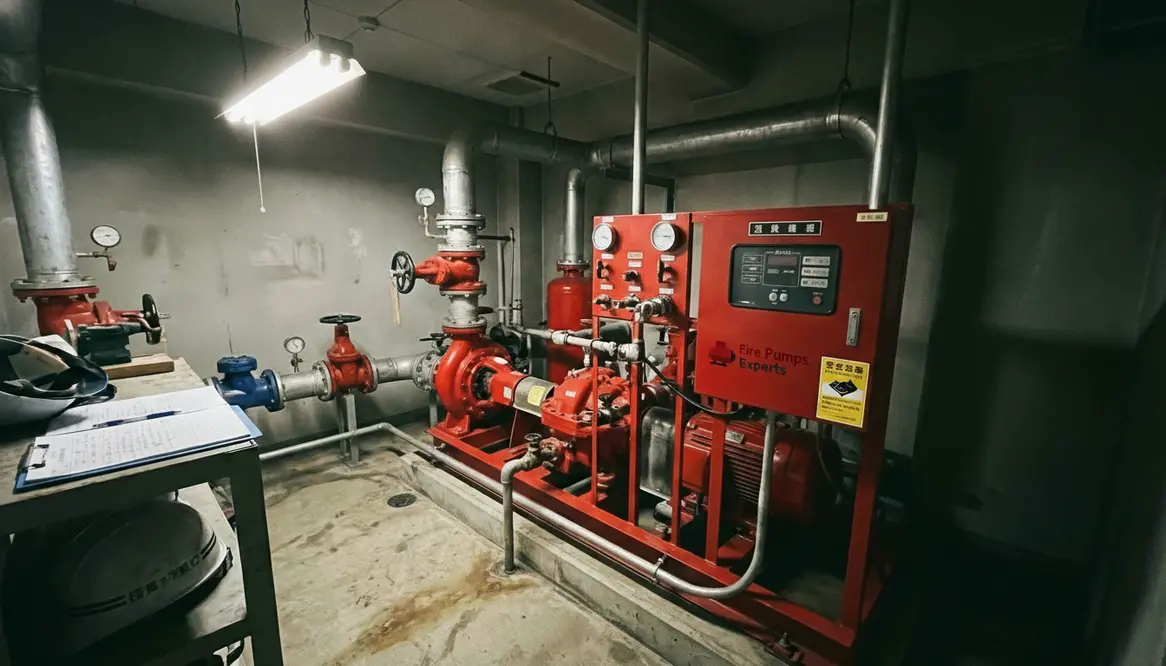
When I review a fire pump system, I follow a clear path. First, I confirm the pump rating against the building demand. Then I inspect the water source, valve setup, power supply, and control panel. After that, I check whether the system can start fast and stay stable under load.
Here is the practical side of the review:
System checks I focus on
- Pump capacity and pressure match the design need
- Water tank or supply holds enough reserve
- Main and backup power support the pump start
- Jockey pump keeps pressure steady and reduces wear
- Test valves and gauges show clear, usable readings
- Control panels, alarms, and wiring stay in good condition
I also test the pump under real conditions whenever possible. A gauge can smile at you, but only a proper flow test tells the truth. That is where many systems reveal weak spots, especially in older industrial buildings where parts may have aged like a prop from an old action film.
Where Japan Fire Service Law compliance often fails
Common weak spots
I often find the same problems again and again. The first is poor maintenance records. If nobody can show test history, repair notes, or inspection dates, then the building already looks risky. The second is delayed fixes. Owners spot a fault, then wait. The pump does not enjoy waiting.
Another common issue is change inside the building. A tenant adds storage racks, production space shifts, or a floor layout changes. As a result, the fire demand changes too. However, many owners forget to reassess the pump system after those changes. That can create a gap between the design and the real use of the property.
Hidden technical trouble
In addition, I see problems with power supply and corrosion. A pump can look fine on the outside while rust or wiring wear causes trouble inside. So, I never trust appearances alone. The machine may be dressed for the job, but that does not mean it can perform.
When Japan Fire Service Law compliance fails in these quiet, technical ways, the gap often shows up only during an emergency or an inspection you really wanted to pass. Regular, honest testing is the only cure for that kind of surprise.
How I keep inspections simple and on schedule
I like a process that stays clear, repeatable, and boring in the best way. Fire safety should not become a last minute scramble. Therefore, I keep a fixed schedule for visual checks, performance tests, and repair reviews.
My simple inspection rhythm
- Monthly visual review of the pump room and controls
- Regular pressure and alarm checks
- Annual or required flow testing for system performance
- Fast follow up on leaks, noise, heat, or vibration
- Record keeping that anyone can understand later
Also, I make sure the team knows who owns each task. When responsibility feels vague, deadlines wander off like a side character in a long drama series. Clear roles help the building stay ready and help Japan Fire Service Law compliance stay real, not just theoretical.
Compliance focus
Meet the required fire pump standard, document tests, and fix faults fast.
Facility benefit
Reduce downtime, protect assets, support insurance review, and keep operations stable.
If you want a deeper reference point for commercial and industrial sites, I recommend reviewing a trusted Japan fire pump compliance resource for major buildings alongside your internal maintenance plan. That kind of support helps align system checks with real building risk, which is exactly where good planning earns its keep. A solid outside reference also helps you maintain Japan Fire Service Law compliance when equipment or building use shifts over time.
What I ask before I approve a fire pump plan
Before I call a fire pump plan ready, I ask a few direct questions. Does the pump meet the building demand under worst case conditions? Can the system run when utility power fails? Are logs current and easy to audit? Has the building use changed since the last review?
These questions sound simple, but they reveal the real story. A compliant system is not just installed. It is maintained, tested, and matched to the building as it exists today. That point matters a lot in factories, logistics sites, and other large properties where space use changes often.
Readiness over perfection
So, I do not chase perfection. I chase readiness. That is the heart of Japan Fire Service Law compliance for fire pumps. It protects people, protects property, and keeps a business from facing a costly surprise at the worst possible time.
If you want to benchmark your system against a broader standard, you can review guidance and technical discussions at https://firepumps.org while you update your internal procedures and documentation.
FAQ
These are some of the most common questions I hear when people start getting serious about Japan Fire Service Law compliance and fire pump performance.
Final thoughts and next step
If I had to sum it up, I would say this: fire pump compliance is not busywork, it is built for real life. In a commercial or industrial setting, that matters every single day. So, if you manage a major building, now is the time to review your pump system, test your records, and close any gaps before they grow teeth. I encourage you to act early, check the system thoroughly, and keep your property ready for whatever comes next.