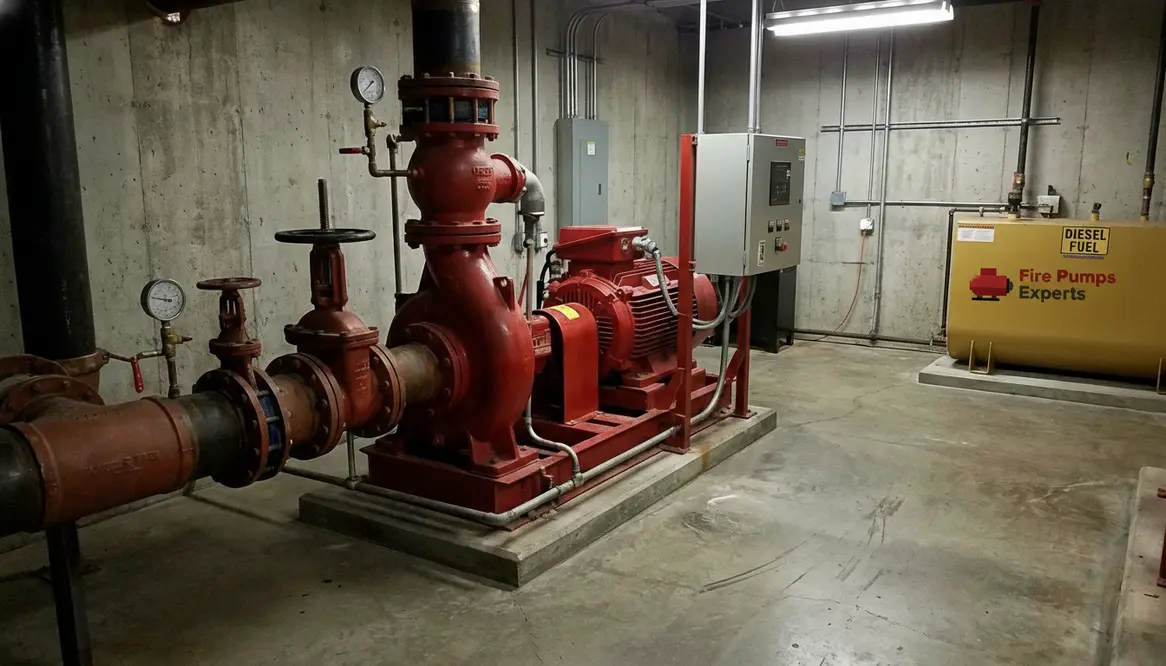
Commercial Fire Protection Systems and Fire Pumps
Inside every serious commercial building, there is at least one system that absolutely cannot fail when everything else does. This is a story about that system, and the quiet machinery behind it.
I have spent years around large buildings where safety is not a suggestion but a requirement, and one truth stands tall every time. When I talk about commercial fire protection systems, I am really talking about reliability under pressure. Literally. In high rise offices, data centers, and industrial plants, fire pumps are the quiet guardians that wait patiently until everything goes wrong. And when that moment comes, they do not hesitate. They perform.
Now, I know what you are thinking. Fire pumps are not exactly the rock stars of building systems. They do not get the spotlight like alarms or sprinklers. But without them, those systems are just expensive decorations. Kind of like owning a Batmobile with no engine. Looks great. Goes nowhere.
What does a fire pump actually do in a commercial building?
A fire pump takes water and gives it purpose. More specifically, it boosts water pressure so sprinkler systems and standpipes can perform at full strength. In large commercial and industrial facilities, municipal water pressure often falls short. That is where the pump steps in, turning a weak stream into a force that can control or extinguish a fire.
Because time matters, the pump activates automatically when pressure drops. No dramatic button pressing. No heroic speeches. Just immediate action. As a result, the system responds within seconds, helping contain damage before it spreads across floors or production lines.
In my experience, the difference between a controlled incident and a full scale disaster often comes down to whether the pump delivers consistent pressure when it matters most. In well designed commercial fire protection systems, that pressure is not a “nice to have.” It is the entire point.
Pressure, performance, and the chain reaction of safety
Once the pump starts, everything else in the system suddenly makes sense. Sprinkler heads that would have dribbled now discharge with authority. Standpipes on upper floors stay usable for firefighters. Hose valves deliver the flow they were designed for instead of leaving crews guessing. All of it works together as one chain reaction built on pressure, performance, and timing.
How fire pumps support large scale commercial fire protection systems
When I evaluate commercial fire protection systems, I look at integration first. A fire pump does not operate in isolation. Instead, it works alongside sprinklers, standpipes, and storage tanks to create a coordinated response.
Moreover, these systems must meet strict codes and standards. That means proper sizing, correct installation, and routine testing. If one component underperforms, the entire system feels it. Think of it like a band. If the drummer loses rhythm, the whole show gets awkward fast.
In large facilities, fire pumps often support multiple zones. Therefore, they must maintain steady pressure across long distances and vertical heights. High rise buildings especially depend on this capability, since gravity is not exactly on your side when water needs to travel upward.
Key Benefit
- Maintains water pressure across multiple floors
- Supports simultaneous system activation
- Reduces fire spread risk
- Ensures compliance with safety codes
Operational Advantage
- Automatic activation during pressure drops
- Works with backup power sources
- Handles high demand scenarios
- Enhances system reliability
Where fire pumps sit inside the safety strategy
In a serious risk assessment, fire pumps are not a footnote. They are the backbone of water based commercial fire protection systems, especially where tall structures, large footprints, or mission critical operations are involved. Whether it is a warehouse stacked to the ceiling or a server room that absolutely cannot go dark, the logic is the same: no pressure, no protection.
Types of fire pumps and where they fit best
Not all fire pumps are created equal. In fact, choosing the wrong type can lead to inefficiencies or even failure under stress. So I always match the pump to the building’s specific needs.
Electric fire pumps
Electric fire pumps are common in commercial properties with stable power. They are efficient and relatively easy to maintain. For buildings where utility reliability is high and emergency generators are in place, they often provide a streamlined solution inside broader commercial fire protection systems.
Diesel driven fire pumps
Diesel driven pumps step in when reliability must go beyond the grid. If the power goes out, and it often does during emergencies, diesel keeps running. No drama. No excuses. These pumps shine in high risk sites, older power infrastructure, or locations that simply cannot trust the utility during a crisis.
Vertical turbine and split case pumps
Additionally, vertical turbine pumps serve facilities that rely on underground water sources. Meanwhile, horizontal split case pumps dominate large buildings because they handle high flow rates with impressive stability. Vertical inline and end suction pumps fill out the lineup where space, orientation, or piping constraints shape the design.
Each type serves a purpose. The trick is understanding the environment, the risk level, and the system demand before making a decision. That is where experienced fire pump specialists, like the team behind dedicated pages such as fire pump systems and services, really earn their keep.
Why maintenance is not optional but mission critical
I will say this plainly. A fire pump that is not maintained is a liability. It may sit quietly for years, but when it fails, the consequences are immediate and severe.
That is why regular testing is essential. Weekly churn tests, annual flow tests, and routine inspections ensure the system performs under real conditions. Moreover, maintenance teams can catch issues like pressure drops, leaks, or mechanical wear before they escalate.
Interestingly, many failures do not come from dramatic breakdowns. Instead, they stem from small oversights. A valve left partially closed. A controller setting misconfigured. It is the little things. Like forgetting to charge your phone before a long trip. Except here, the stakes are much higher.
Maintenance as the engine of reliable protection
In practice, the strongest commercial fire protection systems are not always the newest or the most expensive. They are the ones that are tested, documented, and cared for with boring consistency. Logs are updated, trends are reviewed, deficiencies are corrected early, and no one assumes that “quiet” equals “good.” That mindset turns equipment from a checkbox into an actual safety net.
Common challenges in industrial and commercial environments
Large scale facilities introduce complexity. Long pipe runs, high ceilings, and specialized hazards all demand precision. Therefore, fire pumps must operate under varying loads and conditions.
In industrial settings, corrosive environments can affect components. Meanwhile, data centers require uninterrupted protection without water damage risks. Each scenario calls for careful planning and system design.
Furthermore, retrofitting older buildings adds another layer of difficulty. Integrating modern fire pumps into existing infrastructure requires expertise and strategic thinking. It is not a plug and play situation.
However, when done right, these systems provide a level of safety that allows operations to continue with confidence. The best commercial fire protection systems are the ones occupants barely notice because everything just works, even when the conditions around them are anything but simple.
Designing for reality, not just drawings
On paper, pipes are straight, rooms are open, and nothing ever gets in the way. In real buildings, there are tight mechanical rooms, surprise beams, equipment relocations, and the occasional “why is that there?” moment. Fire pump and system design that acknowledges this reality up front produces cleaner installations, easier maintenance, and fewer headaches years down the line.
FAQ about fire pumps in commercial facilities
What triggers a fire pump to start?
A drop in system water pressure automatically activates the pump.
How often should fire pumps be tested?
Weekly visual checks and annual performance tests are standard.
Can a fire pump run without electricity?
Yes, diesel driven pumps operate independently of electrical power.
Are fire pumps required in all commercial buildings?
Not all, but most large or high risk facilities require them by code.
What happens if a fire pump fails?
Water pressure drops, reducing the effectiveness of the entire fire protection system.
From questions to strategy
If these questions are surfacing for the first time during an inspection or after a close call, that is a warning sign. Strong commercial fire protection systems treat these answers as design inputs, not last minute trivia. The more clearly a facility team understands how their pump behaves, the better they can plan, train, and maintain around it.
Conclusion: Investing in protection that actually performs
When I look at a facility, I do not just see walls and equipment. I see risk, responsibility, and the need for systems that work without hesitation. Fire pumps sit at the core of that promise. If you are managing or upgrading a property, now is the time to ensure your system is ready.
Connect with experts who understand performance, compliance, and real world demands. The strongest commercial fire protection systems are built on that combination of design, equipment, and maintenance. Because when the moment comes, there is no room for guesswork. Only results.