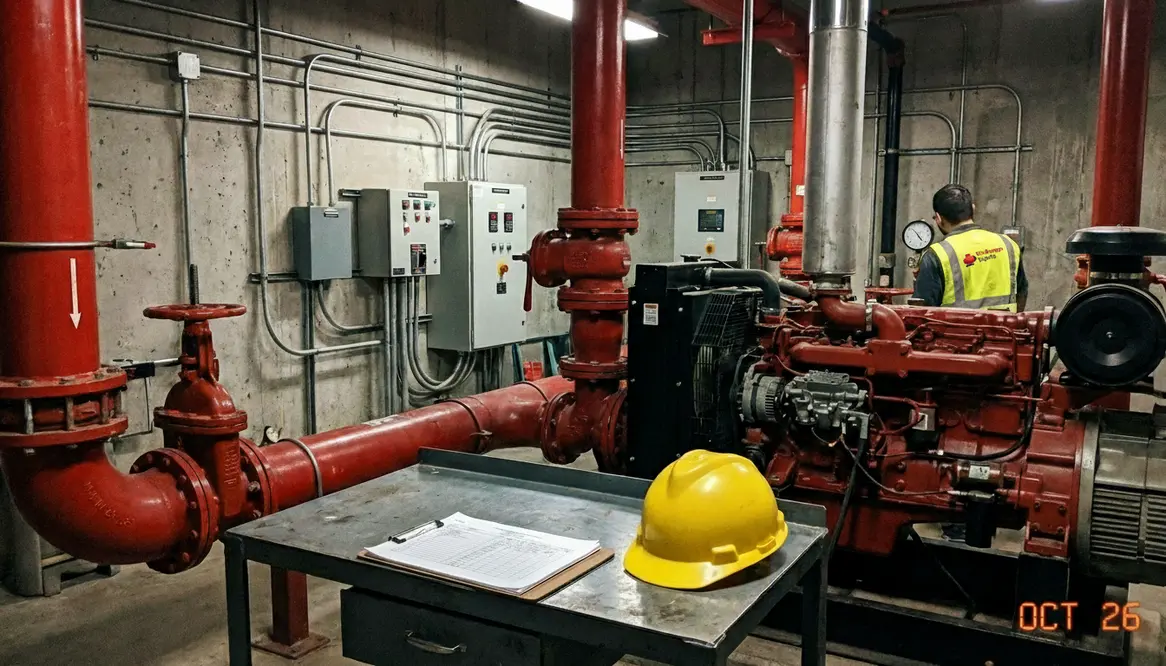
Commercial Fire Pump Requirements New Jersey Guide
I have spent enough time around pump rooms to know one simple truth. When things go wrong, they go wrong fast. That is exactly why commercial fire pump requirements in New Jersey are not just paperwork. They are the backbone of fire protection in large scale buildings. If you are developing a high rise, a warehouse, or a complex industrial site, these requirements shape everything from your design to your inspections. And yes, they can feel about as exciting as watching paint dry, but ignoring them is far less entertaining.
What Developers Need to Know About Fire Pumps in New Jersey
Let me answer this the way most developers actually ask it in real life. What do I really need to get right so I do not end up in a meeting with inspectors who look like they have not smiled since 1998?
First, New Jersey follows NFPA standards closely, especially NFPA 20. However, local jurisdictions often add their own flavor. That means I always check both state rules and local amendments before I even sketch a system layout.
Next, fire pumps are not optional in many commercial structures. If your building height, size, or hazard level demands higher water pressure than the municipal supply can provide, then a pump becomes mandatory. No debates. No shortcuts.
Finally, approval is not a one step process. It involves design review, installation checks, testing, and ongoing inspection. Think of it less like flipping a switch and more like a series finale with multiple plot twists.
Understanding Commercial Fire Pump Requirements in Large Scale Builds
Now we get into the real engine room of the topic. The commercial fire pump requirements for major properties revolve around reliability, redundancy, and performance under pressure. Literally.
Pump selection that actually matches the building
Pump selection matters. I look at flow rate, pressure demand, and system type. A high rise might need a vertical turbine pump, while a sprawling warehouse may rely on a horizontal split case pump. Choosing wrong is like casting the wrong actor as Batman. It just does not work.
Power, redundancy, and the moment everything goes dark
Power supply is critical. Most systems require a dedicated and reliable power source. In many cases, that means a backup diesel pump or generator. Because during a fire, the power grid is not exactly known for its calm and steady behavior.
Installation standards are strict. Clearances, ventilation, and accessibility all matter. Inspectors want to see that technicians can reach every component without performing gymnastics.
Finally, testing is not optional. Acceptance testing proves the system performs as designed. And yes, it is as serious as it sounds. Water flows, gauges are checked, and every detail is documented. These commercial fire pump requirements are where design decisions meet real world performance.
If you want a real world look at what full fire pump service, testing, and maintenance can involve, take a look at how specialists structure their work here: professional fire pump service overview. It is a useful reference point when you are planning long term compliance on your own projects.
Design Decisions That Make or Break Compliance
Every project has a moment where design choices either save time or create months of delays. I have seen both.
Access, layout, and the future inspector
Placing the pump room in a poorly accessible area may seem convenient during design. However, it becomes a nightmare during inspection and maintenance. So I always prioritize access early and think about how each commercial fire pump requirements checklist will be verified in real life.
Coordination and materials that keep you out of trouble
I coordinate closely with fire protection engineers and local authorities. That collaboration avoids costly redesigns. It also keeps everyone aligned on expectations. Material selection also plays a role. Pipes, valves, and controllers must meet specific standards. Cutting corners here is like bringing a plastic sword to a real battle. It might look fine until it absolutely does not.
Common Pitfalls I See Developers Run Into
Let me save you some trouble. These mistakes show up more often than they should.
Underestimating water demand
Developers sometimes assume municipal supply is enough. Then calculations prove otherwise.
Poor coordination
Mechanical, electrical, and fire teams are not always aligned. That leads to conflicts during installation.
Ignoring maintenance access
Systems need regular testing. If access is tight, compliance becomes harder.
Delaying approvals
Waiting too long to involve local authorities can stall the entire project.
Each of these issues can delay occupancy. And if there is one thing developers dislike more than extra costs, it is waiting. Solid planning around commercial fire pump requirements is one of the simplest ways to keep these headaches from showing up in the first place.
Inspection, Testing, and Long Term Responsibility
Installing a fire pump is only the beginning. Keeping it compliant is where the real commitment begins.
The real work starts after the pump is running
Routine inspection and testing follow strict schedules. Weekly churn tests, annual flow tests, and periodic maintenance all play a role. I like to think of it as giving the system a regular checkup, except this patient protects entire buildings.
Moreover, documentation matters. Inspectors want records. Clear, accurate, and up to date. If those records are missing, even a perfectly working system can raise red flags.
In New Jersey, enforcement is consistent. Authorities expect building owners to maintain systems long after construction ends. So I always advise planning for lifecycle costs, not just installation. Build those ongoing commercial fire pump requirements into your budget early, and they will not ambush you years down the road.
How I Approach Fire Pump Planning for Commercial Projects
When I approach a new development, I start with a simple mindset. Build it right the first time.
From calculations to code alignment
I begin with detailed hydraulic calculations. Then I align those numbers with code requirements and site conditions. After that, I coordinate with engineers, contractors, and inspectors early and often so no one is surprised when the first plan review hits their inbox.
Planning for the surprises you know are coming
And yes, I leave room for the unexpected. Because in construction, something always shows up uninvited. Like that one guest who brings a plus one and eats all the snacks.
By staying proactive, I avoid last minute surprises. And more importantly, I deliver systems that perform when they are needed most, while staying firmly inside the commercial fire pump requirements that New Jersey inspectors will use to judge the project.
FAQ About Fire Pumps in New Jersey
Do all commercial buildings need a fire pump?
Not all, but many large or high risk buildings require one if water pressure is insufficient.
Who enforces fire pump regulations?
Local authorities and fire marshals enforce compliance along with state guidelines.
How often should fire pumps be tested?
Weekly visual checks and annual flow tests are standard.
Can I use electric pumps only?
Sometimes, but backup power or diesel pumps are often required.
What happens if my system fails inspection?
You must correct issues before approval, which can delay occupancy.
Bringing It All Together
If you are planning a commercial or industrial project in New Jersey, do not treat fire pumps as an afterthought. Build with compliance in mind, align with experts early, and respect the process from design to testing. When you are ready to move forward, partner with professionals who understand these systems inside and out. The right guidance keeps your project on schedule, your building protected, and your stress level somewhere below panic mode.