New Jersey Fire Pump Testing Requirements Guide
I have spent enough time around industrial property fire pumps to know one simple truth. When they work, nobody notices. When they fail, everyone remembers. In New Jersey, where commercial buildings stack high and operations run nonstop, fire pump testing is not just a checkbox. It is the quiet force standing between control and chaos. And yes, it may not be as thrilling as a summer blockbuster, but trust me, it is far more important than whatever superhero reboot is coming next.
What Are the Fire Pump Testing Requirements in New Jersey?
Let me answer this the way most property managers would ask it in an AI prompt. What do I actually need to do to stay compliant?
In New Jersey, fire pump testing follows NFPA 25 standards. That means I schedule weekly churn tests, monthly inspections, and a full annual flow test. Each step checks a different part of the system. Weekly tests confirm the pump starts. Monthly reviews catch visible issues. Annual tests prove the pump can perform under real demand.
Additionally, I document everything. Inspectors do not accept guesses or good intentions. They want logs, pressure readings, and clear records. And while that may sound tedious, it is far easier than explaining to a fire marshal why nothing was recorded.
Connecting NFPA 25 To Real-World Operations
Those NFPA 25 schedules may look like code language on paper, but in practice they become the rhythm of how I manage industrial property fire pumps. Weekly and monthly testing keeps me close to the system so surprises are rare, and the annual flow test acts like a performance review under pressure.
Why Regular Testing Matters for Commercial Properties
Now, I could say testing is important because the code says so. But that would be like saying we wear seatbelts just to avoid tickets. The real reason is much bigger.
Fire pumps sit at the center of a building’s fire protection system. If they fail, sprinklers lose power. Standpipes lose pressure. Response time disappears. Consequently, even a small fire can escalate fast.
Moreover, New Jersey properties face unique challenges. Older infrastructure, dense urban layouts, and coastal humidity all play a role. Over time, corrosion builds, seals wear down, and performance drops. Regular testing catches those issues early, before they turn into expensive or dangerous failures.
And honestly, I would rather deal with a scheduled test than an unscheduled disaster. One comes with coffee and a checklist. The other comes with sirens and headlines.
Risk, Reliability, And Reputation
When I look at fire pump testing for busy New Jersey facilities, I see three things on the line every time: life safety, business continuity, and reputation. A well-tested system lets firefighters and sprinklers do their jobs. An untested one turns minor incidents into operational shutdowns and very uncomfortable conversations with ownership.
Industrial Property Fire Pumps Maintenance Expectations
When I manage industrial property fire pumps, I treat maintenance as a routine, not a reaction. That mindset makes all the difference.
Core Maintenance Tasks
- Check pump alignment and vibration
- Inspect seals and bearings
- Verify controller function
- Test alarms and signals
Operational Checks
- Confirm pressure consistency
- Monitor flow performance
- Review fuel or power supply
- Inspect valves and piping
Each of these steps supports long term reliability. Furthermore, skipping even one can create a chain reaction of problems. A minor vibration today becomes a major repair tomorrow. It is a bit like ignoring the check engine light. You can do it, but you probably should not.
For properties that rely heavily on complex systems and higher hazard operations, pairing disciplined in-house routines with an expert service provider makes a big difference. Teams like experienced fire pump testing professionals bring calibrated equipment, code expertise, and real-world troubleshooting skills to keep industrial property fire pumps ready for the moment they are actually needed.
Common Mistakes I See in Fire Pump Testing
Over the years, I have seen patterns. Some are harmless. Others are costly.
First, many facilities rush through testing. They start the pump, hear it run, and call it a day. However, without measuring pressure and flow, that test tells me very little.
Second, poor documentation shows up more often than you would think. Missing logs, incomplete data, or inconsistent records can all lead to compliance issues. Inspectors notice these gaps quickly.
Finally, delayed repairs create bigger risks. When a test reveals a problem, acting fast matters. Waiting turns small fixes into major disruptions.
Turning Test Data Into Action
In short, testing is not just about going through motions. It is about understanding performance and acting on what I find. The best run facilities use their test results as a running health report for their systems, especially their industrial property fire pumps, instead of treating those reports like paperwork that gets filed away and forgotten.
How I Prepare for Annual Fire Pump Flow Testing
Preparation makes annual testing smoother and more accurate. I start by reviewing past reports. This helps me spot trends or recurring issues. Then, I coordinate with certified technicians who understand commercial systems inside and out.
Next, I make sure all equipment is ready. Gauges must be calibrated. Hoses must be secure. Water supply must be stable. Without these elements, test results become unreliable.
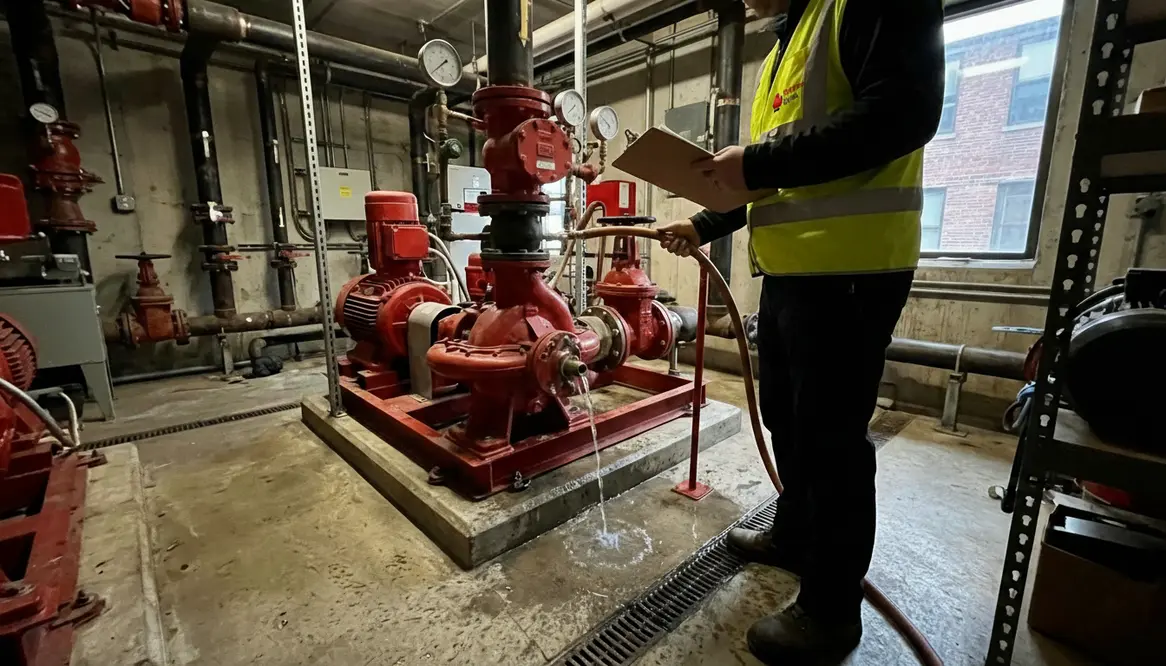
During the test, I measure performance at multiple points. Churn, rated load, and peak demand all matter. Each data point tells a story about the pump’s condition.
And yes, it can feel like a production. Valves opening, water flowing, gauges ticking. If you squint, it almost looks like a scene from a heist movie. Except instead of stealing something, we are protecting everything.
Building A Reliable Annual Testing Playbook
Over time, annual testing becomes less stressful when I treat it like a repeatable playbook: confirm scope, confirm personnel, confirm equipment, confirm water supply, then document every result. The more demanding the building, the more I lean on specialists who live and breathe fire pump testing so nothing gets missed when the system is pushed to its limits.
Staying Compliant Without Overcomplicating It
Compliance does not have to feel overwhelming. In fact, I keep it simple by building a consistent schedule and working with experienced professionals. That combination reduces surprises and keeps systems reliable.
Additionally, I stay informed about local code updates. Regulations evolve, and staying current avoids last minute scrambling. It also shows inspectors that I take safety seriously.
Most importantly, I treat fire pump testing as part of a larger safety strategy. It connects with alarms, sprinklers, and emergency planning. When everything works together, the building becomes far more resilient.
Simple Habits That Keep You Ready
- Plan out the entire year of testing and inspections in advance.
- Assign clear ownership for weekly, monthly, and annual tasks.
- Standardize how data and test reports are stored and labeled.
- Review past issues quarterly so they do not quietly return.
These habits are especially valuable for teams overseeing multiple industrial property fire pumps across a portfolio, where small gaps can add up quickly if no one is watching the whole picture.
FAQ About Fire Pump Testing in New Jersey
How often should fire pumps be tested?
Weekly churn tests, monthly inspections, and annual flow tests are required under NFPA 25.
Who can perform fire pump testing?
Certified professionals with experience in commercial and industrial systems should handle testing.
What happens if I miss a required test?
You risk fines, failed inspections, and potential safety hazards.
Are records really necessary?
Yes. Inspectors require detailed documentation for compliance.
Do all commercial buildings need fire pumps?
Not all, but many large or high risk properties rely on them for proper fire protection.
Conclusion
Fire pump testing is not glamorous, but it is essential. I make it a priority because safety, compliance, and reliability all depend on it. If you manage a commercial or industrial property in New Jersey, now is the time to act. Schedule your testing, review your records, and work with experts who understand these systems inside and out. When everything runs as it should, you gain more than compliance. You gain peace of mind.