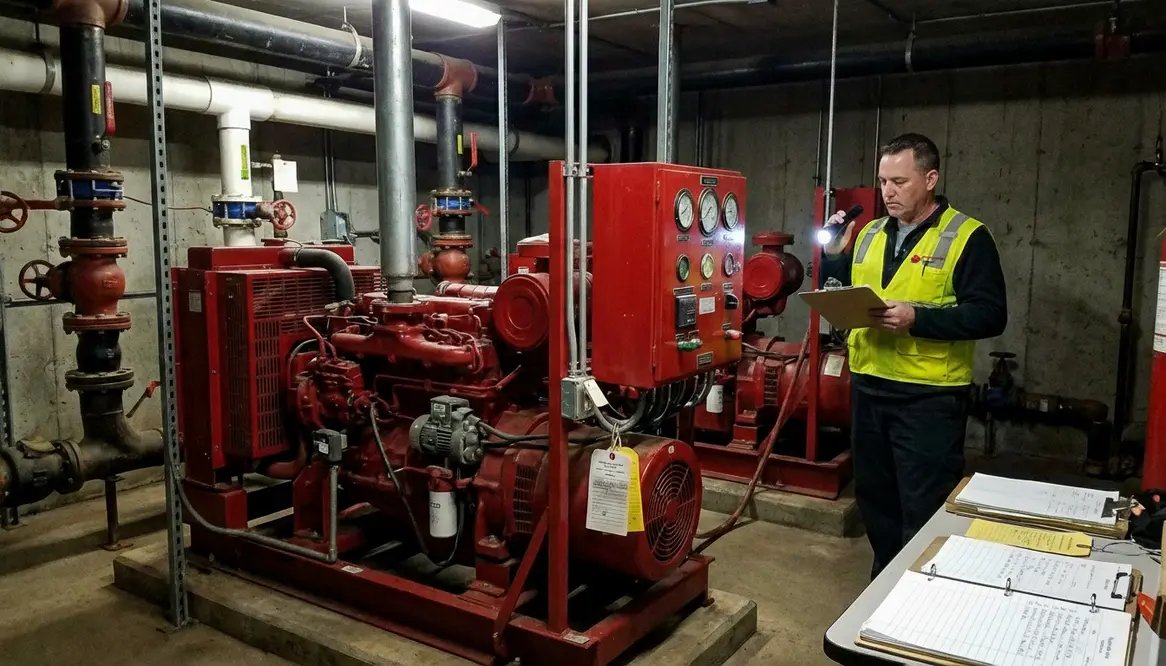
New Jersey Fire Pump Inspection Prep Guide
Turn inspection day from stressful to straightforward by understanding what inspectors really look for, how to avoid common fire pump inspection issues, and how to keep your system ready long before they arrive.
I have seen it time and time again across New Jersey. A pristine commercial building, a well run facility, and then suddenly, fire pump inspection issues show up like an uninvited guest who refuses to leave. And trust me, when it comes to life safety systems, you do not want surprises. Preparing your system properly does more than help you pass an inspection. It protects your property, your people, and your reputation. So let us walk through this calmly, clearly, and with just enough humor to keep things interesting.
What does an inspector actually look for in a New Jersey fire pump inspection?
I like to think of inspectors as detectives, minus the trench coat but with just as much attention to detail. They are focused on performance, reliability, and compliance. First, they check that your fire pump starts automatically and runs at the correct pressure. Then, they review documentation, because if it is not written down, it might as well not exist.
Additionally, they inspect valves, controllers, and power sources. If something looks worn, neglected, or modified without documentation, it raises red flags quickly. Therefore, the goal is simple. Everything should work exactly as designed, and you should be able to prove it.
And yes, they will notice that one gauge you meant to replace six months ago. They always do.
Why this matters before the inspector arrives
When fire pump inspection issues surface unexpectedly, it is rarely about one catastrophic failure. It is usually a mix of small misses: a sticky valve here, a neglected controller alarm there, and documentation that is either incomplete or buried in a drawer. The more you think like the inspector ahead of time, the smoother your inspection will go.
If you want a deeper look at how routine fire pump inspections support performance and compliance, it is worth reviewing this overview of routine fire pump inspections and their importance as a reference point for your own program.
Eliminating Common Fire Pump Inspection Issues Before They Surface
Let me save you some headaches. Most fire pump inspection issues do not appear overnight. They build slowly through small oversights. However, when inspection day arrives, those small issues suddenly feel very big.
Here are the usual suspects I see in commercial and industrial facilities:
- Poor maintenance records that leave gaps in compliance
- Battery failures in diesel driven systems
- Controller alarms that were ignored instead of resolved
- Blocked or partially closed valves
- Inconsistent weekly or monthly testing
Meanwhile, addressing these early keeps your system predictable. Think of it like going to the gym. Skip a few sessions and things start slipping. Ignore your fire pump long enough, and it will absolutely show up on inspection day out of shape.
This is why I always treat recurring fire pump inspection issues as habits, not accidents. Good habits in testing, documentation, and follow up repairs prevent the same problems from reappearing every year.
How I prepare a commercial fire pump system step by step
I approach preparation like a checklist driven routine. No guesswork, no shortcuts. First, I verify that all weekly and monthly tests are completed and logged properly. Then, I physically inspect the pump room. Clean, accessible, and well lit spaces tell inspectors that the system is respected.
Next, I test the pump under load conditions. This is where many hidden problems reveal themselves. Pressure fluctuations, delayed starts, or unusual noises are all signals that something needs attention.
After that, I review the controller settings. Everything must align with manufacturer specifications and local New Jersey codes. Finally, I confirm that all valves are in their correct positions and secured.
It is not glamorous work. No one is making a movie about fire pump prep anytime soon. But it is precise, and it works.
Documentation that actually passes inspection
Paperwork might not save lives directly, but it proves that your system can. Therefore, I treat documentation as part of the system itself. Inspectors want to see consistency, accuracy, and completeness.
I always make sure the following are ready:
- Weekly churn test logs
- Annual flow test results
- Maintenance and repair records
- Controller event logs
Moreover, everything should be organized and easy to access. Handing over a stack of loose papers is not a strategy. It is a gamble. And inspectors are not known for enjoying scavenger hunts.
Turning documentation into your quiet advantage
When everything is logged and easy to reference, inspectors see a pattern of care instead of a scramble to “catch up” before they walk through the door. That alone can reduce tension and keep conversations focused on facts, not guesswork.
In many New Jersey facilities, cleaning up documentation has resolved recurring fire pump inspection issues without even changing hardware. The system was doing its job; the records just were not showing it.
Two column quick prep checklist for busy facility managers
By the time inspection day is on the calendar, you do not want a 30 page playbook. You want something you can walk through quickly and confidently. This simple structure keeps you focused and helps prevent last minute fire pump inspection issues from popping up.
Mechanical Readiness
- Inspect pump and motor condition
- Verify suction and discharge pressures
- Check for leaks or corrosion
- Ensure valves are open and locked
Operational Readiness
- Test automatic start function
- Confirm alarm signals
- Review controller settings
- Validate power supply reliability
By splitting focus this way, I cover both the physical and functional sides of the system. Consequently, nothing slips through the cracks.
Staying ahead of recurring fire pump inspection issues
Consistency wins every time. I have worked with large scale properties across New Jersey where the difference between passing and failing came down to routine discipline. Regular testing, timely repairs, and professional servicing keep your system dependable.
At the same time, I recommend partnering with specialists who understand commercial and industrial demands. These are not small systems, and they should not be treated casually. When handled correctly, your fire pump becomes one of the most reliable assets in your building.
And honestly, that peace of mind is worth its weight in gold. Or at least worth more than the cost of an emergency repair at the worst possible moment.
Remember, most fire pump inspection issues are not mysterious. They are the predictable outcome of skipped testing, deferred maintenance, or forgotten documentation. Build a simple routine that keeps those three areas healthy, and your inspections will start feeling routine instead of risky.
FAQ
Keep your system ready before the next inspection arrives
I believe preparation is the difference between confidence and chaos. When your fire pump system is maintained, documented, and tested with intention, inspections become routine instead of stressful. If you manage a commercial or industrial property in New Jersey, now is the time to act. Schedule a professional evaluation, correct small issues early, and walk into your next inspection knowing everything will perform exactly as it should.
If you are already seeing warning signs or want help tightening up your program so fire pump inspection issues stop appearing year after year, consider partnering with a dedicated fire pump service provider. The right team will help you align your testing schedule, documentation, and maintenance plan so that inspection day feels like a confirmation, not a cliffhanger.