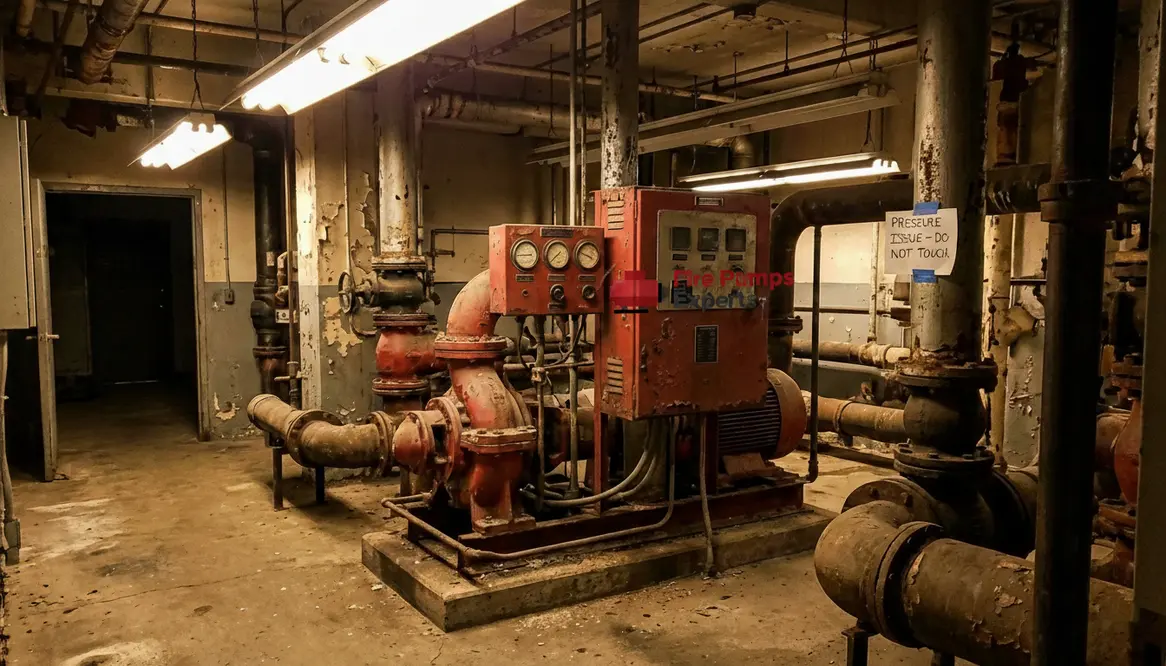
Fire Pump Compliance NJ Water Supply Pressure Issues
I have walked through enough older commercial buildings in New Jersey to know this truth: the past has a way of lingering in the pipes. And more often than not, it shows up as water supply and pressure issues that quietly undermine fire protection systems. Now, those systems may have worked just fine back when flip phones were cutting edge, but today’s compliance standards demand more. So, if your building still leans on legacy infrastructure, it is time to take a closer look before small inefficiencies turn into very expensive problems.
What Fire Pump Compliance Really Means in New Jersey
Let me put it plainly. Fire pump compliance is not just about having a pump in place. It is about ensuring that pump performs under pressure, literally and legally. In New Jersey, codes follow NFPA 20 and NFPA 25 standards, which means your system must be tested, maintained, and capable of delivering the required flow at the right pressure.
Now, older commercial and industrial properties often fall behind here. Over time, components wear down, demand increases, and what once met code quietly drifts out of compliance. Meanwhile, local authorities do not care how charming your 1970s mechanical room looks. They care whether your system works when it counts.
Common Weak Points in Aging Fire Pump Systems
Here is where things get interesting. Older buildings were designed for a different era of water demand. Today, higher occupancy loads and expanded layouts place greater strain on systems that were never built to handle them.
Key trouble spots I see often:
- Outdated controllers that fail modern testing standards
- Corroded piping that restricts flow
- Undersized pumps struggling to meet demand
- Electrical components that belong in a museum
As a result, even if the pump turns on, it may not deliver adequate performance. And yes, that is where those subtle pressure inconsistencies begin to creep in.
Water Supply and Pressure Issues in Legacy Buildings
Now we arrive at a topic that deserves a slow nod and a deep breath. Water supply and pressure issues are the quiet villains of fire protection. They do not announce themselves with alarms. Instead, they whisper through weak flow tests and inconsistent readings.
In many New Jersey municipalities, infrastructure has evolved. However, your building’s connection to that infrastructure may not have kept up. Consequently, fluctuating municipal supply or increased demand in surrounding areas can reduce available pressure right when you need it most.
And let me tell you, hoping for the best during a fire event is not a strategy. That is a gamble. And not the fun kind you see in Ocean’s Eleven.
How I Approach Bringing Older Systems Up to Code
When I step into an older facility, I do not start by replacing everything in sight. That would be dramatic, and while drama has its place, this is not Broadway.
Instead, I focus on a structured approach:
Assessment
I evaluate flow test data, inspect components, and identify performance gaps.
Testing
I simulate real demand conditions to see how the system behaves under stress.
Upgrades
I recommend targeted improvements such as pump replacement, controller upgrades, or pipe modifications.
Documentation
I ensure everything aligns with New Jersey compliance requirements and passes inspection.
Because at the end of the day, compliance is not about guesswork. It is about proof.
Balancing Cost, Compliance, and Long Term Reliability
What Owners Worry About
- Upfront costs
- Operational downtime
- Inspection delays
- Tenant disruption
What I Focus On
- System longevity
- Code alignment
- Performance under load
- Future scalability
Now, here is the honest truth. Cutting corners today almost always leads to higher costs tomorrow. Therefore, I guide property managers toward solutions that hold up over time. Because no one wants to revisit the same problem year after year. That is not maintenance. That is a sequel nobody asked for.
Can My Existing Fire Pump Handle Modern Demand?
Short answer: maybe. Longer answer: only testing will tell.
Even if your system appears functional, it may not meet current flow and pressure requirements. Additionally, evolving fire codes and increased building usage can push older systems beyond their limits.
So, I always recommend a full performance evaluation. Because assumptions in fire protection are like plot twists in bad movies. You see them coming, and they rarely end well.
Why Water Supply Fluctuations Should Not Be Ignored
Let us circle back for a moment. Changes in municipal supply, seasonal demand, and infrastructure upgrades can all contribute to inconsistent flow. Over time, these shifts create water supply and pressure issues that compromise system reliability.
However, with proper testing and system adjustments, these challenges can be managed effectively. Booster pumps, system recalibration, or infrastructure upgrades often restore balance. And when everything works in harmony, compliance becomes far less stressful.
Getting Strategic Support With Fire Pumps
If your facility team is juggling upgrades, inspections, and budgets, you do not have to guess your way through fire pump decisions. A proven service partner can evaluate your building, document real-world performance, and recommend upgrades that address water supply and pressure issues without overbuilding the system.
For example, a specialist provider like Kord Fire’s fire pump services team focuses on compliant design, testing, and maintenance that keep pumps ready for real emergencies, not just paperwork.
Practical Signs Your System Needs Attention
You do not need a stack of lab data to suspect trouble. Day-to-day operation usually leaves clues that water supply and pressure issues are lurking in the background of your fire protection system.
- Flow test readings that slowly trend downward year over year
- Zones that pass tests only when demand is carefully limited
- Unexpected pump starts during what should be low-demand periods
- Tenants reporting pressure swings at fixtures during peak usage
Individually, these may feel like minor annoyances. Together, they paint a picture of a system that is one bad day away from failing a critical test or struggling during an actual fire.
FAQ
Conclusion
If your commercial or industrial building in New Jersey still relies on an aging fire pump system, now is the time to act. I can help you uncover hidden risks, resolve performance gaps, and bring your system into full compliance without unnecessary guesswork. Reach out today, and let us make sure your fire protection system is ready when it matters most. Because when it comes to safety, reliable performance is not optional.