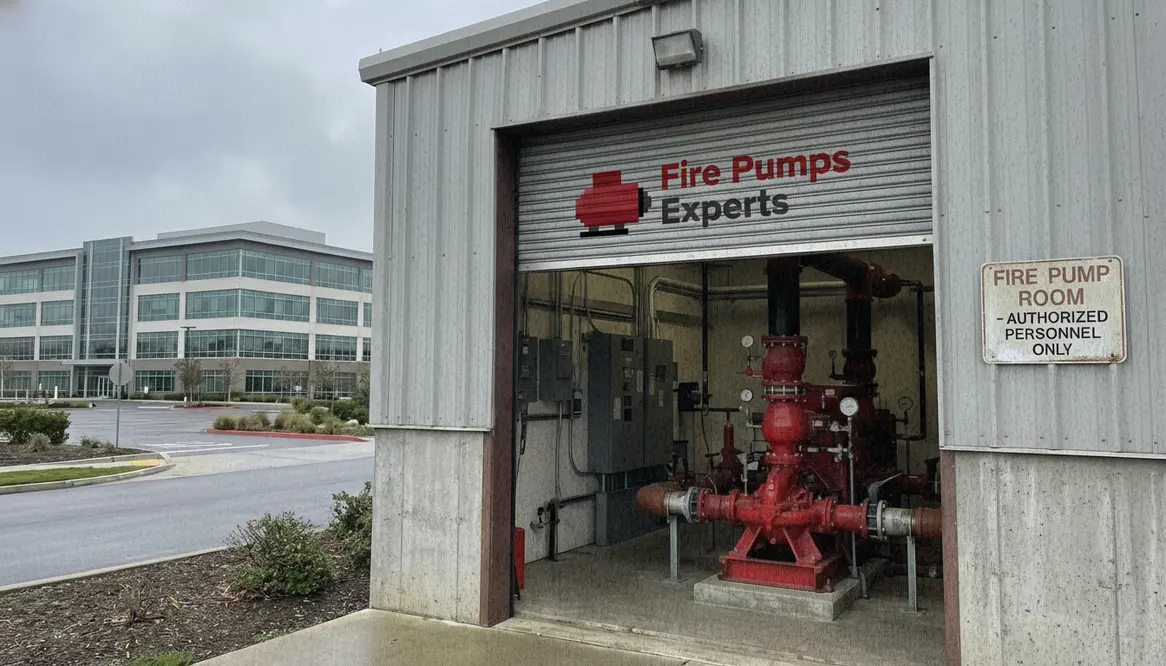
Detached Commercial Building Fire Pumps Guide
A practical look at how detached commercial building fire pumps protect multi tenant properties when it matters most.
I have spent years walking through large properties where safety systems hum quietly in the background, doing their job without applause. Among them, fire pump systems stand as the unsung heroes. When I talk about detached commercial building fire pumps, I am referring to a critical layer of protection designed for scale, complexity, and the kind of risk that comes with multi tenant environments. These systems are not just equipment. They are a promise that when things go wrong, water will move with purpose.
And trust me, when dozens of tenants share a building, “hope for the best” is not a strategy. It is more like a bad plot twist no one asked for.
In multi tenant buildings, a fire pump is less a piece of hardware and more a contract: no matter which floor is in trouble, water pressure shows up like it means it.
What Makes Fire Pump Systems Essential in Multi Tenant Buildings
In a multi tenant building, fire protection is not just about one space. It is about dozens, sometimes hundreds, of independent operations under one roof. Therefore, I always look at fire pump systems as the backbone of the entire suppression network.
These pumps ensure consistent water pressure across multiple floors and zones. Without them, upper levels might see weak flow, and that is a risk no property manager should accept. Moreover, different tenants often have different fire loads. A restaurant, a data center, and a warehouse do not play by the same rules.
Because of this, I rely on properly designed pump systems to balance demand. They respond instantly, pushing water where it is needed without hesitation. It is a bit like having a backstage crew that never misses a cue, even when the script changes mid performance.
Why multi tenant layouts raise the stakes
- More people, more varied risks, more ignition sources.
- Fire loads swing from light office use to heavy storage or cooking operations.
- Evacuation routes are longer and more complex.
- Systems must serve every tenant fairly, even when one space pushes demand to the limit.
How Detached Commercial Building Fire Pumps Improve System Reliability
I have seen firsthand how separating fire pump systems from the main structure can change the game. Detached commercial building fire pumps offer a level of resilience that integrated systems often struggle to match.
Physical separation that buys time
First, they reduce risk exposure. If a fire compromises the main building, the pump system remains protected and operational. That separation alone can mean the difference between control and catastrophe.
Maintenance without chaos
Additionally, maintenance becomes more manageable. Technicians can access the system without disrupting tenants. In large properties, that is not just convenient. It is essential for business continuity.
Compliance that hurts less
Then there is compliance. Codes often favor designs that minimize system vulnerability. Detached setups naturally align with that goal, giving owners fewer headaches during inspections. And let’s be honest, no one enjoys surprise compliance issues. They tend to show up like uninvited guests and stay longer than expected.
Detached commercial building fire pumps sit slightly out of the action so they can stay fully in the fight when the building is under maximum stress.
Design Considerations I Focus On for Large Scale Properties
When I evaluate or plan a system, I do not just look at capacity. I look at behavior under stress. A fire pump system must perform under peak demand, not ideal conditions.
Key elements I prioritize
- Accurate demand calculations across all tenant zones
- Redundant power sources for uninterrupted operation
- Proper pump sizing to avoid over or under performance
- Integration with alarm and monitoring systems
Operational factors I monitor
- Response time during system activation
- Pressure consistency across vertical spaces
- Ease of maintenance access
- Long term durability under continuous readiness
Furthermore, I always account for future growth. Multi tenant buildings evolve. New tenants move in, layouts change, and demand shifts. A rigid system becomes a liability over time, while a flexible one keeps pace without drama.
Common Challenges and How I Solve Them
Let me be clear. Fire pump systems are not “set it and forget it” solutions. They require attention, planning, and sometimes a bit of creative problem solving.
Uneven pressure in tall structures
One common issue is uneven pressure distribution. In taller buildings, gravity is not your friend. So I address this with zoning strategies and pressure regulating components that keep everything balanced.
Power that vanishes when it is needed most
Another challenge is power reliability. Pumps without power are just expensive decorations. Therefore, I ensure backup generators and automatic transfer switches are part of the design. Because when the lights go out, the system still needs to perform like it is opening night on Broadway.
Maintenance without bringing the building to a halt
Maintenance access also comes up often. In busy commercial environments, downtime is costly. That is why I favor layouts that allow service without disrupting tenant operations.
The human factor
And then there is human error. Even the best system can fail if it is misunderstood. So I advocate for clear documentation and regular training. A well informed team is just as important as well built equipment.
Detached commercial building fire pumps solve several of these headaches in one move: better access, lower exposure to building hazards, and cleaner separation of critical equipment from tenant chaos.
How Do I Maintain Peak Performance Over Time
I treat maintenance as a continuous process, not a scheduled chore. Regular testing is non negotiable. Weekly churn tests, monthly inspections, and annual flow tests all play a role in keeping the system ready.
Additionally, I pay close attention to data. Modern monitoring systems provide real time insights into performance. If something drifts out of range, I catch it early. Think of it as listening to the system before it starts shouting.
I also coordinate with certified professionals for detailed evaluations. In large commercial and industrial properties, expertise matters. A small oversight can scale into a big problem, and that is a storyline I prefer to avoid entirely.
A quick snapshot of a strong maintenance program
- Weekly churn tests to keep pumps exercised and ready.
- Monthly visual and functional checks on controls, valves, and alarms.
- Annual flow testing to confirm real world performance.
- Trend analysis of monitoring data to spot drift before it becomes failure.
- Periodic third party reviews to validate assumptions and settings.
FAQ About Fire Pump Systems in Multi Tenant Buildings
Conclusion
If you manage or own a large commercial property, I encourage you to take a closer look at your fire pump system. The right design, especially with detached configurations, strengthens safety and simplifies long term operations. Work with specialists who understand complex buildings and demand precision. When everything is on the line, you want a system that performs without hesitation. Visit https://firepumps.org to explore solutions built for serious properties, and consider how detached commercial building fire pumps could fit into your long term risk strategy.