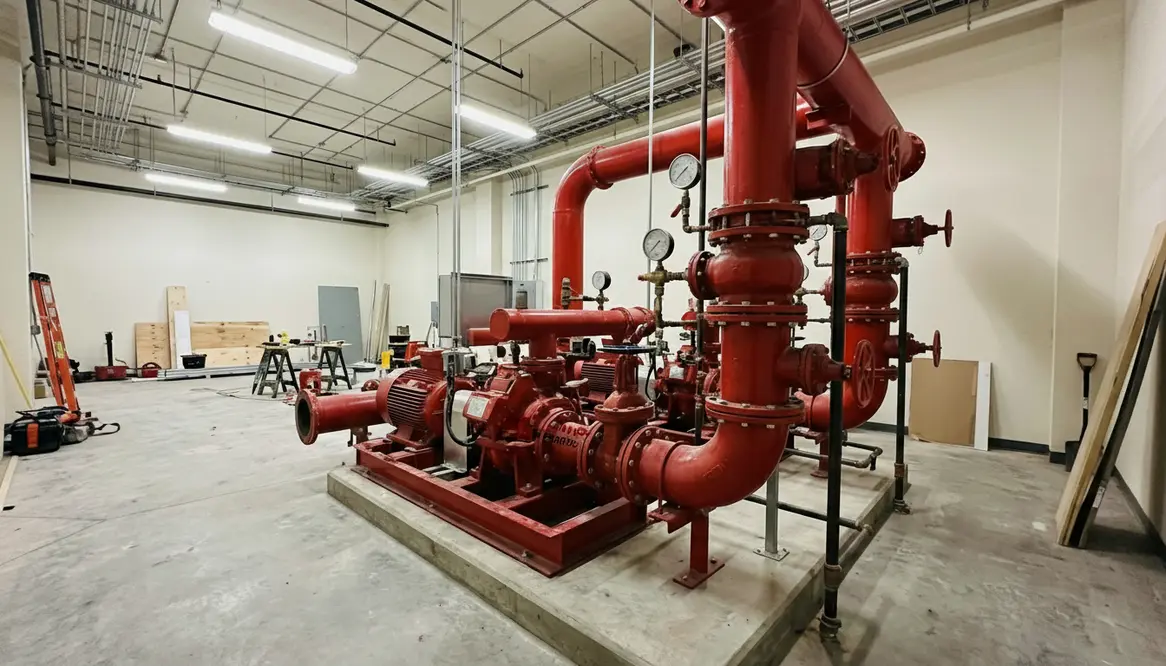
Tenant Improvement Fire Pump Design Convention Centers
I have spent years walking the mechanical corridors of massive buildings, and if there is one system that quietly stands guard over a convention center, it is the fire pump. In projects involving tenant improvement fire pump design, I have seen how small oversights can ripple into very big problems. Convention centers are not your average buildings. They are sprawling, complex, and often packed with people who would rather be thinking about keynote speakers than fire safety. So today, I am going to walk you through what really matters, with a calm voice and just enough humor to keep things human.
Why Convention Centers Demand a Different Level of Fire Pump Design
Convention centers are, in many ways, small cities under one roof. They host thousands of occupants, feature high ceilings, and often include exhibit halls that can change layouts overnight. Because of this, I approach fire pump planning with a mindset that leans toward flexibility and strength.
First, the water demand is significantly higher than typical commercial properties. Large open spaces require extensive sprinkler coverage, and that means the pump must deliver consistent pressure across long distances. In addition, ceiling heights can push systems to their limits. Gravity is not your friend here.
Moreover, codes such as NFPA 20 and NFPA 13 are not just guidelines. They are the rulebook, and ignoring them is like ignoring the instructions while assembling furniture. It may stand for a moment, but eventually, something wobbles.
Occupant Load, Layouts, and Risk Profiles
Unlike an office tower with predictable tenant behavior, convention centers flip personalities weekly. One week it is a comic convention with elaborate props and temporary stages, the next week it is a medical conference with sensitive equipment and enclosed demo rooms. Those wildly different risk profiles should be baked into how tenant improvement fire pump design is approached, especially when new walls, platforms, or displays appear where there used to be clean open floor.
How I Approach Tenant Improvement Fire Pump Design in Large Facilities
When I step into a tenant improvement project inside a convention center, I do not assume the existing system can handle the changes. Instead, I evaluate the current fire pump capacity, flow demand, and pressure requirements.
Then, I ask a simple question. Will this system still perform during peak load conditions?
Often, tenant improvements introduce new hazards. For example, an exhibit hall may transition into a trade show with dense booth layouts, or even temporary storage areas. These changes can increase fire load significantly.
Therefore, I adjust the fire pump configuration accordingly. This may include upgrading pump horsepower, modifying controllers, or recalibrating pressure settings. It is not glamorous work, but it is essential. Think of it as tuning an orchestra. Every component must play in harmony.
Coordination With Sprinkler and Standpipe Systems
None of this happens in isolation. The real effectiveness of tenant improvement fire pump design lives in the coordination with sprinklers, standpipes, and sometimes special suppression systems for high-value exhibits. If a new mezzanine or VIP gallery appears, the hydraulic profile changes. I make it a point to verify that the most remote and demanding points on the system still receive the pressure and flow they are owed.
Key Components That Make or Break Fire Pump Performance
Now, let us get into the mechanics, because this is where things get interesting.
Every fire pump system relies on a few critical components working together:
Pump Unit
This is the heart of the system. Whether electric or diesel driven, it must deliver reliable performance under pressure. Literally.
Controller
The controller ensures the pump activates when needed. A poorly configured controller is like a security guard who sleeps on the job.
Water Supply
Without a stable and adequate water source, even the best pump becomes a very expensive paperweight.
Pressure Maintenance
Jockey pumps play a key role in maintaining system pressure and preventing unnecessary fire pump starts.
Common Issues I See
- Undersized pumps
- Inconsistent pressure zones
- Aging equipment not aligned with new layouts
Smart Solutions
- Hydraulic recalculations
- Zoned system upgrades
- Modern control integration
As a result, when all these elements align, the system becomes not just compliant, but dependable.
What Codes Actually Mean in Real World Applications
Codes can feel like dense reading material, the kind you might use to fall asleep faster. However, in practice, they are incredibly practical.
For convention centers, I pay close attention to flow testing requirements, redundancy expectations, and seismic considerations. Large public assembly spaces often require higher safety margins. That means designing for worst case scenarios, not average ones.
Additionally, local amendments can change the game. Therefore, I always coordinate with local authorities having jurisdiction. It saves time, money, and the occasional headache.
Why Documentation and Testing Matter
Paperwork may not put out fires, but it does keep people honest. Clear documentation of hydraulic calculations, pump curves, and testing results makes it far easier to evaluate later tenant improvement fire pump design needs. When a new show demands temporary walls, heavy drapes, or enclosed demonstration rooms, a solid baseline lets you see quickly whether the original design still holds up.
Can One Fire Pump Handle an Entire Convention Center?
Short answer. Sometimes. Long answer. It depends.
In many cases, a single fire pump may not be sufficient due to the sheer size and varied hazard classifications within a convention center. Instead, I often design systems with multiple zones or even multiple pumps.
This approach improves reliability and ensures consistent coverage. If one section demands higher pressure, it does not compromise the rest of the building. Think of it as having multiple engines instead of one. Redundancy is not overkill. It is smart planning.
Zoning Strategies for Large Convention Centers
Breaking a facility into logical zones allows each area to receive the pressure and density it needs without dragging everything else along for the ride. High-bay exhibit halls, multi-story meeting room wings, attached hotels, and underground parking all behave differently when you run the numbers. That is why tenant improvement fire pump design typically favors zoned risers, pressure-reducing valves where needed, and carefully selected pump capacities that keep both ends of the building happy.
Future Proofing Through Smart Fire Pump Planning
Convention centers evolve constantly. Today it is a tech expo. Tomorrow it might be an international auto show with entirely different fire risks.
So, I design with change in mind. That means leaving room for expansion, selecting adaptable equipment, and ensuring that upgrades can happen without major disruptions.
In tenant improvement fire pump design, this foresight becomes especially valuable. It allows facility managers to adapt quickly without compromising safety. And let us be honest, nobody enjoys ripping out a perfectly good system just because it was not designed for growth.
Technology, Monitoring, and Data
Modern monitoring, trending, and remote notification systems turn fire pumps from mysterious black boxes into well-understood assets. Tracking churn tests, run times, and alarm histories gives a clear picture of how hard the equipment is working. That data becomes fuel for smarter tenant improvement fire pump design decisions the next time a hall gets reconfigured or a big-name event demands unusual staging and power setups.
If you want to see how deep the rabbit hole goes with testing curves, acceptance criteria, and best practices, resources like https://firepumps.org are helpful for keeping both engineers and facility teams on the same page.
FAQ: Fire Pump Requirements for Convention Centers
Instead of guessing your way through design meetings, it helps to tackle the most common questions head on.
Conclusion
When I design fire pump systems for convention centers, I am not just meeting code. I am building resilience into spaces that host thousands of people every day. If you are planning upgrades or navigating a tenant improvement project, now is the time to get it right. Reach out, evaluate your system, and ensure your fire protection strategy is as strong and adaptable as the facility it serves.
Thoughtful tenant improvement fire pump design turns the pump room from an afterthought into a strategic asset. It keeps exhibitors safe, protects investments in lighting, staging, and equipment, and gives event organizers the confidence to push creative boundaries without compromising life safety. That is a quiet victory, but in a crowded convention center, it might be the most important one of all.