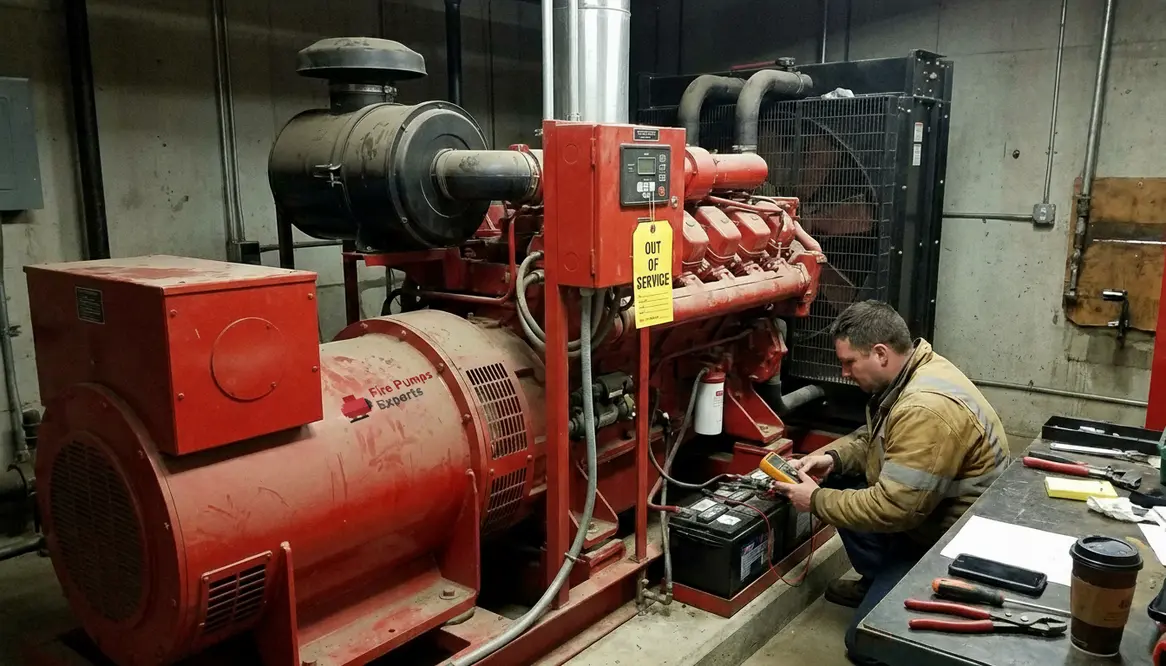
Diesel Fire Pump Not Starting Causes and Fixes
I have seen it more times than I would like to admit. A critical moment arrives, alarms echo through a facility, and then comes the dreaded realization: the diesel fire pump not starting. It is the kind of silence that feels louder than any siren. In commercial and industrial properties, that silence is not just inconvenient. It is a risk no one wants to carry. So, let me walk you through what is really going on behind that stubborn engine, and why it sometimes refuses to wake up when it matters most.
Because, like any good story, there is always a reason. And yes, sometimes it is as simple as a dead battery quietly plotting its revenge.
At-a-Glance: Why Your Pump Stays Silent
- Stale or contaminated diesel choking the system
- Weak batteries that gave up long before the test
- Airflow restrictions that suffocate the engine
- Overprotective controls blocking the start sequence
- Mechanical wear quietly building up over time
Understanding Why a Diesel Fire Pump Refuses to Start
First, I like to ground the problem in reality. A diesel fire pump is not complicated in spirit, but it demands respect in execution. It relies on fuel, air, compression, and electrical control. When one of those elements slips, the system stalls.
However, in large commercial environments, the issue is rarely random. It is usually tied to maintenance gaps, environmental conditions, or overlooked wear. Therefore, when I approach a non starting pump, I do not guess. I follow a chain of logic.
Think of it like diagnosing a classic car. Except this one is responsible for protecting an entire facility. No pressure, right?
The Core Elements Behind Every Start
Fuel: Clean, available, and flowing at the right pressure.
Air: Unrestricted intake and clear exhaust paths.
Compression: Healthy internal components and sealing.
Control: Electrical and control logic that actually allows the engine to start.
Fuel System Failures That Quietly Shut Everything Down
Let me start with the most common culprit: fuel. Without it, nothing moves. Yet, the issue is not always an empty tank. In fact, I often find fuel contamination or clogged lines causing the trouble.
For example, water in diesel fuel can creep in through condensation. Over time, that moisture disrupts combustion. Additionally, blocked filters restrict flow, starving the engine.
What I Check First In The Fuel System
- Fuel tank levels and quality
- Clogged or aging fuel filters
- Air trapped in fuel lines
- Faulty fuel transfer pumps
Moreover, facilities that rely on backup fuel storage sometimes forget rotation schedules. Diesel does not age like fine wine. It ages like milk left out during a summer blockbuster marathon.
Fuel Tips To Prevent A Diesel Fire Pump Not Starting
- Use stabilizers and follow a strict fuel rotation schedule.
- Inspect tanks for water and contamination on a set calendar.
- Replace filters before they become a mystery restriction.
- Document every fuel-related inspection so trends do not sneak up on you.
Electrical and Battery Issues That Stop the Start Sequence
Now, here is where things get interesting. A diesel engine may not need spark plugs, but it absolutely depends on a strong electrical system to start.
In many cases of a diesel fire pump not starting, I find weak or failed batteries at the center of the problem. Control panels may look fine, yet underneath, the stored energy simply is not there.
Additionally, corroded terminals or loose connections can interrupt the starting signal. It is a small detail, but it carries big consequences.
Common Electrical Issues
- Dead or undercharged batteries
- Loose wiring connections
- Corrosion on terminals
- Faulty starter motor
What I Look For
- Voltage consistency under load
- Clean and tight connections
- Routine battery testing logs
- Starter response time
And yes, I have seen situations where everything looked perfect on paper, but the battery had quietly given up weeks earlier. It is like showing up to a big meeting with a dead phone. Technically prepared, practically stuck.
If you have a diesel fire pump not starting and the batteries are more of a rumor than a documented fact, it is time to put testing, replacement intervals, and torque checks for terminals on a written schedule.
Air Intake and Exhaust Restrictions You Might Overlook
Next, I turn my attention to airflow. Engines breathe, and when that breathing is restricted, performance suffers immediately.
Blocked air filters, obstructed intake paths, or even debris in exhaust systems can prevent ignition. In industrial settings, dust and particles build up faster than many expect.
Therefore, I always inspect:
- Air filters for clogging
- Intake vents for obstructions
- Exhaust outlets for blockages
It sounds simple, yet it is often ignored. And like trying to run a marathon while breathing through a straw, the engine simply refuses to cooperate.
Simple Airflow Habits With Big Payoffs
Schedule filter inspections around known dusty operations, keep intake and exhaust pathways clearly marked and unobstructed, and add airflow checks to your routine testing. These tiny habits help avoid the next complaint about a diesel fire pump not starting for a reason as preventable as a dirty filter.
Why Is My Diesel Fire Pump Not Starting During Testing?
This is a question I hear often, especially from facility managers running scheduled inspections. The answer usually lies in consistency.
Testing conditions do not always match real world demands. For instance, a pump that sits idle for long periods can develop internal friction or minor component degradation. When finally activated, it struggles.
Additionally, control panel settings or sensor faults may interrupt the sequence. These systems are designed to protect the engine, but sometimes they become overly cautious.
Turn Test Runs Into Real Insight
- Record suction and discharge pressures during every test.
- Note cranking time from start signal to full speed.
- Verify that alarms and status indications match actual pump behavior.
- Regularly review logs for slow changes in performance.
That is why I recommend routine, properly documented testing. Not just running the pump, but analyzing how it performs under load. If you want a deeper look into proper maintenance standards, I often point teams toward commercial fire pump system best practices as a solid reference.
Mechanical Wear That Builds Up Over Time
Finally, we cannot ignore the physical reality of machinery. Parts wear down. Seals weaken. Components drift out of alignment.
In large scale facilities, where pumps may sit idle for extended periods, this wear becomes subtle but significant. Bearings may stiffen. Cooling systems may degrade. Compression may drop.
Consequently, the engine loses its ability to start efficiently.
I always remind teams that inactivity is not harmless. In fact, it can be just as damaging as overuse. Much like an old gym membership, unused equipment tends to decline quietly in the background.
Mechanical Red Flags To Catch Early
- Unusual noises or vibration during weekly tests
- Slower acceleration to rated speed
- Rising operating temperatures under the same load
- Repeated complaints about the diesel fire pump not starting after sitting idle
FAQ: Quick Answers for Fast Troubleshooting
Sometimes a diesel fire pump not starting is the first symptom you notice, but the real cause has been building quietly for months. These quick answers help narrow your focus when time is short and alarms are already in the air.
Conclusion: Keep It Ready Before It Is Needed
I always say this: a fire pump should never surprise you. If a diesel fire pump not starting becomes a discovery instead of an expectation, something in the process has already slipped. Stay ahead with routine checks, fuel quality control, and electrical testing. When you treat your system like a priority, it responds the same way. If you manage a commercial or industrial facility, now is the time to tighten your maintenance strategy and ensure your fire protection never hesitates.