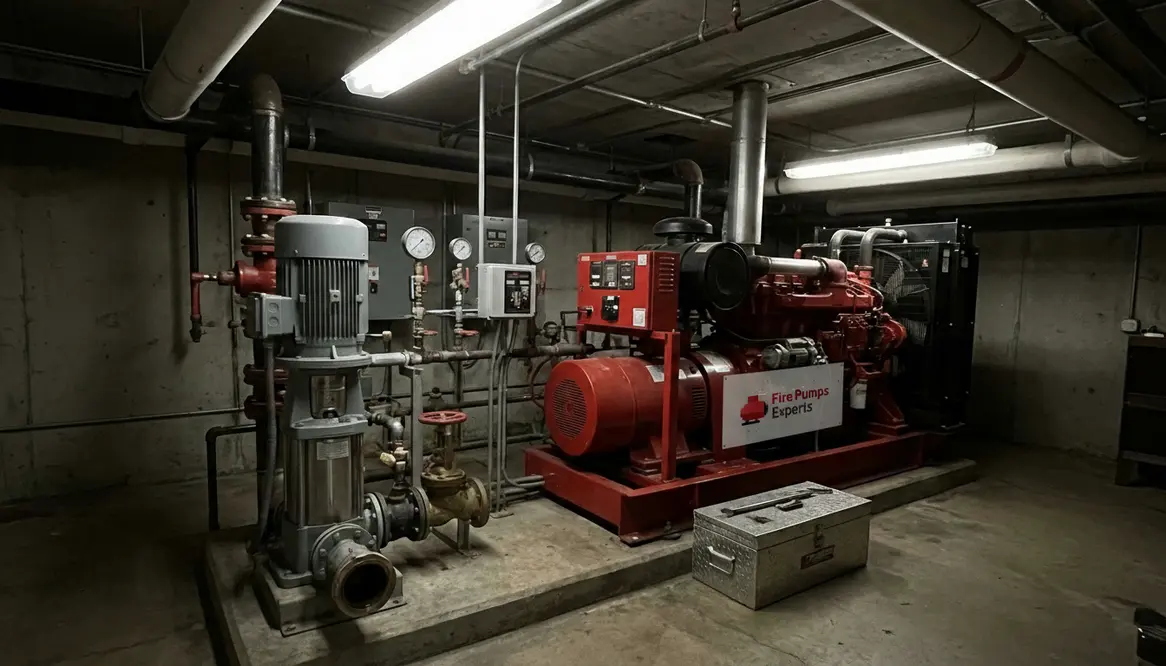
Jockey Pump vs Fire Pump Key Differences Explained
I have spent years around pump rooms that hum like quiet engines of safety, and if there is one comparison that keeps coming up, it is the classic jockey pump vs fire pump debate. At first glance, they seem like teammates doing the same job. However, once you look closer, you realize they play very different roles. Think Batman and Alfred. Both critical, but only one is jumping into the flames. Today, I will walk you through how these systems differ, how they work together, and why commercial and industrial facilities simply cannot afford to confuse the two.
Understanding the Roles in a Fire Protection System
Let me set the stage. In large commercial buildings, water based fire protection systems rely on pressure stability. Without it, sprinklers become unreliable, alarms misfire, and safety turns into a guessing game.
A fire pump is the heavy lifter. It delivers high pressure water when a fire event occurs. Meanwhile, a jockey pump quietly maintains system pressure during normal conditions. Because of this, the system stays ready without constantly triggering the main pump.
In other words, one handles emergencies, while the other prevents unnecessary ones. And yes, one works a lot harder, but the other works a lot smarter.
Jockey Pump vs Fire Pump: Key Differences Explained
Now let us get into the heart of it. When people ask me about jockey pump vs fire pump, they usually want a clear, no nonsense breakdown. So here it is.
Jockey Pump
- Maintains pressure in the system
- Operates during small pressure drops
- Prevents frequent cycling of the fire pump
- Uses lower flow and power
Fire Pump
- Activates during actual fire demand
- Delivers high flow and pressure
- Supports sprinkler and standpipe systems
- Designed for emergency operation
So while the fire pump gets the glory, the jockey pump ensures the hero only shows up when truly needed. Without that balance, systems wear out faster, and operational costs climb.
How Do Jockey Pumps Work in Fire Systems?
I like to describe jockey pumps as the system’s quiet guardian. They monitor pressure constantly. Whenever there is a small drop, maybe from a minor leak or temperature change, they step in and restore balance.
Because of this, the fire pump stays inactive until a real emergency occurs. That distinction matters more than most people realize. Frequent starts on a fire pump can cause wear, increase maintenance costs, and shorten its lifespan.
Moreover, in large scale facilities like manufacturing plants or high rise buildings, stability is everything. A well tuned jockey pump ensures the entire system remains ready without unnecessary stress.
And let us be honest, nobody wants their fire pump kicking on every time someone sneezes near a valve.
When Does a Fire Pump Take Over?
A fire pump does not deal in small problems. It waits for a significant drop in pressure, usually caused by an activated sprinkler or hose demand. Then it starts, and when it does, it commits fully.
Unlike the jockey pump, the fire pump delivers high volume water flow. This supports fire suppression systems across large commercial or industrial properties. It is built for reliability under pressure, both literally and figuratively.
Additionally, these pumps often connect to dedicated power sources such as diesel engines or backup generators. That way, even during power outages, they continue to operate.
If the jockey pump is the calm manager, the fire pump is the action hero kicking down the door. Both are essential, but they show up at very different times.
Side by Side Comparison for Facility Decision Makers
When I consult with facility managers, they often want a quick visual comparison. So here is a simple side by side breakdown.
Jockey Pump Snapshot
Maintains pressure
Handles minor drops
Runs frequently
Low power usage
Fire Pump Snapshot
Delivers emergency flow
Responds to major demand
Runs only during events
High power output
This contrast highlights why both are necessary. Removing one would compromise the entire system. It is not a competition. It is a partnership, and understanding jockey pump vs fire pump is really about understanding how protection and efficiency work together.
Choosing the Right Setup for Commercial and Industrial Buildings
If you manage a large facility, your focus should not be choosing between them. Instead, you need to ensure both are properly sized, installed, and maintained.
For example, an oversized jockey pump can mask real system issues. On the other hand, an undersized one may fail to maintain pressure effectively. Similarly, a fire pump must meet the specific demand of your building’s fire protection system.
I always recommend working with trusted industry experts like commercial fire pump system specialists who understand the complexities of large scale installations. Because in these environments, there is no room for guesswork.
Also, routine testing is not optional. It ensures both pumps perform exactly when needed. And when safety is on the line, precision matters more than convenience. If you are comparing jockey pump vs fire pump performance in your building, testing is where theory meets reality.
FAQ: Quick Answers About Fire Pumps and Jockey Pumps
Here are straightforward answers to common questions that come up whenever someone starts comparing jockey pump vs fire pump operation and maintenance in real world systems.
Final Thoughts and Next Steps
When I think about jockey pump vs fire pump, I see a system built on balance. One maintains calm, the other delivers force. Together, they protect lives and property without hesitation. If you oversee a commercial or industrial facility, now is the time to evaluate your system, confirm proper sizing, and schedule routine testing. Reach out to experienced professionals who understand large scale fire protection, because when the moment comes, your system should not hesitate, and neither should you.