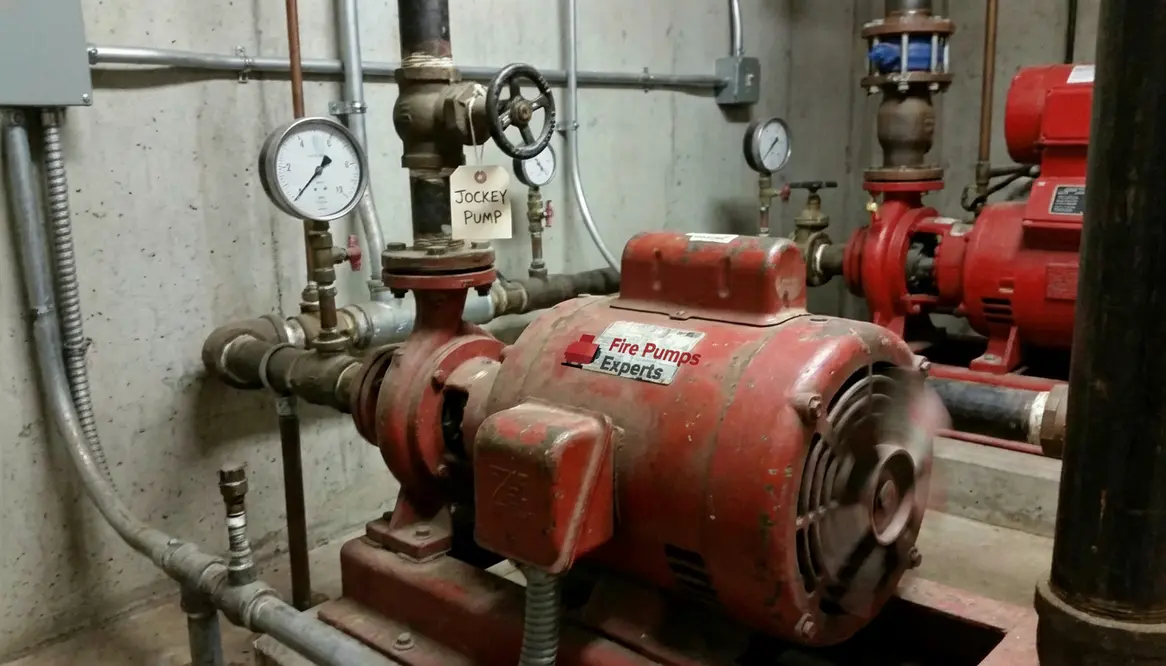
Why Your Jockey Pump Keeps Running Causes and Fixes
I have seen it more times than I can count. A facility manager calls and says, “the jockey pump keeps running, and it just won’t quit.” At first, it sounds like a minor annoyance. However, in a commercial or industrial fire protection system, that quiet, persistent hum is more like a whisper from the system saying, “something isn’t right.” And if we ignore it, that whisper can turn into a very expensive shout.
So let me walk you through it, calmly and clearly, with just enough wit to keep us both awake. Because troubleshooting a jockey pump is not exactly a blockbuster movie, but with the right lens, it can be just as gripping.
What a Jockey Pump Is Really Doing Behind the Scenes
First, I like to ground the conversation. A jockey pump is not the hero of the system. It is more like the stage manager. It keeps pressure stable in a fire sprinkler system so the main fire pump does not jump into action every time there is a tiny fluctuation.
In large commercial buildings, even a small pressure drop can happen from temperature changes or minor valve seepage. That is where the jockey pump steps in. It quietly restores pressure and then stops. Or at least, that is what it is supposed to do.
When the jockey pump keeps running, it is no longer maintaining balance. It is chasing something. And like a detective in a crime drama, we need to figure out what.
Why Does a Jockey Pump Keep Running?
Let’s get straight to it. When I see continuous operation, I immediately think about pressure loss somewhere in the system. The pump is doing its job. It just cannot catch up.
Here are the usual suspects:
System leaks
Even a small leak in a large facility can cause constant pressure drop. Over time, the pump keeps compensating and never reaches its cut off point. That is one of the most common reasons a jockey pump keeps running far longer than it should.
Faulty pressure switch
Sometimes the issue is not physical but electrical. A miscalibrated or failing pressure switch may not signal the pump to stop.
Check valve failure
Water can flow backward if a check valve fails. As a result, pressure bleeds off, and the jockey pump keeps running to maintain levels.
Improper settings
If the cut in and cut out pressures are too close, the pump cycles excessively or runs continuously. It is like setting your thermostat to fight itself.
Each of these causes points to one thing. The system is out of balance, and the jockey pump is working overtime to fix it.
How I Diagnose the Problem Step by Step
When I approach a system where the jockey pump keeps running, I do not guess. I follow a sequence. Think of it as less “random troubleshooting” and more “methodical investigation.”
Step 1: Watch the pressure
I check system pressure readings over time. If pressure never stabilizes, I suspect a leak.
Step 2: Isolate sections
I isolate sections of the system. This helps pinpoint where pressure loss occurs.
Step 3: Inspect hardware
I inspect valves and fittings. Even a slightly open drain valve can cause trouble.
Step 4: Test the pressure switch
I test the pressure switch. If it is not responding correctly, it goes on the replacement list.
Step 5: Review settings
I review system settings. Sometimes the issue is not mechanical but human.
Step 6: Verify check valves
I verify check valves. Backflow is sneaky, and it loves to hide.
By the end of this process, the cause usually reveals itself. Not dramatically, of course. This is not a superhero movie. It is more like a slow reveal in a detective series.
Common Mistakes That Make the Problem Worse
Now here is where things get interesting. I have seen well intentioned fixes make the situation worse. And yes, sometimes they come with a confident “we already tried that.”
Ignoring small leaks
People assume minor leaks are harmless. However, in large systems, even small losses add up quickly.
Adjusting pressure blindly
Turning knobs without understanding the system can create new problems. It is like trying to fix your Wi Fi by yelling at the router.
Delaying maintenance
A jockey pump that runs constantly is already signaling distress. Waiting only increases wear and energy costs. When a jockey pump keeps running week after week, it is your cue that the system wants attention, not a shrug.
Instead, I always recommend a structured inspection. For facilities managing critical infrastructure, partnering with experts like commercial fire pump system specialists ensures the issue is resolved correctly the first time.
How to Prevent Continuous Running in the Future
Once we fix the issue, the next step is prevention. Because let’s be honest, no one wants to revisit this problem next quarter or wonder again why a jockey pump keeps running in the middle of a quiet night shift.
Schedule routine inspections
Regular checks catch leaks and component wear early.
Monitor pressure trends
Digital monitoring can reveal subtle changes before they become major issues.
Maintain valves and switches
These small components play a big role in system stability.
Document system settings
Clear records prevent accidental misconfiguration during maintenance.
With these steps, the system stays balanced, and the jockey pump returns to its quiet, reliable role.
FAQ: Quick Answers About Jockey Pump Issues
Conclusion: Take Control Before the System Takes Control
When the jockey pump keeps running, it is not just a technical glitch. It is a signal that your system needs attention. I always tell facility teams to act early, diagnose carefully, and fix the root cause instead of chasing symptoms. If you want reliability and peace of mind, bring in experienced professionals who understand large scale systems. Because in fire protection, quiet confidence beats last minute panic every single time.