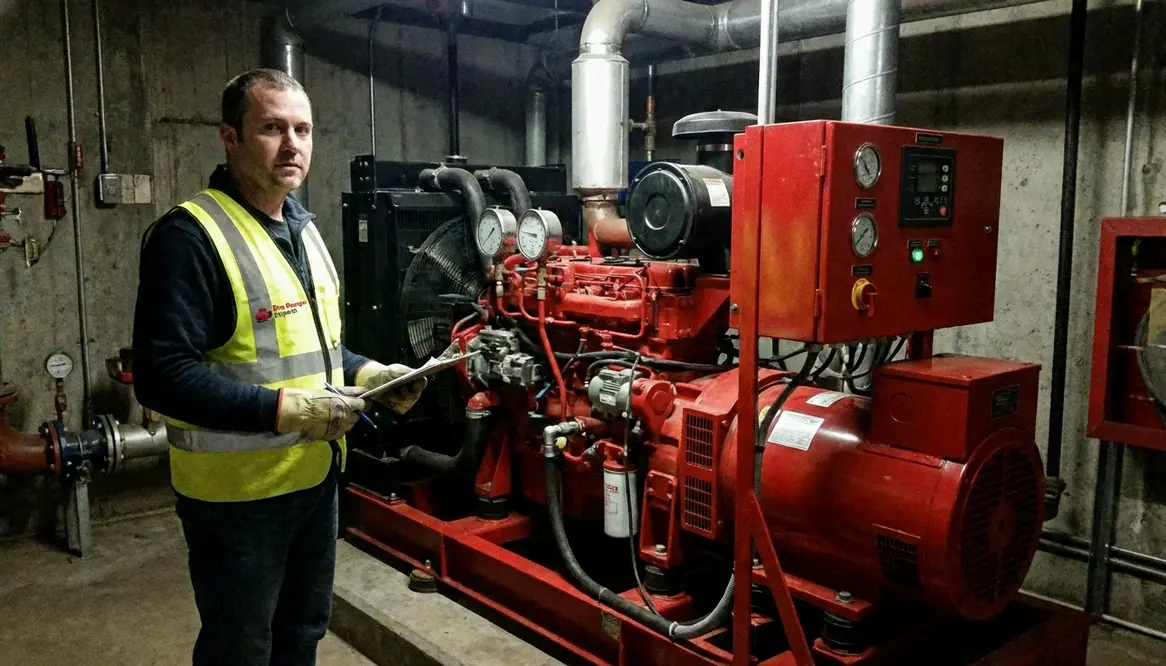
Diesel Fire Pump Weekly Test Step by Step Guide
I have always believed that a well maintained fire protection system is a quiet promise. It sits in the background, waiting patiently for a moment no one wants to experience. At the center of that promise in many commercial and industrial facilities is the diesel fire pump. And yes, the diesel fire pump weekly test might not sound exciting, but ignore it and you are basically trusting your building’s safety to hope and good vibes. Spoiler alert, hope is not a maintenance strategy.
So let me walk you through this process in a way that is clear, practical, and just engaging enough to keep you from checking your phone halfway through.
Why I Take the Diesel Fire Pump Weekly Test Seriously
First, let me set the tone. A diesel fire pump is not decorative equipment. It exists for one reason, and it does not get a second chance to perform. Therefore, the weekly pump test ensures that every moving part works when it matters most.
In large commercial buildings and industrial facilities, systems sit idle for long stretches. Because of that, issues like battery failure, fuel contamination, or controller faults can creep in quietly. However, a consistent testing routine exposes those problems early.
And honestly, I prefer finding a problem during a calm Tuesday morning test rather than during an actual emergency. That is the difference between a controlled fix and a very expensive lesson.
How Do I Perform a Diesel Fire Pump Weekly Test Step by Step?
Let’s get into it. When I run a weekly diesel fire pump inspection, I follow a deliberate sequence. No shortcuts. No guesswork.
Here is my process:
- Visual inspection first
I check for leaks, loose connections, and anything that looks out of place. If it looks suspicious, it probably is. - Fuel level and quality
Diesel degrades over time. Therefore, I confirm the tank is full and the fuel is clean. - Battery check
A diesel pump lives and dies by its batteries. I inspect charge levels and connections carefully. - Controller status
I verify that the controller shows normal operation with no alarms. - Start the pump
Then, I run the pump using the test header or flow method. I listen closely. Smooth operation is the goal. Grinding noises are not part of the soundtrack. - Monitor pressure and speed
While running, I watch discharge pressure and engine RPM to confirm proper performance. - Run duration
I typically run it for at least 30 minutes, ensuring stable operation throughout. - Shutdown and review
Finally, I log all readings and note anything unusual.
It is a rhythm. Once you know it, you can spot irregularities almost instantly.
Common Problems I Watch for During Weekly Testing
Now here is where experience earns its keep. During a weekly pump test, I am not just checking boxes. I am looking for patterns.
For example, slow starts often point to battery issues. On the other hand, fluctuating pressure can signal air in the system or valve problems. And if the engine hesitates, well, that is your early warning sign.
Meanwhile, overheating is another red flag. Diesel engines should run steady, not like they just finished a marathon.
I also keep an eye on exhaust color. Clean exhaust is ideal. Thick smoke, however, is your system’s way of saying something is off. It is not subtle about it either.
In facilities with high stakes operations, these small clues matter. That is why many property managers rely on professional support from resources like commercial fire pump maintenance specialists to ensure nothing slips through the cracks.
Key Components I Never Overlook
Mechanical Focus
- Pump bearings and alignment
- Cooling system function
- Fuel lines and filters
- Exhaust system condition
Electrical Focus
- Battery voltage and terminals
- Controller wiring
- Alarm systems
- Automatic start signals
By splitting my attention between mechanical and electrical components, I reduce the chance of missing something critical. Think of it like checking both the engine and the brain of the system.
What Makes Weekly Testing Different From Other Inspections
It is easy to assume all inspections are the same. They are not. Weekly testing is about consistency and early detection.
Monthly and annual inspections go deeper, of course. However, the weekly routine builds a performance history. Because of that, I can compare data over time and spot gradual changes.
Additionally, weekly checks reinforce reliability. A diesel engine that runs regularly tends to behave better. It is a bit like a classic car. Let it sit too long, and it develops personality traits you did not ask for.
So while it may feel repetitive, the diesel fire pump weekly test is the backbone of system reliability. Over time, that steady rhythm of checking, recording, and adjusting turns into a very real layer of protection for the property and everyone in it.
FAQ About Diesel Fire Pump Weekly Test
Before getting into specifics, it helps to remember that the diesel fire pump weekly test is about proving, every single week, that the system is ready. The questions below come up constantly in facilities that take reliability seriously.
Closing Thoughts and Next Steps
If you manage a commercial or industrial property, the diesel fire pump is not something you “get around to.” It demands attention now, not later. A consistent testing routine protects your building, your people, and your investment. If you want confidence instead of guesswork, bring in experienced professionals, refine your process, and treat every weekly test like it matters. Because one day, it absolutely will.
Build the habit, document every result, pay attention to the small warning signs, and treat the diesel fire pump weekly test as an essential part of your safety culture, not just another task on a checklist.