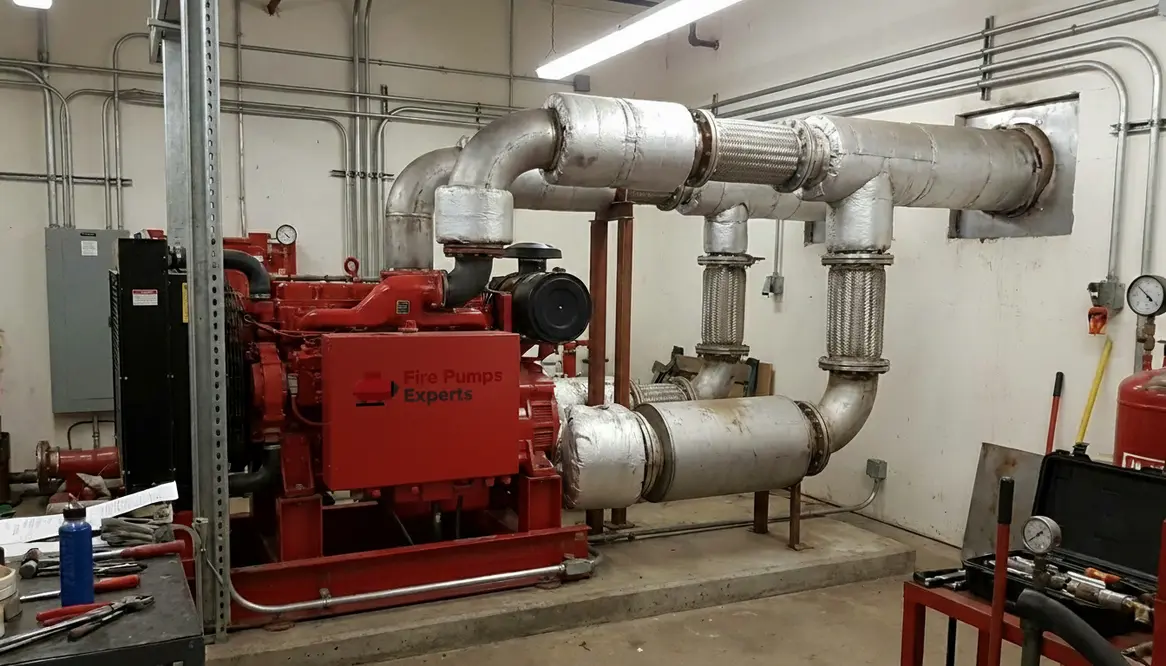
Diesel Fire Pump Exhaust Requirements Guide
I have spent enough time around pump rooms to know this truth: when a diesel fire pump starts, it does not whisper. It roars like it just remembered it has a job to do. And with that roar comes heat, fumes, and pressure. That is where diesel fire pump exhaust requirements step in. Within the first moments of operation, exhaust gases must move safely and efficiently out of the building, or you are trading one emergency for another. In large commercial and industrial properties, getting this right is not just about compliance. It is about protecting people, equipment, and the structure itself.
Understanding Diesel Fire Pump Exhaust Requirements in Real World Systems
I like to think of the exhaust system as the unsung bodyguard of the fire pump. While the pump gets the spotlight, the exhaust quietly handles the dangerous byproducts. These systems must direct hot gases away from occupied spaces, reduce backpressure, and prevent heat damage to surrounding materials.
Moreover, codes such as NFPA 20 guide how exhaust piping should be routed, insulated, and terminated. I always recommend reviewing commercial fire pump system standards and guidance when planning or upgrading a system. That resource keeps things grounded in what actually works in large facilities.
However, beyond code language, I focus on practical flow. Exhaust should exit as directly as possible. Long, winding routes might look clever on paper, but they slow gases down and increase heat buildup. And trust me, hot exhaust trapped in a pump room is about as welcome as a smoke machine at a fire drill.
How Should Exhaust Be Routed in a Diesel Fire Pump Room?
Let me answer this the way most facility managers would ask it in a real moment of need. Keep it short, direct, and effective.
First, I route exhaust piping to the outdoors with minimal bends. Every turn adds resistance. Next, I ensure the discharge point sits far from air intakes, windows, or pedestrian areas. No one wants to walk into a cloud of diesel exhaust on their lunch break.
Additionally, I use proper insulation. Exhaust pipes can reach extremely high temperatures, so insulation protects nearby equipment and reduces fire risk. Finally, I support the piping well. Vibration from the engine can loosen connections over time if the system is not secured properly.
Core Components That Make or Break Compliance
When I inspect a system, I focus on a few key components. Each one plays a role in meeting diesel fire pump exhaust requirements without cutting corners.
Exhaust Piping
I look for materials that can handle high heat and corrosion. Steel is common, but it must be properly rated.
Flexible Connectors
These absorb vibration between the engine and piping. Without them, stress cracks can form over time.
Mufflers
Not always required, but often installed to control noise. Because not every facility wants to sound like a racetrack during testing.
Insulation
This protects both people and equipment. It also helps maintain system efficiency.
Termination Points
The outlet must safely disperse gases outdoors, away from critical areas.
Condensate Management
I ensure moisture does not collect in the system, which can lead to corrosion or blockage.
Common Mistakes I See in Large Facilities
Even in high value buildings, I still run into the same issues. And yes, some of them make me raise an eyebrow.
First, oversized exhaust runs. Bigger is not always better. If the diameter is too large, gases cool too quickly and condensation builds up. Second, poor routing near air intakes. That one feels obvious, yet it happens more often than you would think.
Then there is the classic shortcut of skipping insulation in less visible areas. Out of sight should not mean out of mind. Heat does not care if the pipe is tucked behind a wall.
Finally, I sometimes see systems installed without considering maintenance access. If technicians cannot reach components easily, small issues turn into expensive repairs. And nobody enjoys a surprise budget meeting.
Design Considerations for High Rise and Industrial Properties
In larger buildings, exhaust design becomes more strategic. I account for vertical routing, structural constraints, and long distances to exterior walls. Consequently, I often need to balance efficiency with space limitations.
For high rise properties, routing exhaust upward may seem logical, but it requires careful planning to maintain proper draft and avoid excessive backpressure. In industrial facilities, on the other hand, I usually have more flexibility, but I still need to coordinate with other systems like HVAC and process equipment.
Additionally, I pay attention to how the exhaust interacts with surrounding operations. In a manufacturing plant, for example, exhaust discharge cannot interfere with production areas or sensitive materials.
In both cases, aligning with diesel fire pump exhaust requirements ensures the system performs reliably when it matters most. Because when a fire event occurs, there is no time for second guesses.
Getting these details right means your approach to diesel fire pump exhaust requirements is more than just checking boxes. It becomes part of a strategy to protect people, assets, and the building’s long-term operation.
FAQ About Diesel Fire Pump Exhaust Systems
Final Thoughts and Next Steps
When I look at a diesel fire pump system, I see more than pipes and engines. I see a chain of decisions that either protect a building or leave it exposed. If you manage a commercial or industrial property, now is the time to review your exhaust setup, correct weak points, and align with proven standards. Reach out to experienced professionals, evaluate your system thoroughly, and make improvements before they are needed. Because preparation always beats reaction.