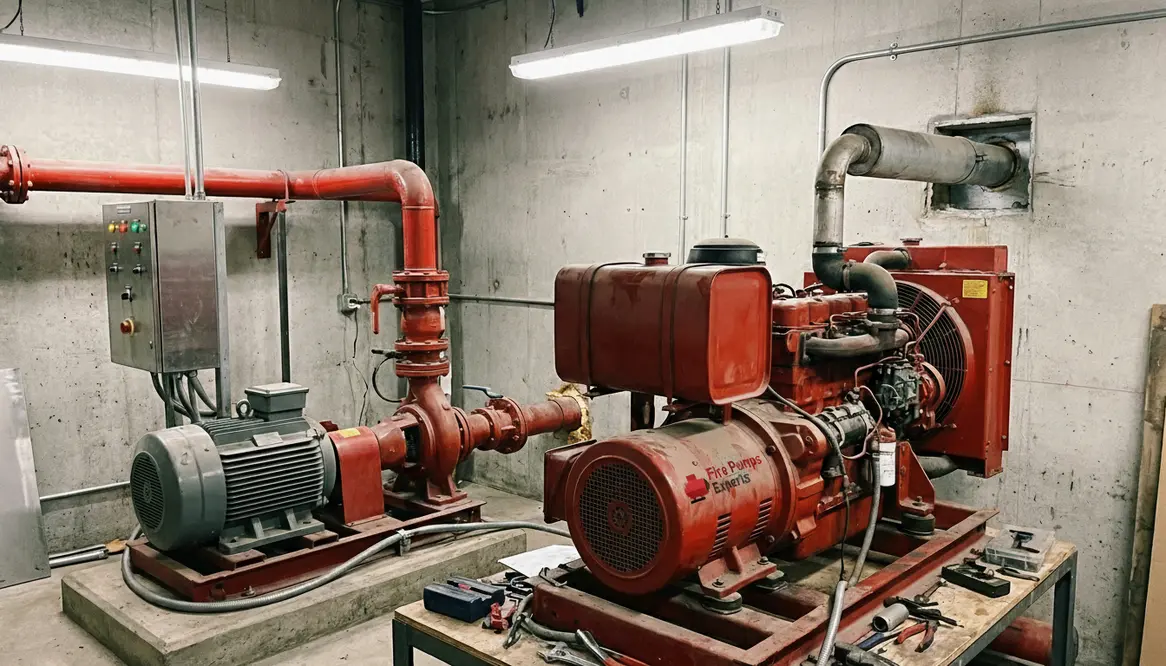
Electric Fire Pump vs Diesel Fire Pump Guide
I have spent enough time around pump rooms to know this truth: when a fire starts, nobody cares about brand names or shiny paint. They care about one thing. Water, delivered with force and reliability. That is where the conversation around electric fire pump vs diesel fire pump begins. It is not just a technical choice. It is a decision that shapes how your facility responds when everything is on the line. And yes, it can feel a bit like choosing between Batman and Iron Man. Both get the job done. They just do it differently.
So let me walk you through it in a way that is practical, grounded, and maybe even a little entertaining.
What do I really need in a fire pump system?
First, I focus on the environment. Commercial towers, manufacturing plants, data centers, and distribution hubs all demand consistency. However, they do not all have the same infrastructure. That matters.
I always ask myself three things. Do I have reliable power? How critical is uptime? And what level of maintenance can my team realistically handle?
Because while both pump types meet fire protection standards, they behave very differently under pressure. Literally.
Electric driven systems rely on a steady power supply. Meanwhile, diesel powered units bring their own energy source to the party, like that one friend who shows up with snacks and a backup plan.
Electric fire pump vs diesel fire pump: power source realities
Let us talk power, because that is where the fork in the road appears.
Electric pumps connect directly to your facility’s electrical system. As a result, they offer clean operation, quieter performance, and lower emissions. I often recommend them for high rise commercial buildings where utility power is stable and backed by generators.
However, when the grid fails and no backup exists, an electric pump becomes a very expensive paperweight. Not ideal.
On the other hand, diesel pumps operate independently. They do not care if the lights go out. In fact, they expect it. Because of this, I see them often in industrial sites, remote facilities, and large campuses where power reliability is uncertain.
Still, diesel units come with tradeoffs. They are louder, require fuel storage, and need regular engine maintenance. Think of them as rugged but a little high maintenance, like a classic muscle car.
Electric Pump Strengths
- Quiet operation
- Lower maintenance
- No fuel handling
- Ideal for stable urban grids
Diesel Pump Strengths
- Independent power source
- Reliable during outages
- Strong for remote sites
- No reliance on utility supply
Installation and space considerations I cannot ignore
Now, let us step into the pump room. Because space is never as generous as we wish it was.
Electric pumps are compact and simpler to install. They do not need exhaust systems or large fuel tanks. Therefore, they fit neatly into tighter mechanical rooms, which is often the case in commercial high rises.
Diesel systems, however, demand more breathing room. I have to account for fuel storage, ventilation, and exhaust routing. Consequently, they require careful planning during design and retrofits. And yes, I have seen projects where someone forgot about exhaust clearance. That conversation did not end well.
Maintenance, testing, and long term reliability
This is where reality settles in. Because installing a fire pump is only the beginning.
Electric pumps are straightforward. Routine inspections and periodic testing keep them ready. In addition, they have fewer moving parts, which means fewer surprises.
Diesel pumps, on the other hand, need more attention. I schedule regular engine checks, fuel quality monitoring, and battery maintenance. Otherwise, the system may fail when it is needed most.
However, here is the twist. When maintained properly, diesel pumps can be incredibly dependable. They are built for harsh conditions and long durations. So the question becomes not just what you install, but how committed you are to maintaining it.
Electric fire pump vs diesel fire pump in compliance and risk planning
Codes and standards guide every decision I make. And thankfully, both options meet fire protection requirements when installed correctly.
That said, risk tolerance plays a major role. In facilities where continuous operation is critical, such as data centers or manufacturing plants, I often lean toward diesel or a combination system. Redundancy matters.
Meanwhile, in urban commercial buildings with strong infrastructure, electric pumps make perfect sense. They align with sustainability goals and simplify operations. It is not about which is better in general. It is about which is better for your specific risk profile.
So which one do I choose for my facility?
If I have stable power, limited space, and a focus on efficiency, I choose electric. It is clean, simple, and reliable under the right conditions.
But if I face uncertain power, high risk, or remote operations, I go diesel. It gives me independence and peace of mind.
And sometimes, I do not choose just one. In large scale facilities, combining both systems creates redundancy that can handle almost anything. Think of it as having both Superman and Wonder Woman on call. Overkill? Maybe. Effective? Absolutely.
If you are building out or upgrading a fire protection strategy and want to go deeper on standards, NFPA 20 fire pump system requirements are a powerful lens for comparing electric fire pump vs diesel fire pump in real world applications.
FAQ
Below are practical answers to the most common questions people ask when weighing electric fire pump vs diesel fire pump options for their facilities.
Final thoughts and next steps
Choosing the right fire pump is not just a box to check. It is a commitment to safety, uptime, and smart planning. I always recommend evaluating your power reliability, facility demands, and maintenance capabilities before making the call.
If you are managing a commercial or industrial property, now is the time to review your system and ensure it matches your real world risks. The right decision today can make all the difference when it matters most, especially when you weigh electric fire pump vs diesel fire pump against how your building actually operates under stress.
Electric fire pump vs diesel fire pump is ultimately a question about your risk tolerance, infrastructure, and willingness to maintain what you install. When those three pieces line up, your fire pump stops being a mystery in a mechanical room and becomes a quiet, reliable partner in keeping people and property safe.