EN 12845 Fire Pump Power Supply Checks Guide
A practical walkthrough of what actually matters when checking an EN 12845 power supply for fire pumps in commercial and industrial buildings.
EN 12845 Fire Pump Power Supply Requirements: What I Check First
When I look at an EN 12845 power supply, I do not start with the shiny parts. I start with the part that keeps the whole fire pump alive when everything else goes quiet. That is the real job. In commercial and industrial buildings, a fire pump must come on fast, stay steady, and do its work without drama. And honestly, that is the kind of hero we all want in an emergency. Not flashy. Just reliable. Like the good sequel everyone forgot to complain about.
EN 12845 sets the rules for sprinkler system fire pumps, and the power supply is a big piece of that puzzle. So, I will walk through what I check, why it matters, and how I make sure the pump does not become a very expensive paperweight when the building needs it most. When I talk about an EN 12845 power supply, I am talking about the one link in the chain that absolutely cannot afford to fail.
What EN 12845 expects from a fire pump power source
First, I look at the main rule: the pump needs a power supply that can support safe and dependable operation. For electric fire pumps, EN 12845 expects a dedicated supply that is not shared with normal building loads in a way that could cause trouble. In plain terms, the fire pump should not have to compete with office lights, chillers, or that one machine everyone swears is essential until the fire alarm sounds.
Next, I check whether the supply can handle starting current. Fire pumps pull a lot of power at start up, so the system must support that surge without a voltage drop that could stop the motor from coming up to speed. That is why I pay close attention to cable size, voltage stability, and upstream protection. If those parts are weak, the pump may fail at the one moment it matters.
Also, I look for a clear, dedicated arrangement that helps the pump stay available during an emergency. In many projects, this means a direct supply path, strong protection strategy, and a layout that limits the chance of accidental shutdown. In other words, the power path should be boring. Boring is beautiful when fire protection is on the line, and a solid EN 12845 power supply makes that possible.
Key expectations in simple terms
- A dedicated EN 12845 power supply that is clearly identified and not casually shared with non essential loads.
- A supply path that can withstand motor starting current without excessive voltage drop.
- Protection devices that protect the system without tripping at the slightest hint of excitement.
- A layout that makes accidental isolation or shutdown far less likely, even on a busy site.
When those expectations are met, the fire pump is far more likely to start, run, and stay running when the building is under maximum stress.
How I check the electrical setup for reliability
After that, I move to the practical side. I review the source, the cables, the control gear, and the protection devices. I want to see a setup that supports the pump without nuisance trips. A fire pump system should not quit because a device feels a little dramatic. We want resilience, not theatre.
Here is the dual view I use when I review a site:
Supply side
I confirm the source has enough capacity, the routing is sensible, and the fire pump has a dependable connection. I also check whether the supply remains suitable under emergency conditions and whether any single fault could cut the pump off too easily.
Control side
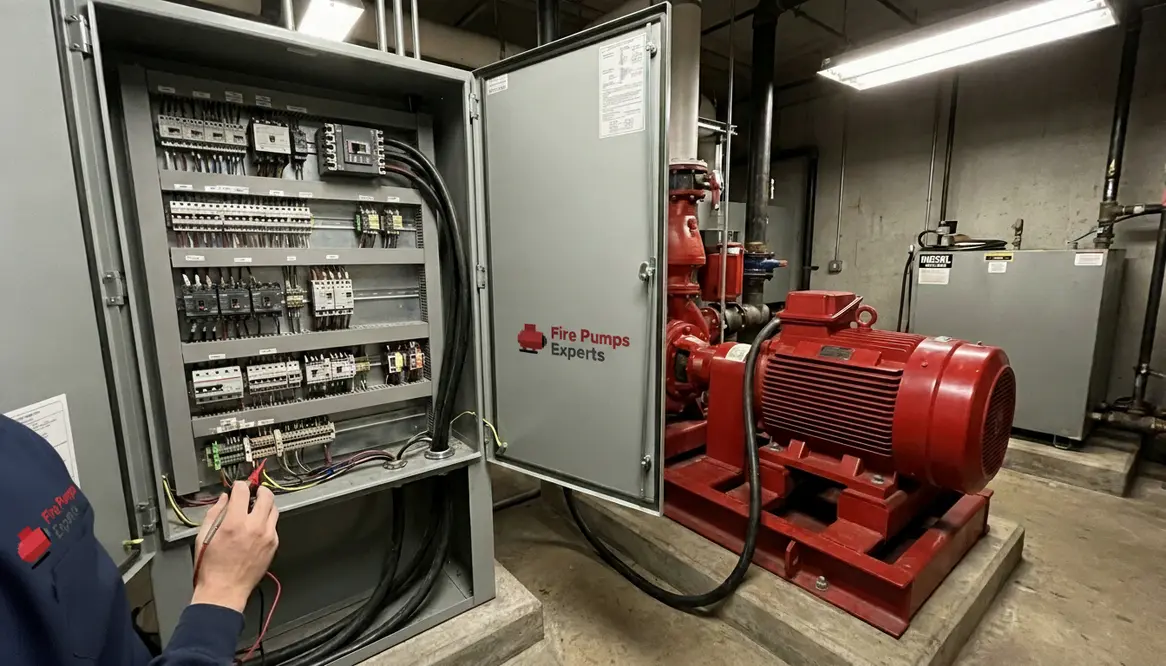
I look at the controller, starting method, monitoring features, and alarm signals. I want clear status feedback, proper fault indication, and a layout that helps staff and service teams act fast. If the panel looks like a spaceship, fine. But I still need it to be easy to trust.
Moreover, I check the environment around the equipment. Heat, water risk, and physical damage can all hurt reliability. So, I make sure the room and cable routes support the system, not fight it. A strong design does not stop at the pump skid. It runs through the whole electrical chain and keeps the EN 12845 power supply in good shape all the way from source to motor terminals.
Why backup power matters in major properties
For commercial and industrial facilities, backup power is not a nice extra. It is part of the plan. If the main power fails, the fire pump still has to do its job. That is why I look for a proper emergency arrangement, often with a diesel driven pump or a backup source that meets the project needs. The best choice depends on the building, the fire risk, and the site layout.
Now, let me be clear. I do not treat backup power like a vague comfort blanket. I treat it like a business rule. A warehouse, data center, production plant, or large mixed use property can face serious loss if the pump does not run. So, I make sure the system can support critical fire flow when power cuts, faults, or grid issues hit. And yes, the grid can be moody. It has its days.
Furthermore, I always think about maintenance access. A backup system only helps if people can test and service it without delay. Regular checks, fuel care where needed, and proper alarm monitoring all help keep the system ready. I like systems that do not make the team play detective every time they inspect them.
Backup and the EN 12845 power supply
A well designed EN 12845 power supply does not stop at the normal grid connection. It ties in clearly with standby sources, diesel pump arrangements, or other emergency provisions so that one fault does not become a single point of failure for the entire sprinkler system.
EN 12845 power supply checks I never skip
When I assess an EN 12845 power supply, I never skip the basics. These checks keep the pump honest:
- I confirm the supply is dedicated and clearly identified.
- I check that the start up load will not cause failure or major voltage drop.
- I review cable size, protection devices, and routing for strength and safety.
- I verify the controller shows faults, run status, and supply issues clearly.
- I make sure the backup arrangement matches the building risk and use.
- I confirm the system supports testing and maintenance without confusion.
Also, I keep one eye on coordination. The fire pump supply must work with the rest of the fire protection setup, not against it. That means good design, clear labels, and smart separation from non essential circuits. If a circuit serves a coffee machine, a lobby screen, and the pump controller all at once, I start asking hard questions. Politely, of course.
Making the checks stick
These checks are not box ticking. They are the difference between a fire pump that is there in name only and one that stands up when the sprinklers call for it. Every strong EN 12845 power supply I see has this same backbone of clear identification, robust capacity, and clean separation from everything that does not matter in a fire.
How I turn the rules into a practical site decision
In the real world, I use EN 12845 to answer one simple question: will this pump power up when the building needs fire protection most? If the answer feels shaky, I dig deeper. I check the source, the controls, the starting method, and the backup path until I can trust the system. That is the standard I want for major properties, and that is the standard I recommend for serious sites.
Paper compliance is not enough. The EN 12845 power supply has to make sense on the ground, in the real plant room, with the real people who will stand there while alarms are sounding and sprinklers are running. If they cannot see what is happening or how to respond, the design has missed the mark.
From drawings to a live, trusted system
- Start at the source: confirm capacity, reliability, and separation from non essential loads.
- Follow the path: trace cables, protections, and any changeover points all the way to the controller.
- Stand at the panel: check the layout, indications, alarms, and manual controls with real people in mind.
- Test the story: ask how the EN 12845 power supply behaves during faults, during maintenance, and during full flow testing.
By the time I am done, I want a clear, simple story: when the building is in trouble, the fire pump starts, stays supplied, and does what it was built to do.
Frequently asked questions
Bringing it all together
If you manage a commercial or industrial property, now is the time to review your fire pump power setup with care. I recommend checking your supply path, backup arrangement, and control gear before a fault makes the decision for you. A calm, predictable EN 12845 power supply is one of the most valuable assets your sprinkler system can have when everything else is going wrong.
For stronger guidance and support built around major properties, visit firepump system support for commercial and industrial facilities and take the next step toward a more reliable fire protection setup.