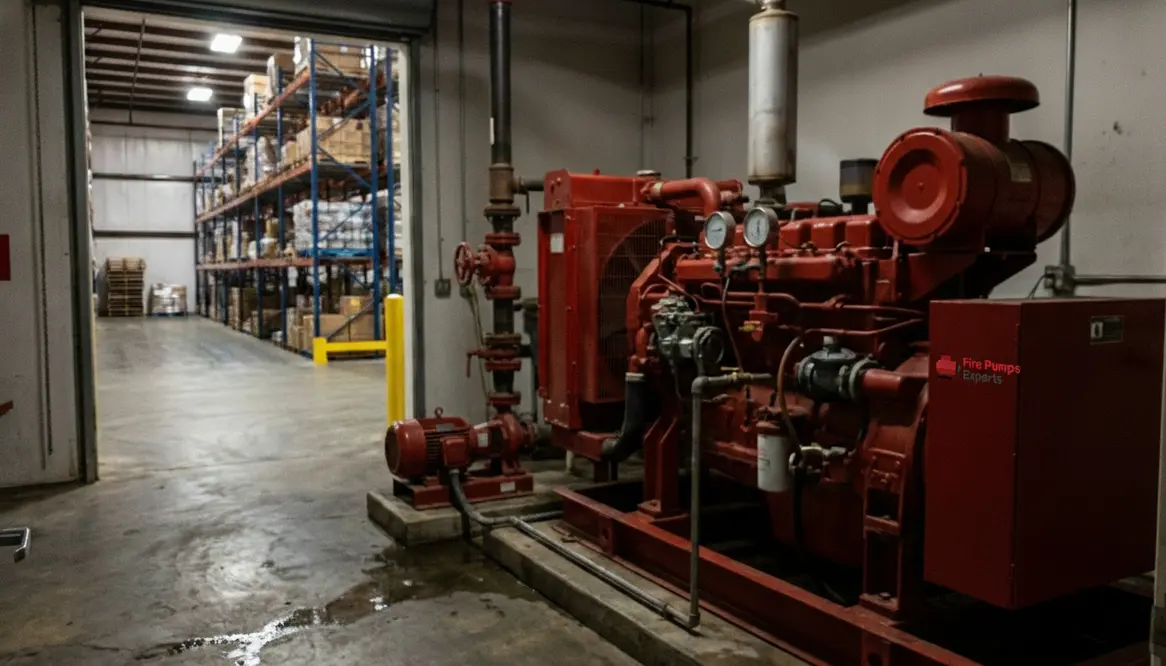
EN 12845 Fire Pump Requirements for Warehouses
EN 12845 Fire Pump Requirements for Warehouses shape how I think about fire safety in large commercial and industrial spaces. When I look at EN 12845 warehouses, I see more than racks, forklifts, and busy loading bays. I see a place where water supply, pump choice, and system reliability can decide whether a small fire stays small or turns into a costly shutdown. And yes, fire safety can sound dull at first, but so does a weather report until lightning shows up. In this article, I break down the practical rules that matter, in plain language, so you can see what your warehouse needs and why it matters.
What EN 12845 means for warehouse fire pumps
EN 12845 sets the baseline for automatic sprinkler systems in commercial and industrial buildings. For warehouses, that means I must look closely at demand, water supply, and pump performance. The standard does not treat every storage space the same, because stored goods, rack height, and fire load all change the risk. So, I start with the building use, then I check the sprinkler design, and only then do I size the pump.
The fire pump supports the sprinkler system when the main water supply cannot meet the needed flow and pressure on its own. That is the whole job, and it is a serious one. If the pump fails, the whole system can stumble like a movie hero without a backup plan. EN 12845 expects the pump to deliver the right pressure for the full duration of the design fire scenario, not just a quick burst.
How I size the pump for warehouse demand
To size a pump, I first look at the sprinkler hazard category, storage arrangement, and total water demand. Then I check the pressure losses in the pipe network, valves, and any backflow devices. After that, I add the safety margin that keeps the system stable under real conditions. This is where careful design matters, because a warehouse is not a neat little box. It is usually a maze of aisles, stock changes, and expansion plans.
Here is how I approach the key checks:
Dual view of the main design points
Water demand side
- The sprinkler system needs enough flow for the full protected area.
- The stored goods type and rack height affect the required water supply.
- The design must support the expected fire growth in the storage area.
Pump side
- The pump must meet the needed flow at the required pressure.
- The suction supply must stay reliable under peak demand.
- The driver, electric or diesel, must match the site risk and power security.
As a result, I never treat the pump as a separate item. I treat it as part of the full water system. That mindset saves trouble later, and it keeps the design honest.
What warehouse sites must include for compliance
EN 12845 expects more than a pump sitting in a plant room and looking important. It calls for a complete, dependable setup. I check the water source first. If the supply comes from a tank, I verify the size, refill method, and usable water volume. If the supply comes from town mains, I confirm that pressure and flow stay stable when the system runs under load.
I also look at pump room access, ventilation, drainage, frost protection, and maintenance space. A fire pump cannot hide in a cramped corner like a forgotten prop from a sci fi set. It needs room to breathe and be serviced. In addition, the system should include controls, alarms, test lines, and clear signs so staff can inspect and test it without guesswork. Regular testing matters too, because a pump that works on paper only helps in the meeting, not in the fire.
Why reliability matters in EN 12845 warehouses
Warehouse fires spread fast. Cardboard, packaging, plastics, and high storage loads can raise the heat quickly. That is why reliability sits at the center of EN 12845. I want the pump to start when called, keep running, and hold pressure for the required time. Therefore, I also consider failure points such as power loss, blocked suction, poor maintenance, and frozen pipework.
For larger sites, I often recommend a careful review of alarms and weekly test routines. A small fault can hide for weeks, then show up at the worst moment, which is a very rude habit. So, I push for simple checks, clear logs, and trained staff. That way, the system stays ready, and the warehouse stays open for business instead of starring in a very expensive incident report.
All of this becomes even more important in EN 12845 warehouses that rely on complex storage or seasonal stock swings. The more the layout and inventory change, the more closely the fire pump and sprinkler performance need to be watched.
Do fire pump rules differ for big warehouses?
Yes, they often do, because bigger storage spaces usually bring higher fire loads and longer pipe runs. As the site grows, pressure loss rises and water demand can climb fast. So, I look harder at pump capacity, tank volume, and the layout of the sprinkler zones. I also pay close attention to future changes, because warehouses never stay still for long. One year it is general storage, and the next year it holds taller racks and faster stock flow.
For that reason, I advise planning with growth in mind. If the system barely meets today’s demand, it may fall short after a fit out or expansion. A stronger design now often costs less than a rushed upgrade later. And let us be honest, nobody enjoys emergency rework. It is the office version of realizing the sequel was better planned than the original.
In high-bay EN 12845 warehouses with deep-rack storage, small oversights in pump sizing or water storage can turn into large performance gaps. That is why I like to see a clear link between the storage strategy, the sprinkler layout, and the pump curve, not three separate documents pretending they have never met.
FAQ about EN 12845 fire pump needs
Conclusion
If you manage a warehouse, I recommend treating EN 12845 fire pump design as a core business decision, not a box ticking job. The right pump, the right water supply, and the right checks protect stock, staff, and uptime. So, if you are planning a new site or reviewing an existing one, take a fresh look now. A proper review today can save time, money, and a great deal of fire related drama later. And if your site falls under the category of EN 12845 warehouses, that review is not just good practice; it is part of keeping the whole operation honest, resilient, and ready for the day the “boring” fire protection system has to be the hero of the story.