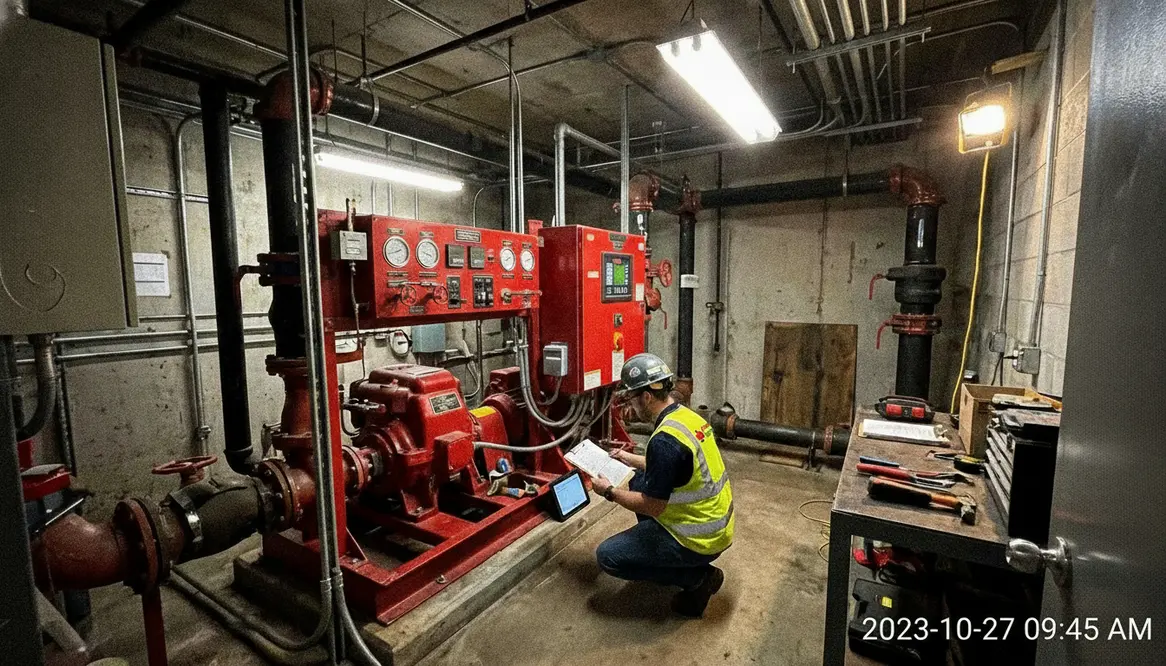
Preparation makes the test safer and more useful. So, I start by verifying that the pump room is clean, dry, and easy to access. Then I check whether the pump area has clear labels, no blocked pathways, and no storage that should have never been there in the first place. Facility teams in industrial sites often deal with tighter spaces, heavier loads, and more wear, so small issues can grow fast.
After that, I confirm that the water supply is stable and the system is ready for a live run. I also warn the right people before testing starts. This matters because pressure changes can affect active operations in a large property. A good test should protect the building without creating fresh chaos in the loading bay.
Dual view: what I inspect and why it matters
Inspection point
Controller, valves, fuel, batteries, and alarms
Inspection point
Flow, pressure, and run time
Inspection point
Leaks, vibration, and noise
Why I check it
These items show whether the pump will start, run, and keep pressure during a fire event
Why I check it
These numbers confirm the pump matches the protection design for the facility
Why I check it
These signs often point to wear, poor alignment, or a fault that needs repair
How I record results and spot trouble early
Once the test ends, I write down every reading right away. I do not trust memory for critical safety work because memory can be dramatic, and not in a useful way. I record the date, test type, pump start time, pressure at each stage, flow results, and any fault notes. Then I compare the numbers with previous tests to spot slow changes.
For example, a small drop in discharge pressure may not look serious on day one. However, if the trend continues, it can point to suction loss, worn parts, or a controller issue. That is the value of regular EN 12845 testing. It gives facility teams a pattern, and patterns tell the truth before failures do.
When facility teams should call a specialist
I always suggest specialist support when the pump fails to start, pressure drops below the design need, or alarms do not respond correctly. Also, if the system shows repeated faults, strange vibration, or fuel delivery issues on diesel units, the site should act fast. In major properties and industrial plants, fire pump problems can affect the whole protection plan.
For teams that want deeper guidance, I recommend reviewing the EN 12845 fire pump testing guide for commercial and industrial facilities. It gives useful direction for sites that need dependable fire pump performance and proper maintenance planning.
FAQ
Conclusion
If you manage a commercial or industrial facility, I urge you to treat EN 12845 testing as a core safety task, not a side chore. A fire pump only helps when it performs under pressure, and your checklist keeps that promise alive. So, review your test process, tighten your records, and fix small issues before they grow teeth. If you want stronger protection and less guesswork, now is the time to act and bring your fire pump testing routine up to standard.
Preparation makes the test safer and more useful. So, I start by verifying that the pump room is clean, dry, and easy to access. Then I check whether the pump area has clear labels, no blocked pathways, and no storage that should have never been there in the first place. Facility teams in industrial sites often deal with tighter spaces, heavier loads, and more wear, so small issues can grow fast.
After that, I confirm that the water supply is stable and the system is ready for a live run. I also warn the right people before testing starts. This matters because pressure changes can affect active operations in a large property. A good test should protect the building without creating fresh chaos in the loading bay.
Dual view: what I inspect and why it matters
Inspection point
Controller, valves, fuel, batteries, and alarms
Inspection point
Flow, pressure, and run time
Inspection point
Leaks, vibration, and noise
Why I check it
These items show whether the pump will start, run, and keep pressure during a fire event
Why I check it
These numbers confirm the pump matches the protection design for the facility
Why I check it
These signs often point to wear, poor alignment, or a fault that needs repair
How I record results and spot trouble early
Once the test ends, I write down every reading right away. I do not trust memory for critical safety work because memory can be dramatic, and not in a useful way. I record the date, test type, pump start time, pressure at each stage, flow results, and any fault notes. Then I compare the numbers with previous tests to spot slow changes.
For example, a small drop in discharge pressure may not look serious on day one. However, if the trend continues, it can point to suction loss, worn parts, or a controller issue. That is the value of regular EN 12845 testing. It gives facility teams a pattern, and patterns tell the truth before failures do.
When facility teams should call a specialist
I always suggest specialist support when the pump fails to start, pressure drops below the design need, or alarms do not respond correctly. Also, if the system shows repeated faults, strange vibration, or fuel delivery issues on diesel units, the site should act fast. In major properties and industrial plants, fire pump problems can affect the whole protection plan.
For teams that want deeper guidance, I recommend reviewing the EN 12845 fire pump testing guide for commercial and industrial facilities. It gives useful direction for sites that need dependable fire pump performance and proper maintenance planning.
FAQ
Conclusion
If you manage a commercial or industrial facility, I urge you to treat EN 12845 testing as a core safety task, not a side chore. A fire pump only helps when it performs under pressure, and your checklist keeps that promise alive. So, review your test process, tighten your records, and fix small issues before they grow teeth. If you want stronger protection and less guesswork, now is the time to act and bring your fire pump testing routine up to standard.
First, I check the pump’s ability to start, build pressure, and hold stable performance. In a commercial or industrial building, that means the system must support the sprinkler network under real demand, not just look good on paper. So, I look at the jockey pump, electric or diesel fire pump, valves, controllers, suction lines, and discharge pressure. Then I confirm that the pump responds fast and runs smoothly.
Next, I compare the result to the site’s approved design and the EN 12845 requirement. If the flow, pressure, or start time falls short, the facility team needs action, not excuses. Fire safety does not care about “almost passed.” It is not a Marvel movie; there is no sequel if the first response fails.
EN 12845 testing checklist for facility teams
Here is the practical checklist I follow during routine inspections and performance testing:
- Check the pump room access, lighting, ventilation, and drainage
- Inspect the suction and discharge valves for full open position
- Confirm controller power, alarms, and fault indicators
- Review fuel level and battery condition for diesel units
- Look for leaks, vibration, rust, or loose fittings
- Test automatic start signals from the fire protection system
- Record suction pressure, discharge pressure, and flow data
- Confirm pump run time and stop behavior after the test
- Check jockey pump operation and pressure recovery
- Log all readings and compare them with the design target
Also, I make sure the team keeps the test records in one place. When auditors, insurers, or building managers ask for proof, neat records save time and stress. And yes, they also save you from the ancient art of “I think someone filed that last month.”
How I prepare the pump room before the test
Preparation makes the test safer and more useful. So, I start by verifying that the pump room is clean, dry, and easy to access. Then I check whether the pump area has clear labels, no blocked pathways, and no storage that should have never been there in the first place. Facility teams in industrial sites often deal with tighter spaces, heavier loads, and more wear, so small issues can grow fast.
After that, I confirm that the water supply is stable and the system is ready for a live run. I also warn the right people before testing starts. This matters because pressure changes can affect active operations in a large property. A good test should protect the building without creating fresh chaos in the loading bay.
Dual view: what I inspect and why it matters
Inspection point
Controller, valves, fuel, batteries, and alarms
Inspection point
Flow, pressure, and run time
Inspection point
Leaks, vibration, and noise
Why I check it
These items show whether the pump will start, run, and keep pressure during a fire event
Why I check it
These numbers confirm the pump matches the protection design for the facility
Why I check it
These signs often point to wear, poor alignment, or a fault that needs repair
How I record results and spot trouble early
Once the test ends, I write down every reading right away. I do not trust memory for critical safety work because memory can be dramatic, and not in a useful way. I record the date, test type, pump start time, pressure at each stage, flow results, and any fault notes. Then I compare the numbers with previous tests to spot slow changes.
For example, a small drop in discharge pressure may not look serious on day one. However, if the trend continues, it can point to suction loss, worn parts, or a controller issue. That is the value of regular EN 12845 testing. It gives facility teams a pattern, and patterns tell the truth before failures do.
When facility teams should call a specialist
I always suggest specialist support when the pump fails to start, pressure drops below the design need, or alarms do not respond correctly. Also, if the system shows repeated faults, strange vibration, or fuel delivery issues on diesel units, the site should act fast. In major properties and industrial plants, fire pump problems can affect the whole protection plan.
For teams that want deeper guidance, I recommend reviewing the EN 12845 fire pump testing guide for commercial and industrial facilities. It gives useful direction for sites that need dependable fire pump performance and proper maintenance planning.
FAQ
Conclusion
If you manage a commercial or industrial facility, I urge you to treat EN 12845 testing as a core safety task, not a side chore. A fire pump only helps when it performs under pressure, and your checklist keeps that promise alive. So, review your test process, tighten your records, and fix small issues before they grow teeth. If you want stronger protection and less guesswork, now is the time to act and bring your fire pump testing routine up to standard.
Here is the practical checklist I follow during routine inspections and performance testing:
Also, I make sure the team keeps the test records in one place. When auditors, insurers, or building managers ask for proof, neat records save time and stress. And yes, they also save you from the ancient art of “I think someone filed that last month.”
Once the test ends, I write down every reading right away. I do not trust memory for critical safety work because memory can be dramatic, and not in a useful way. I record the date, test type, pump start time, pressure at each stage, flow results, and any fault notes. Then I compare the numbers with previous tests to spot slow changes.
For example, a small drop in discharge pressure may not look serious on day one. However, if the trend continues, it can point to suction loss, worn parts, or a controller issue. That is the value of regular EN 12845 testing. It gives facility teams a pattern, and patterns tell the truth before failures do.
If you manage a commercial or industrial facility, I urge you to treat EN 12845 testing as a core safety task, not a side chore. A fire pump only helps when it performs under pressure, and your checklist keeps that promise alive. So, review your test process, tighten your records, and fix small issues before they grow teeth. If you want stronger protection and less guesswork, now is the time to act and bring your fire pump testing routine up to standard.