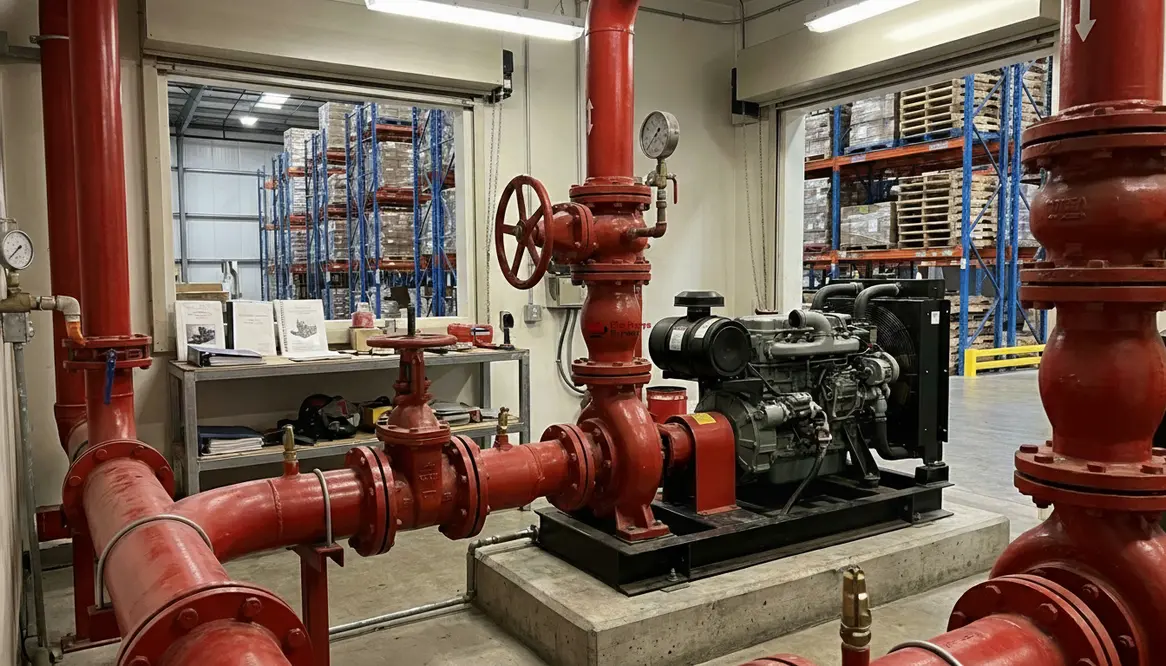
EN 12845 Warehouse Fire Pump Requirements Guide
EN 12845 Fire Pump Requirements for Warehouses
When I look at EN 12845 warehouses, I see more than shelves, forklifts, and neatly stacked pallets. I see a space where fire risk can climb fast and where a strong pump system can make the difference between a small incident and a very bad day with a very expensive ending. EN 12845 sets the rules for sprinkler systems in commercial and industrial buildings, so the fire pump must support the full system with steady pressure and reliable flow. And yes, the pump has to perform like a lead actor under pressure, not like a side character who forgets the script.
In this guide, I will walk through the main fire pump rules for warehouse sites, explain what matters in real use, and show how the standard shapes system design, testing, and upkeep. Let’s keep it clear, practical, and useful.
What EN 12845 expects from a warehouse fire pump
EN 12845 expects the pump to deliver the flow and pressure the sprinkler system needs at the worst likely demand point. In plain terms, the pump must keep sprinklers working when the fire grows and the water demand rises. For warehouses, that matters even more because large open areas, high storage, and tall rack systems can push the system hard.
I always start with the building risk profile. The stored goods, rack height, ceiling type, roof design, and fire load all affect pump sizing. Because of that, I do not treat every warehouse as the same. A chilled goods store, a pallet warehouse, and a high bay logistics site may all need different pump duties. The standard pushes us to match the pump to the hazard, not to guess and hope for the best. Hope is great for movie endings. It is not a fire strategy.
How I size the pump for industrial storage buildings
Pump sizing begins with the sprinkler design demand. I check the required water flow, the pressure at the most remote sprinklers, and any extra demand from hose reels or fire brigade connections where the design calls for it. Then I add the losses from pipework, valves, backflow devices, and elevation. After that, I verify that the pump can hold the duty point with confidence.
For EN 12845 warehouses, I also pay close attention to water supply reliability. If the main supply cannot support the full demand, the pump system must carry the load without delay. That means the suction line, tank size, and pump arrangement must all work as one unit. A strong pump with a weak supply path is like a race car with one good tyre. It looks impressive until it moves.
Key hardware I check first
Here is the part where the system earns its keep. I review the pump set, controller, suction source, pipe layout, test line, and backup power where required. Each item has a job, and each job matters when the alarm sounds.
Design point
The pump must meet the required sprinkler demand at the correct pressure. I confirm the duty point against the system curve, not just a nameplate rating.
Water source
The tank or supply must give enough water for the expected fire duration. If the source falls short, the system loses strength over time.
Power and control
The controller must start the pump quickly and reliably. If the site uses electric and diesel pumps, I make sure both options support the overall protection plan.
Testing and routine checks for warehouse sites
Testing is where theory meets reality, and reality always has a stronger opinion. I test the pump at regular intervals to confirm start up, pressure, flow, and stable running. I also check alarms, fuel levels on diesel units, battery condition where relevant, and any signs of wear on valves or seals.
For industrial and commercial storage sites, I treat inspection as a living process, not a one time event. Warehouses change. Storage heights change. Goods change. That means the fire risk changes too. So, I review whether the pump still fits the site after any layout change, added rack, or new product type. A system that matched the old layout may not suit the new one, and that gap can become a problem fast.
Common mistakes I see and how I avoid them
One common mistake is oversizing or undersizing the pump based on rough estimates. Another is ignoring suction losses, which sounds boring until the pump cannot reach the needed performance. I also see poor access around the pump room, weak maintenance planning, and test records that look like they were written during a caffeine shortage.
To avoid these issues, I keep the design simple, document every decision, and make sure the site team knows how the system works. I also recommend working with a specialist who understands warehouse fire protection and EN 12845 rules for commercial and industrial buildings. If you want a deeper technical reference, I suggest reviewing the EN 12845 fire pump guide for commercial sites as a useful starting point.
In EN 12845 warehouses, the best systems are usually the ones that look almost boring during normal operation. Pumps start without drama, test flows line up with design values, alarms behave as expected, and maintenance logs tell a clear story. That calm, predictable behavior is exactly what you want on the day the sprinklers open.
Why EN 12845 matters so much in warehouses
Warehouses concentrate value in one place. High racks, combustible packaging, and changing stock profiles can turn a small ignition into a serious fire faster than most people expect. EN 12845 gives a common language for risk, design density, and water supply so the fire pump, sprinklers, and water source all pull in the same direction.
For EN 12845 warehouses storing mixed goods, that structure avoids design by guesswork. It forces questions about storage height, aisle width, in-rack sprinklers, and required water volume instead of allowing vague assumptions. When the answers to those questions are clear, the fire pump duty, tank sizing, and suction layout stop being mystery numbers and start being traceable engineering choices.
FAQ: EN 12845 fire pumps for warehouses
Conclusion
If you manage a warehouse, I urge you to treat your fire pump as core safety gear, not background equipment humming in the corner. The right EN 12845 setup protects people, stock, and business continuity. So, review your system, test it well, and keep your records clean. If you need expert support for a commercial or industrial site, now is the time to act, check the design, and make sure your warehouse is ready before fire ever shows up.
For EN 12845 warehouses, that effort pays off in quieter nights, fewer surprises during inspections, and far better odds if a fire ever challenges the system. A well designed, well tested pump is not just another line item in a spec sheet; it is the part of the system that turns cold water and metal pipework into a real response when it matters most.