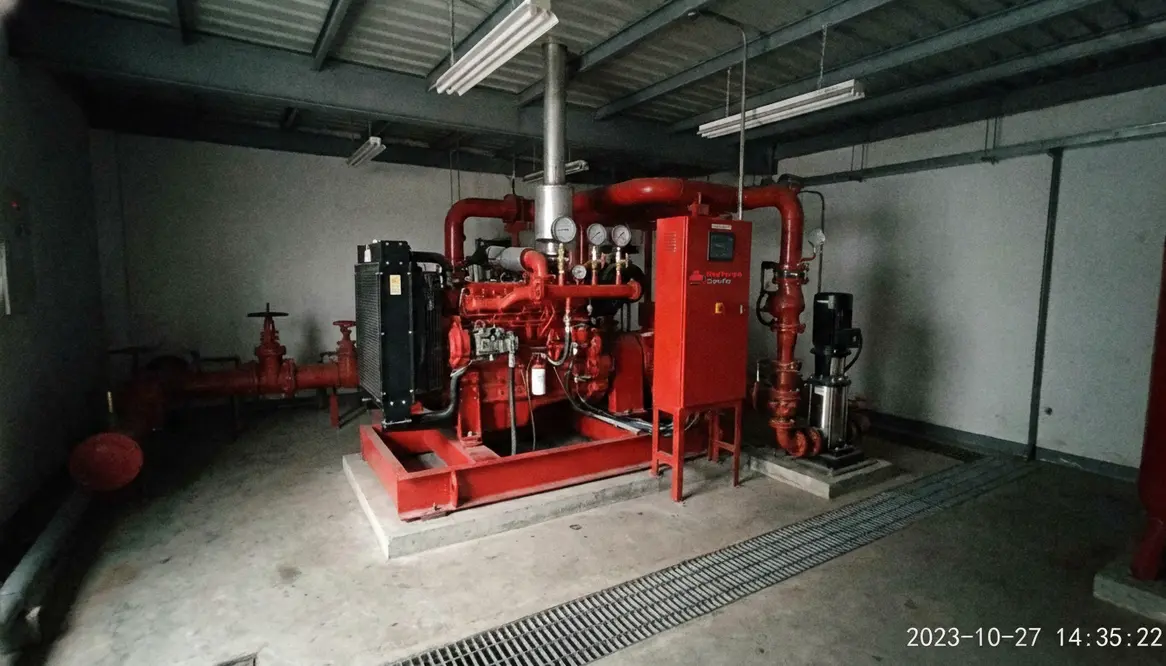
EN 12845 Fire Pump Requirements for Industrial Facilities
I write about EN 12845 industrial fire pump rules the same way I would explain a solid steel door: it looks simple, but the details matter. In an industrial site, a fire pump is not a nice extra. It is the heart of the sprinkler system, and if it fails, the whole setup starts acting like a superhero with a dead battery. So, I want to break down what the standard expects, why it matters, and how I would approach it in a real commercial or industrial facility.
In the world of EN 12845 industrial protection, the fire pump is where theory meets reality. This is where pressure, flow, power, and room layout decide whether the sprinkler system quietly does its job or leaves everyone starring in a very expensive sequel.
What EN 12845 expects from a fire pump
EN 12845 sets the baseline for sprinkler protection in commercial and industrial buildings. For fire pumps, the main goal is simple. The system must deliver the right pressure and flow when the sprinkler demand rises. That sounds neat and tidy, but in real life, it means the pump must perform under stress, not just look good on paper.
First, I look at the water supply. The pump must connect to a reliable source, such as a tank or a stable supply main. Next, I check the required duty point. This is where the pump must meet the needed flow and pressure for the hazard type. If the pump misses that point, the sprinklers may not control the fire fast enough. And nobody wants a factory floor turning into a live version of an action movie.
EN 12845 also expects the pump set to support the system for the full demand period. That means the pump, power supply, controls, and pipework must all work together. In other words, the system is only as strong as the weakest part, and fire protection never enjoys weak links.
Translating standard wording into real pump performance
In an EN 12845 industrial setting, I do not just tick boxes; I look at how the pump curve, net positive suction head, and water storage combine. A pump that technically meets performance on paper but falls short once voltage sags, tank levels drop, or friction losses climb is not doing the job. The standard expects real-world resilience, not optimistic catalog values.
How I choose the right pump for an industrial site
When I select a pump for an industrial facility, I start with the fire risk. Not every building needs the same setup. A warehouse, a food plant, and a chemical storage site can all need very different protection. So, I never treat pump choice like ordering coffee. One size does not fit all, even if the menu looks tempting.
Key sizing questions before any specification
Required flow for the sprinkler demand
Pressure needs at the most distant point in the system
Water supply capacity and refill rate
Site hazard level and building use
Power source and backup options
Then I look at pump type. A diesel pump can help where power cuts are a real concern. An electric pump can suit sites with stable power and strong backup systems. Often, facilities use a main pump and a backup pump so the protection stays alive if one unit fails. That is not luxury. That is common sense with a side of industrial grit.
Matching pump strategy to EN 12845 industrial risk profiles
Light hazard areas with modest storage might accept a single reliable electric pump with robust power backup. As risk and storage height climb, the case for diesel drives, redundant pumps, or dual supplies becomes stronger. The more critical the production line, the less tolerance there is for “we hope the pump starts.”
In many EN 12845 industrial facilities, the best answer is a combination: a main electric pump, a standby diesel pump, and a separate jockey pump to handle small leaks without cycling the main set. That arrangement keeps the system pressurized, protects pump life, and supports the standard’s reliability goals.
Why pump room design matters
A fire pump needs more than a good spec. It needs a proper home. The pump room must allow easy access, safe operation, and regular testing. If staff cannot reach valves, controls, or gauges without climbing around stored boxes, the room has already failed its job.
Left side
Clear access to the pump and controls
Good lighting and ventilation
Frost protection where needed
Right side
Enough space for service work
Drainage that keeps water from pooling
Protection from fire, heat, and damage
Also, the room must support safe testing. I need room for weekly checks, maintenance, and full flow tests without disrupting the whole site. That matters because a fire pump that no one can inspect is a bit like a guitar never tuned. It may look fine until the first loud moment.
Design details that separate theory from practice
In EN 12845 industrial pump rooms, I pay attention to door widths, clear escape routes, noise, heat build-up, and how test water is discharged. Sound-proofed but accessible rooms with clear labeling, protected cabling, and simple test line routing save time and prevent “creative shortcuts” during inspections.
How testing and maintenance keep the system ready
Once the system is in place, testing becomes the real game. EN 12845 expects regular checks so the pump stays ready for action. I do not see testing as paperwork. I see it as proof that the system will respond when smoke appears and everyone suddenly remembers how important schedules are.
Routine checks usually cover starting the pump, checking pressure, looking at fuel or power supply, and confirming alarms work. Flow tests also matter because they show the pump can still meet demand, not just start and hum like a confident sitcom character with no plot.
Maintenance should also include seals, bearings, valves, batteries, controllers, and pipe condition. Small issues can grow fast. A loose fitting today can become a failed supply line tomorrow. Therefore, I always push for a clear log of inspections and repairs. That record helps spot patterns before they turn into trouble.
Turning EN 12845 industrial rules into a living schedule
The best sites build testing into normal operations. Fixed weekly start tests, periodic full-flow runs, and annual third-party inspections keep the system honest. Logs with real readings, not just ticks, turn into a history that helps explain performance changes long before a failure.
Using specialist guidance and references
For more site focused guidance, I would also use a practical resource like the industrial fire pump compliance guide from a specialist source when planning upgrades or audits. Combining that with the formal wording of EN 12845 keeps both the paperwork and the pipework pointing in the same direction.
It also helps to compare against proven case studies from similar EN 12845 industrial facilities. Seeing how other plants solved power resilience, water storage limits, or awkward pump room locations can save plenty of time and rework.
FAQ: EN 12845 fire pump basics for industrial facilities
What I would do next for EN 12845 industrial compliance
If I were planning a new system or reviewing an older one, I would start with a full site survey, then compare the water supply, risk level, and pump duty point against EN 12845. After that, I would review the pump room, testing plan, and backup power. Finally, I would bring in a specialist who knows commercial and industrial fire protection inside out. If your facility depends on uptime, protect it now. Let us make sure your fire pump is ready before the alarm does the talking.
Pulling all of this together into a single EN 12845 industrial strategy means treating the pump set, the water supply, the room, and the maintenance regime as one system. When that system is designed, installed, and cared for properly, the sprinklers can quietly do their work while the production line keeps on running.
For a deeper look at pump options, curves, and selection logic, I would line this approach up with independent references such as material from https://firepumps.org, cross-checking the theory with what actually works on live sites.