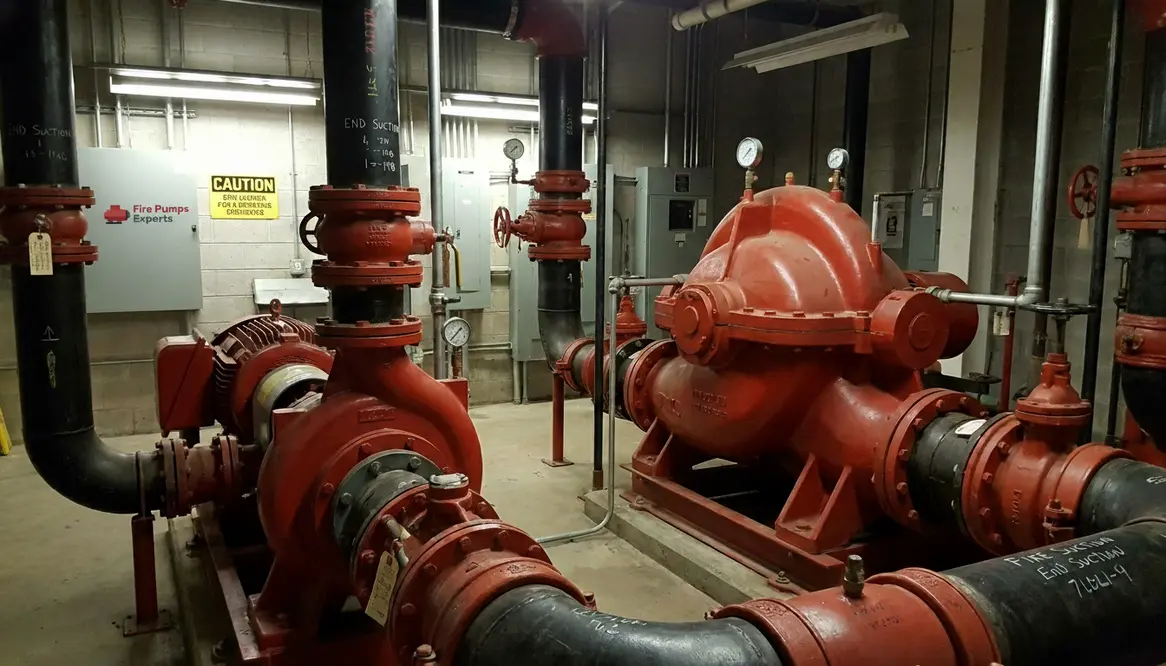
End Suction Fire Pump vs Split Case Pump Comparison
I have spent years around fire protection systems, and I can tell you this right away: choosing between an end suction fire pump vs split case pump is not just a technical decision, it is a strategic one. In large commercial and industrial buildings, where seconds matter and pressure must never fail, the wrong choice can quietly become a very expensive mistake. So today, I will walk you through this comparison in a way that actually makes sense, with just enough personality to keep us both awake.
What is the real difference between an end suction fire pump vs split case pump
Let me simplify it. Both pumps move water for fire protection. However, they do it in very different ways.
An end suction pump pulls water in from one side and pushes it out the top. It is compact, simple, and often the first choice for smaller commercial systems. Meanwhile, a split case pump splits its casing horizontally, allowing water to flow through both sides of the impeller. That design delivers higher efficiency and more consistent performance under heavy demand.
Now, here is where it gets interesting. While both can meet fire code requirements, the environment decides the winner. A mid sized warehouse? End suction might do the job. A high rise or a sprawling industrial facility? Split case steps in like the lead actor in a blockbuster. And yes, it usually deserves the spotlight.
Reading the room before you pick the pump
When weighing an end suction fire pump vs split case in real projects, the building’s risk profile, height, and zoning usually settle the debate long before anyone looks at catalog pages. The more complex the hazard and distribution, the more a split case pump earns its keep.
How I decide which pump fits a commercial or industrial building
When I evaluate a system, I do not start with the pump. I start with the building.
Flow, pressure, and zoning reality
First, I look at flow demand and pressure requirements. If the system calls for high flow rates across multiple zones, a split case pump offers better hydraulic balance. On the other hand, if the demand is moderate and space is tight, end suction units can be surprisingly effective.
Reliability under pressure
Then, I consider reliability. In mission critical environments like manufacturing plants or data centers, downtime is not an option. Split case pumps shine here because they allow easier maintenance. You can open the casing without disturbing the piping. That alone can save hours, and in some cases, prevent operational shutdowns.
Lifecycle cost over sticker shock
Finally, I factor in lifecycle cost. End suction pumps may cost less upfront. However, split case pumps often win over time due to efficiency and durability. It is a bit like choosing between a compact sedan and a heavy duty truck. Both move, but only one is built for the long haul.
If your portfolio includes multiple properties, the end suction fire pump vs split case decision also shapes standardization: training, spare parts, and maintenance routines all become easier when the choice aligns with long term strategy, not just project-by-project pricing.
End suction fire pump vs split case in performance and efficiency
Performance is where things separate quickly.
End Suction Pump
- Compact footprint
- Lower initial cost
- Simpler installation
- Best for moderate demand systems
Split Case Pump
- Higher efficiency at scale
- Handles large flow rates
- Better long term reliability
- Ideal for large facilities
Now, here is the part people overlook. Efficiency is not just about energy use. It is about consistency. Split case pumps maintain stable pressure even when system demand fluctuates. That stability can mean the difference between controlled suppression and, well, chaos.
And if you have ever seen a fire system struggle to maintain pressure, you know it is not exactly a comforting experience. It is less “calm control” and more “why is everything suddenly dramatic.”
Where each pump type really shines
When you stack an end suction fire pump vs split case in a performance chart, the crossover point usually appears once flows and pressures climb into serious territory. Below that point, the compact end suction is lean and efficient. Above it, the split case turns into the workhorse you want on your side when alarms trip and every sprinkler head decides to join the party.
Installation space and maintenance realities I have seen firsthand
Let us talk about the mechanical room, because that space tells no lies.
End suction pumps are compact. They fit into tighter footprints and require less complex alignment. So, if your facility has limited room, they can be a practical solution.
However, split case pumps demand more space. They are larger, heavier, and require careful installation. But in return, they offer something I value deeply: accessibility. Maintenance teams can service internal components without dismantling the entire system.
Over time, that convenience adds up. I have seen facilities save significant labor costs simply because technicians could work smarter, not harder.
If you want a deeper technical perspective, resources like commercial fire pump system standards and guidance provide useful insights tailored for large scale properties.
Serviceability vs shoehorning equipment
I have watched owners try to cram big capacity into small rooms and then live with the consequences. With an end suction fire pump vs split case, you can technically fit an undersized end suction into a tight corner, but the first time someone needs to change bearings or inspect the impeller, that “space saving win” turns into extra labor hours and some very creative wrench angles.
Cost vs long term value in large scale properties
Here is where many decisions go sideways.
It is tempting to focus on upfront cost. End suction pumps usually win that argument. They are less expensive to purchase and install. Done deal, right? Not quite.
In large commercial or industrial facilities, operational lifespan matters more than initial savings. Split case pumps tend to run more efficiently over time, which reduces energy costs. Additionally, their durability means fewer replacements and less downtime.
So while the initial price tag may raise an eyebrow, the long term value often justifies the investment. Think of it as buying quality boots instead of cheap sneakers. One lasts through the storm. The other… well, not so much.
Looking at the whole financial picture
When you compare an end suction fire pump vs split case purely on purchase and installation, you are only seeing the opening scene. Once you layer in testing, periodic repairs, energy consumption, and the cost of any unplanned outage during a fire watch, the “expensive” split case often turns out to be the cheaper decision over the life of the building.
FAQ quick answers for fire pump selection
Which pump is better for high rise buildings?
Split case pumps perform better due to higher flow capacity and stable pressure.
Are end suction pumps reliable?
Yes, they are reliable for moderate demand systems in smaller commercial spaces.
Which pump is easier to maintain?
Split case pumps are easier to maintain because of their accessible design.
Do split case pumps cost more?
Yes, they have a higher upfront cost but often lower lifecycle costs.
Can both meet fire code requirements?
Yes, both types can meet code when properly designed and installed.
Final thoughts and what I recommend moving forward
If you are weighing an end suction fire pump vs split case pump, focus on the demands of your facility, not just the price tag. I always advise clients managing commercial and industrial properties to think long term. The right pump should not just meet today’s requirements, it should handle tomorrow’s pressure without hesitation. If you are planning a system upgrade or new installation, now is the time to choose performance, reliability, and peace of mind.
When you stack end suction fire pump vs split case options side by side, remember that the best choice is the one that still feels boringly reliable ten or fifteen years from now, with alarms, inspections, and surprise audits all in the rearview mirror.