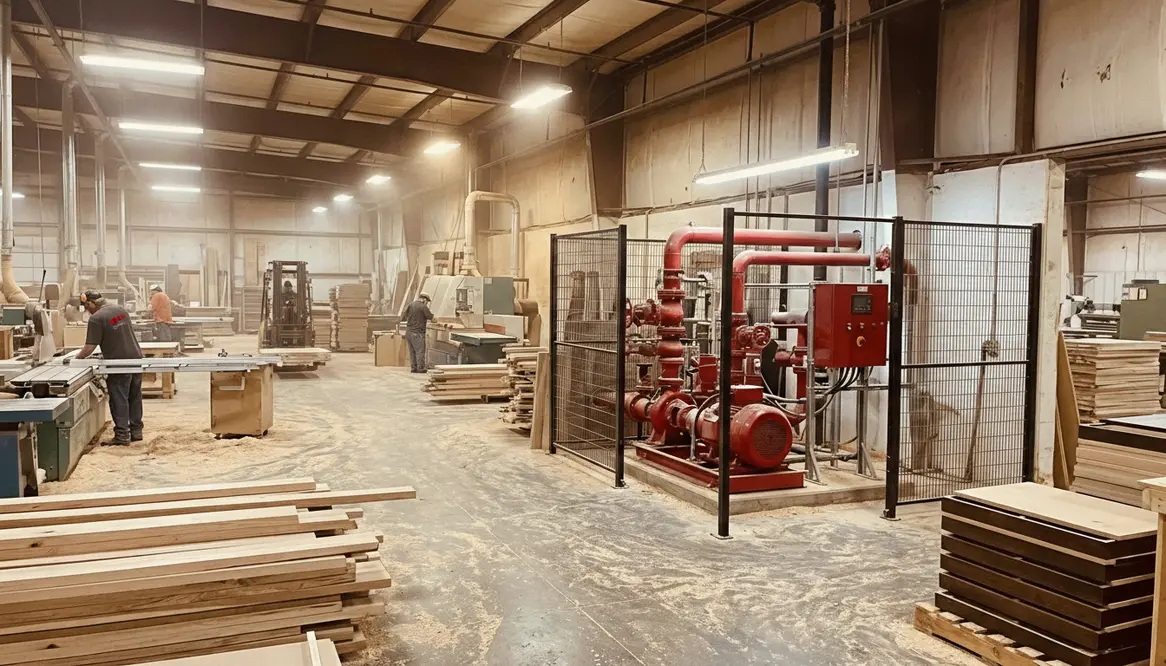
Fire Protection for Wood and Upholstery Production
I have spent years walking through manufacturing floors that hum with energy, dust, and the unmistakable scent of fresh-cut timber. In those moments, one truth always settles in: Fire protection for wood and upholstery production is not optional. It is the silent backbone of safety in furniture manufacturing plants. Sawdust floats like fine powder, adhesives sit ready to ignite, and machinery runs hot. So yes, the stakes are high. But here is the good news. With the right fire pump system, you are not just meeting codes. You are building a shield that stands ready long before the first spark even thinks about misbehaving.
Why fire pumps matter in furniture manufacturing plants
Furniture plants are not your average commercial buildings. They are high fuel environments. Wood dust, foam, varnishes, and fabrics all bring their own fire risks. Because of this, I always emphasize that a standard water supply is rarely enough. Instead, fire pumps step in as the muscle behind your fire protection system.
Moreover, these pumps ensure consistent pressure across sprinkler systems, even during peak demand. Without them, water flow can drop at the worst possible moment. And let’s be honest, fire does not wait politely for water pressure to catch up.
In my experience, facilities that invest in robust fire pump systems reduce response time dramatically. As a result, they limit damage and downtime. Think of it as having a superhero on standby, minus the cape but just as dependable.
How do I choose the right fire pump for a furniture plant?
I get this question a lot, and the answer is not one size fits all. However, I always start with hazard classification. Furniture manufacturing often falls under high hazard categories due to combustible materials.
Then, I look at water demand. Large sprinkler systems, especially those protecting sanding and finishing areas, require strong and steady pressure. Therefore, I typically recommend either electric or diesel driven fire pumps depending on site reliability.
Here is how I break it down:
Electric Fire Pumps
- Reliable when power supply is stable
- Lower maintenance needs
- Cleaner operation
Diesel Fire Pumps
- Operate during power outages
- Ideal for remote or unstable grids
- Require regular fuel checks
Additionally, I always remind clients that Fire protection for wood and upholstery production depends on redundancy. Backup systems are not a luxury. They are peace of mind wrapped in engineering.
Design considerations for high dust and material loads
Now, let’s talk about something that does not get enough attention: dust. Fine wood particles can travel fast and ignite even faster. Because of this, I focus heavily on system design that accounts for airborne fuel.
For example, I recommend placing sprinkler heads strategically near sanding stations and dust collection systems. Furthermore, maintaining proper water pressure ensures quick suppression before flames spread.
Another key factor is system durability. Equipment must withstand vibrations and continuous operation. Otherwise, even the best design can fail under real conditions.
And yes, I have seen systems clogged with debris because maintenance was treated like an afterthought. That is like owning a sports car and never changing the oil. It might run for a while, but not when it matters most.
Compliance standards I always follow for industrial fire pump systems
When I design or evaluate systems, I stick closely to established codes. NFPA 20 governs fire pumps, while NFPA 13 addresses sprinkler systems. Together, they form the rulebook that keeps facilities safe and compliant.
However, compliance is not just about passing inspections. It is about real world performance. Therefore, I ensure that fire pumps meet required flow rates and pressure levels under full load conditions.
Additionally, regular testing plays a major role. Weekly churn tests and annual flow tests confirm that the system performs as expected. Because when a fire starts, there is no time for surprises.
Fire protection for wood and upholstery production in finishing and storage areas
Finishing areas are where things get interesting, and by interesting, I mean risky. Flammable coatings and solvents create an environment where even a small spark can escalate quickly.
So, I always prioritize higher density sprinkler coverage in these zones. In addition, fire pumps must deliver consistent pressure to support rapid suppression. Storage areas, especially those stacked high with finished goods, also demand attention.
Here, I often recommend in rack sprinkler systems paired with strong pump capacity. This ensures water reaches deep into storage racks where fires like to hide.
And if you are picturing a slow moving fire politely staying in one spot, think again. Fire spreads like gossip in a small town. Fast and everywhere.
Maintenance practices that keep fire pumps ready
I cannot stress this enough. Even the best system fails without proper maintenance. Therefore, I always implement a strict inspection schedule.
Routine checks include:
- Monitoring pump pressure and flow levels
- Inspecting valves and controllers
- Testing backup power sources
Furthermore, I train staff to recognize early warning signs. Strange noises, pressure drops, or delayed startup times should never be ignored.
Because at the end of the day, Fire protection for wood and upholstery production is not just about installation. It is about ongoing reliability. And reliability comes from consistency.
FAQ: Fire pump requirements for furniture manufacturing plants
The questions below come up regularly when planning Fire protection for wood and upholstery production in busy manufacturing plants.
Ready to strengthen your facility’s fire protection?
If you are operating a furniture manufacturing plant, now is the time to take a closer look at your fire pump system. I encourage you to assess your current setup, identify gaps, and invest in solutions that match your risk level. Partner with experts who understand industrial demands and can deliver systems built for performance. Because when safety is on the line, cutting corners is never worth the cost.