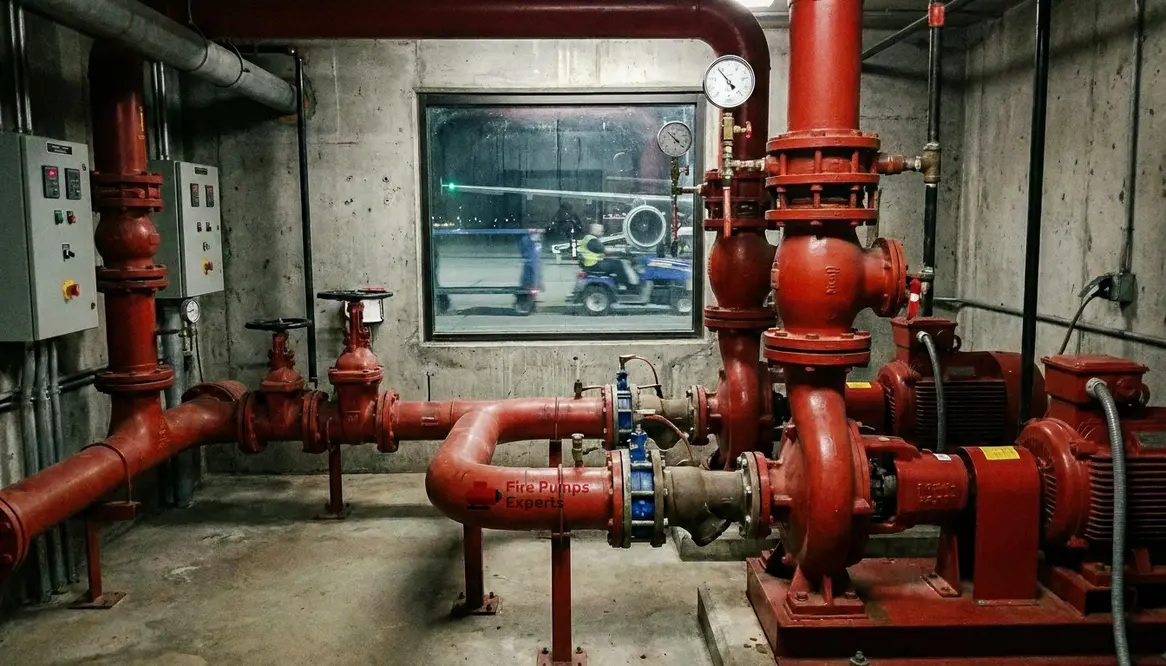
Fire Pump Airport Fire Protection System Design
I have always found airports to be a strange mix of calm and chaos. One moment you are sipping overpriced coffee, the next you are sprinting to Gate C17 like you are in an action movie that forgot to cast you properly. Behind that choreography sits something far less visible but far more critical: fire pump airport fire protection systems. These systems do not chase drama. They prevent it. And when designed right, they do their job so quietly that no one even notices they exist. That is the point.
So let me walk you through how these systems come together, why integration matters, and why skipping the details is a bit like ignoring the engines on a plane. Technically possible to overlook, but not recommended.
How do fire pump systems actually integrate inside an airport?
Integration is not about dropping a pump into a building and calling it a day. Instead, I connect the fire pump to a larger network that includes sprinklers, hydrants, foam systems, and detection controls. Each piece talks to the other. When heat or smoke triggers a response, the pump immediately supplies the pressure needed to move water or foam exactly where it needs to go.
Moreover, airports are not simple buildings. They are layered environments with terminals, hangars, cargo zones, and fuel storage areas. Because of that, I ensure the pump system adapts to multiple hazard levels at once. A baggage claim area does not carry the same risk as a fuel farm, and the system must recognize that difference instantly.
Think of it like an orchestra. The fire pump is not the star soloist. It is the conductor making sure everyone hits their mark at the right time. Without it, the performance falls apart quickly, and nobody claps at the end.
Designing fire pump airport fire protection systems for complex infrastructure
Airports demand precision. I cannot rely on generic layouts or one size fits all designs. Instead, I evaluate flow demand, pressure requirements, and redundancy needs across the entire facility. Then I align the pump capacity with those variables so that no zone is left under protected.
Additionally, I plan for peak scenarios. For example, what happens when multiple suppression systems activate at once? The pump must maintain pressure without hesitation. Therefore, I often incorporate backup pumps and dedicated power sources to ensure continuous operation.
And yes, redundancy might sound boring, but it is the hero of this story. If Hollywood made a movie about fire protection, redundancy would be the quiet character who saves everyone in the final act while the main character takes the credit.
Key components I focus on for seamless performance
To keep everything running smoothly, I pay close attention to the core components that make integration possible.
System Elements
- Fire pumps sized for high demand zones
- Pressure controllers with fast response times
- Reliable water supply connections
- Backup power integration
Operational Priorities
- Consistent pressure across long pipe networks
- Immediate activation during emergencies
- Coordination with detection systems
- Minimal maintenance disruption
At the same time, I make sure each component works as part of a larger system. A powerful pump alone means nothing if the controls lag or the piping cannot handle the flow. Everything must move in sync, like a well rehearsed crew behind the scenes.
Why integration matters for large scale commercial aviation facilities
Airports operate like small cities. Because of that, fire risks scale quickly. I cannot treat them like standard commercial buildings. Instead, I approach them as interconnected ecosystems where one failure can ripple outward.
When integration is done right, response times shrink dramatically. Water reaches the hazard faster. Pressure stays consistent. Damage is contained before it spreads. On the other hand, poor integration leads to delays, pressure drops, and system conflicts that can turn a manageable incident into something far worse.
Also, let us be honest. Airports already deal with enough delays. Fire protection should not add another one to the departure board.
Maintaining performance over time without disrupting operations
Once the system is in place, the job is not over. I focus heavily on maintenance strategies that keep everything operational without interfering with daily airport activity. This means scheduled testing, remote monitoring, and predictive maintenance.
Furthermore, I ensure that testing procedures simulate real conditions. A system that works on paper but fails under pressure is about as useful as a parachute that only opens halfway. Regular validation keeps surprises off the table.
In high traffic environments, downtime is not an option. So I design systems that allow for maintenance without shutting down protection entirely. It is a careful balance, but it is necessary for facilities that never sleep.
Bringing fire pump airport fire protection systems into focus
When I approach fire pump airport fire protection systems, I start with a simple question: what has to work perfectly on the worst day this facility will ever face? From that point, capacity, zoning, power, controls, and monitoring become part of one continuous thread. Passenger terminals, maintenance hangars, fuel farms, and cargo areas all demand tailored protection, but they cannot operate as isolated islands.
That is why I map out hydraulic demand across the airport, not just at a single riser or pump room. It is the difference between hoping a system keeps up and knowing it has already been tested against realistic, overlapping scenarios. The more complex the layout, the more critical it becomes to treat fire pump airport fire protection systems as the backbone of the entire suppression strategy rather than a box checked on a design drawing.
Power, redundancy, and real-world reliability
Power Strategies
- Dedicated feeders separated from nonessential loads
- Diesel or alternate power pumps for blackout scenarios
- Automatic transfer sequencing that does not stall pump start-up
- Clear separation between fire power circuits and general distribution
Redundancy Tactics
- Multiple pumps sized for overlapping coverage
- Diverse water supply sources where feasible
- Backup controls and monitored valves
- Segmentation so one fault does not silence an entire wing
All of this folds back into the same idea: fire pump airport fire protection systems are less about hardware on a slab and more about how that hardware behaves when a real incident starts stacking up variables you did not ask for.
Using data and monitoring to keep systems honest
Continuous monitoring turns a static installation into a living system. Flow tests, churn tests, pressure trends, and alarm histories tell a story about how well the pump system and its connected network are aging. Instead of waiting for a failure, I use that information to tune performance, schedule targeted inspections, and verify that every part of the chain still behaves the way the original design intended.
When airports embrace that mindset, fire pump airport fire protection systems stop being mysterious equipment rooms and become measurable, predictable safety infrastructure. It is far easier to justify upgrades, replacements, or redesigns when the data clearly shows where the risk is drifting out of tolerance.
Conclusion
If you manage or design large scale airport facilities, now is the time to take a closer look at how your fire pump systems integrate with your overall protection strategy. I help organizations build systems that respond faster, perform reliably, and scale with complex environments. Reach out today and let us make sure your infrastructure stays protected without missing a beat. Because in this business, quiet reliability is the real headline.