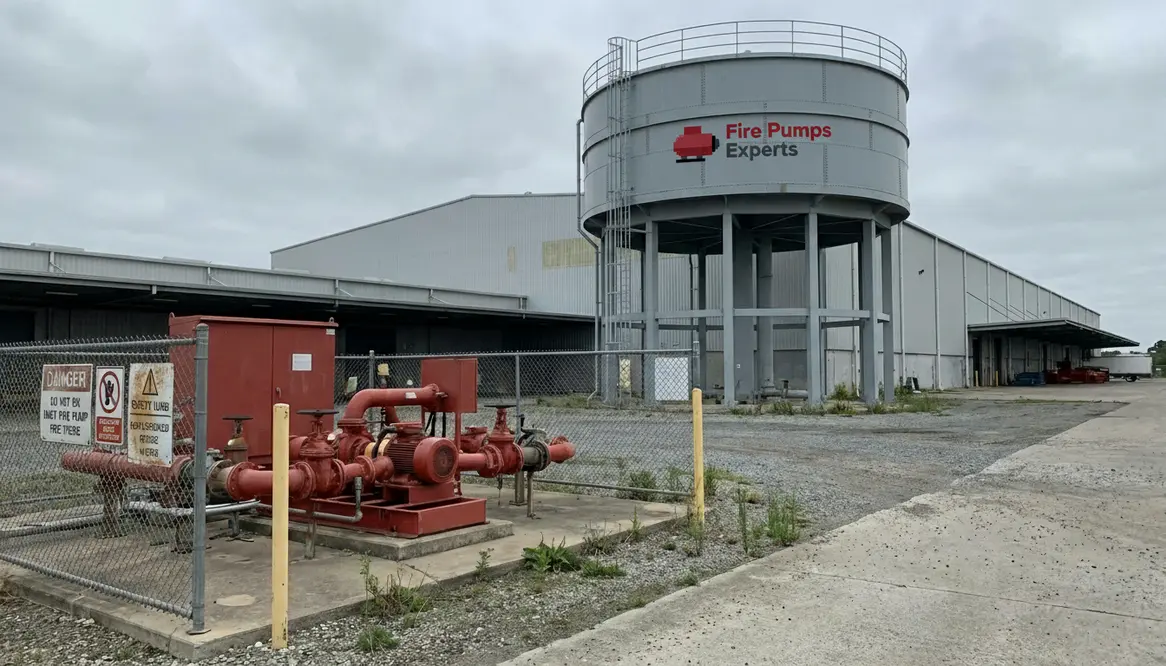
Fire Pump Elevated Tank Systems Explained
How stored water and boosted pressure team up to protect modern buildings when it matters most.
I have spent years around water systems that are designed to work perfectly on their worst day. And when I talk about fire pump elevated tank systems, I am talking about a quiet partnership that only gets attention when everything else is on the line. In large commercial and industrial facilities, elevated storage tanks provide gravity fed reliability. However, gravity alone does not always win the race against pressure loss, friction, or sheer building scale. That is where the fire pump steps in, like a seasoned backup actor who ends up stealing the scene when it matters most.
These systems are built for the uncomfortable questions: What happens when multiple sprinkler zones open at once? How do you push water to the top floors during a fire? And how do you keep performance predictable in buildings that stretch both height and complexity?
The answer, more often than not, is a smart combination of elevation, storage, and pressure boosting working together instead of competing for credit.
What role does a fire pump play in elevated storage tank systems?
I will answer this plainly. A fire pump ensures that water stored above can actually reach where it needs to go with the right pressure and flow. While an elevated tank provides static pressure through gravity, that pressure drops as demand rises or as systems grow more complex.
Therefore, I rely on the pump to stabilize and boost performance during peak demand. In high rise commercial buildings or sprawling industrial campuses, friction loss in pipes and multiple sprinkler zones can quickly eat away at available pressure. Without intervention, that beautifully stored water becomes a polite suggestion instead of a force.
In addition, fire pumps act as a safeguard. If tank levels fluctuate or system demand spikes, the pump responds instantly. Think of it as the difference between a garden hose and a fire hose. Both carry water, but only one commands attention.
How that partnership actually feels in practice
When designed properly, fire pump elevated tank systems feel almost boring on a normal day. Gauges sit where they should, pump controllers wait quietly, and the tank level creeps up and down like a calm tide. But that calm is exactly what you want before the alarms go off and every valve, sensor, and sprinkler head suddenly has an opinion.
Why gravity alone is not enough in modern facilities
Gravity has served us well for centuries. However, modern buildings are not medieval towers with a bucket at the top. They are complex environments with layered fire protection zones, long pipe runs, and strict compliance requirements.
As a result, relying only on an elevated tank can leave gaps. For example, when multiple sprinkler heads activate at once, demand increases sharply. Consequently, pressure drops right when it should be strongest. That is not the kind of suspense anyone enjoys.
Moreover, industrial facilities often deal with specialized hazards. High hazard areas require consistent, high pressure delivery. A gravity system alone may struggle to maintain that level across the entire network.
So, I see the pump not as optional, but as essential. It transforms stored water into a controlled, reliable fire suppression force.
The hidden cost of “gravity only” thinking
When people assume the elevated tank is doing all the work, they tend to be shocked by pressure readings during actual flow tests. That is when theory meets pipe friction, elevation changes, and real demand curves. It is also when the value of well designed fire pump elevated tank systems becomes obvious.
Key advantages of integrating fire pumps with elevated tanks
Consistency under demand
When multiple systems activate, the pump maintains steady pressure without hesitation.
Coverage across large properties
In expansive commercial sites, distance weakens gravity fed systems. Pumps restore strength.
Compliance with fire codes
Many jurisdictions require pressure levels that gravity alone cannot guarantee.
Redundancy and reliability
If one component underperforms, the pump compensates immediately.
Support for system expansion
As facilities grow, pumps adapt more easily than redesigning entire tank systems.
Faster response times
Water reaches critical areas quicker, which can mean the difference between control and catastrophe.
Why “tank plus pump” beats “tank or pump”
Individually, tanks store energy and pumps create it on demand. Together, properly engineered fire pump elevated tank systems combine stored potential with responsive muscle, giving fire protection a steadiness it cannot achieve with a single component carrying all the responsibility.
How I approach designing fire pump elevated tank systems for large buildings
I start with demand, not equipment. Every commercial or industrial property has unique fire protection requirements. Therefore, I calculate flow rates, pressure needs, and hazard classifications before selecting any component.
Next, I evaluate the elevated tank. Its height determines baseline pressure, but I also consider volume and refill capabilities. After that, I integrate the fire pump to complement, not compete with, the tank.
Placement matters as well. A poorly positioned pump can introduce inefficiencies or delays. So, I ensure it connects seamlessly into the system, minimizing friction loss and maximizing response speed.
Finally, I think about control systems. Modern fire pumps are not just mechanical workhorses. They are monitored, tested, and maintained with precision. And yes, they are a bit like the Avengers. Each part has a role, but together they handle threats no single component could manage alone.
From code requirements to real world resilience
It is tempting to size a system just to clear code requirements and move on. I am far more interested in how that system behaves on a chaotic Tuesday afternoon when power flickers, tanks are partially drawn down, and multiple zones are flowing. Thoughtful fire pump elevated tank systems are built for those days, not just for plan review paperwork.
Common misconceptions I see in elevated tank fire protection setups
One misconception is that elevated tanks eliminate the need for pumps entirely. That idea sounds appealing, but it ignores real world demand scenarios. Gravity does not adjust itself when conditions change.
Another issue is oversizing or undersizing the pump. Bigger is not always better. In fact, an oversized pump can create system instability. On the other hand, an undersized one simply fails when needed most. Neither option inspires confidence.
I also notice that maintenance often gets overlooked. A fire pump that is not regularly tested is like a superhero who forgot how to fly. It might look impressive, but I would not bet a building on it.
The maintenance habit that separates stories from statistics
The best systems I see have one thing in common: disciplined, documented testing. Weekly or monthly churn tests, annual flow tests, and clear records give owners confidence that when those fire pump elevated tank systems are called on, they will not be improvising their performance under pressure.
Where fire pump elevated tank systems shine the most
I have seen these systems perform exceptionally well in high rise office buildings, manufacturing plants, distribution centers, and large campuses. In these environments, demand is unpredictable and scale works against simple solutions.
Additionally, facilities with critical operations benefit greatly. Data centers, for example, cannot afford downtime. Therefore, a system that combines stored water with boosted delivery creates a reliable safety net.
Even in older properties undergoing upgrades, integrating a pump with an existing elevated tank can dramatically improve performance without requiring a full system overhaul.
Real world payoffs you actually notice
Operators usually notice the difference not during a headline event, but during testing: tighter pressure curves, more consistent flows at remote hydrants, and fewer nervous conversations about whether the top floors are actually getting the water they were promised on paper.
FAQ
Bringing it all together
I see fire pump elevated tank systems as a partnership built on reliability and performance. One stores the promise of protection, while the other delivers it when it counts. If you manage a large commercial or industrial facility, now is the time to evaluate whether your system can truly meet demand under pressure. Connect with experts who understand both sides of the equation and can design a system that performs without hesitation.
Whether you are working with clean sheet designs or retrofitting legacy infrastructure, treating the tank and pump as a coordinated team instead of separate line items pays off in performance, testing confidence, and peace of mind. If you want a useful starting point for thinking through options, you can explore resources like https://firepumps.org and then tailor those concepts to the realities of your own site.
In the end, the real measure of success is simple: on the system’s worst day, water arrives where it is needed, at the right pressure and flow, without drama. Thoughtfully engineered fire pump elevated tank systems quietly stack the odds in your favor long before the first alarm sounds.