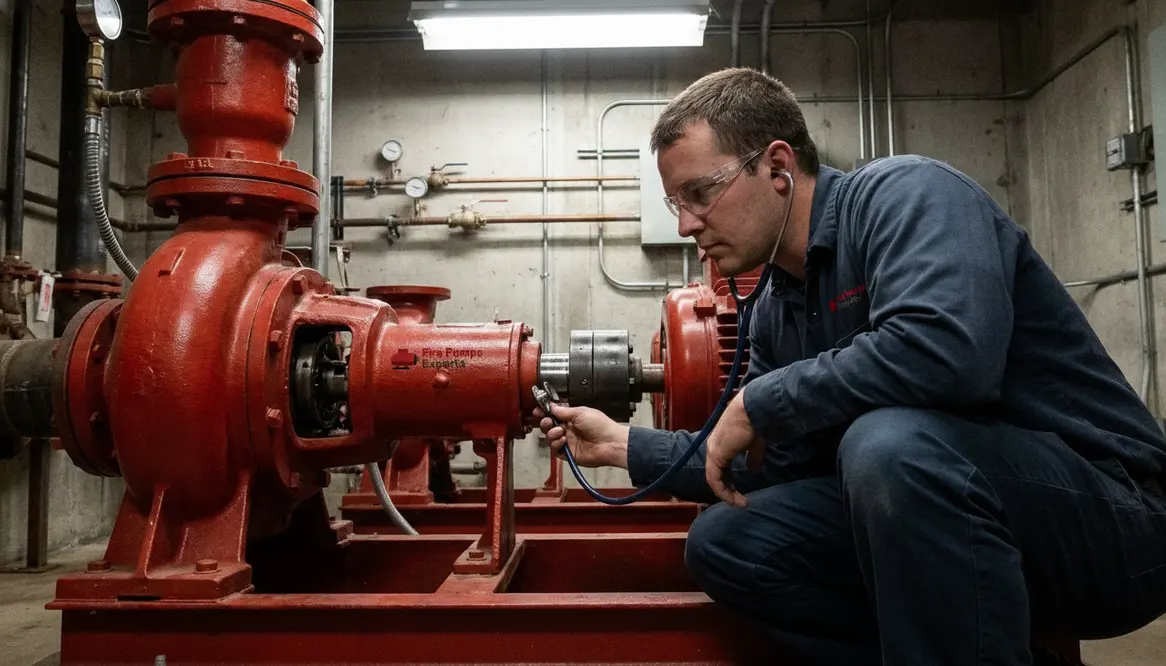
Fire Pump Bearing Noise Early Warning for Reliability
I have heard a lot of strange sounds in mechanical rooms, but a fire pump bearing making noise gets my attention fast. It is not just a little hum in the background. It can be the first hint that a pump is losing balance, running hot, or heading toward a costly failure. In a commercial or industrial building, that is not the kind of surprise anyone wants. A fire pump must be ready when the pressure drops, and I treat every odd sound like a warning from the machine itself.
Because of that, I listen closely, I check the pattern, and I act before a small issue turns into a shutdown. That is the difference between a simple service call and a very expensive problem, with extra drama nobody asked for.
Why bearing noise matters in fire pump systems
Bearing noise often tells me something is wrong inside the pump before I can see it. First, the sound may point to wear from age or poor lubrication. Then it may show that the shaft is misaligned or that the pump is under load it should not carry. Since fire pumps protect major properties, I do not wait for the sound to get louder. I want to catch it early, while the fix is still simple.
In many cases, the noise changes with speed. A sharp whine, a rough growl, or a steady grind can mean different things. So, I compare the sound with vibration, heat, and pressure readings. That gives me a clear picture. After all, a fire pump should sound steady and calm, not like it is trying out for a villain role in a late night movie.
The early warning you can actually hear
When a fire pump bearing making noise shows up, it is usually the machine telling you it is unhappy before it becomes a headline. I do not treat it like background clutter. I treat it like a timeline: what changed, how it changed, and when it started showing up during operation.
A short answer: ignore it, and you may find yourself troubleshooting in the middle of an emergency test or worse. The whole point is reliability, not “we’ll handle it later” storytelling.
How I check a fire pump bearing making noise
I start with the basics. First, I confirm where the sound comes from. Then I look at the bearing housing, the shaft, the coupling, and the motor side. I also check for leaks, loose mounts, and signs of poor lubrication. If the bearing has been running dry, the noise often comes with heat. If alignment is off, the sound may rise during operation and fade when the load changes.
Next, I use both my ears and my tools. A technician learns quickly that the machine speaks in more than one language. Sound matters, but so do temperature checks, vibration readings, and visual inspection. In industrial and commercial settings, I also pay close attention to dust, moisture, and the room itself, because the environment can wear a bearing down faster than people expect.
Common causes I look for
When I hear bearing noise, I usually check for a few common causes:
- Poor lubrication
- Misalignment between pump and motor
- Excess vibration from worn parts
- Contamination from dirt or water
- Overheating from heavy use or poor airflow
Each one can create the same basic warning sound, yet each one needs a different fix. That is why I do not guess. I test, compare, and confirm. A bearing may only need grease, but sometimes it needs replacement. Either way, the goal stays the same: keep the pump ready for fire protection duty, because “we’ll handle it later” is not a plan I would trust with a major property.
What bearing noise can mean for building safety
Here is the real issue. Bearing noise is not just a maintenance concern. It can point to a pump that may fail under emergency conditions. If the bearing gets worse, the pump can lose efficiency, overheat, or stop working when the system needs it most. For fire pump technicians, that risk is serious because these systems serve commercial and industrial facilities that cannot afford downtime.
That is why I treat sound as an early alert. A building owner may hear a faint noise and shrug it off. I do not. I know that a small problem can become a major repair, and a major repair can become a code and safety headache. In short, the earlier I act, the safer the system stays.
What I do after I find the problem
Once I find the cause, I move quickly. If the bearing only needs service, I clean and lubricate it with the right product. If I find damage, I replace the part and check the whole assembly for more wear. I also inspect the motor and coupling so the same issue does not return like an unwanted sequel.
For larger facilities, I often compare the result with other system checks. For example, a broader los angeles fire pump service helps me keep the unit aligned with the rest of the fire protection plan. I also look at related systems through commercial fire sprinkler support and electrical needs through facility electrical services, because all of these parts work together in real buildings.
Quick reliability checklist for noisy bearing situations
When you notice a fire pump bearing making noise, confirm the source first: bearing housing, coupling area, or motor side.
Match the sound with vibration, heat, and pressure readings so the fix is based on facts, not vibes.
After repairs, re-check alignment and lubrication, then keep an eye on whether the fire pump bearing making noise returns.
If you want one simple rule: treat every unusual sound as an early alert. That same habit keeps the pump calm, strong, and ready for fire protection duty.
FAQ
Conclusion
If I hear a bearing noise, I do not wait and hope for the best. I inspect it, find the cause, and fix it before the pump loses reliability. That is how I protect the system, the building, and everyone who depends on it. If your fire pump serves a commercial or industrial property and you want it ready for the worst day, now is the time to act. Book a professional inspection and keep your fire protection system calm, strong, and ready.