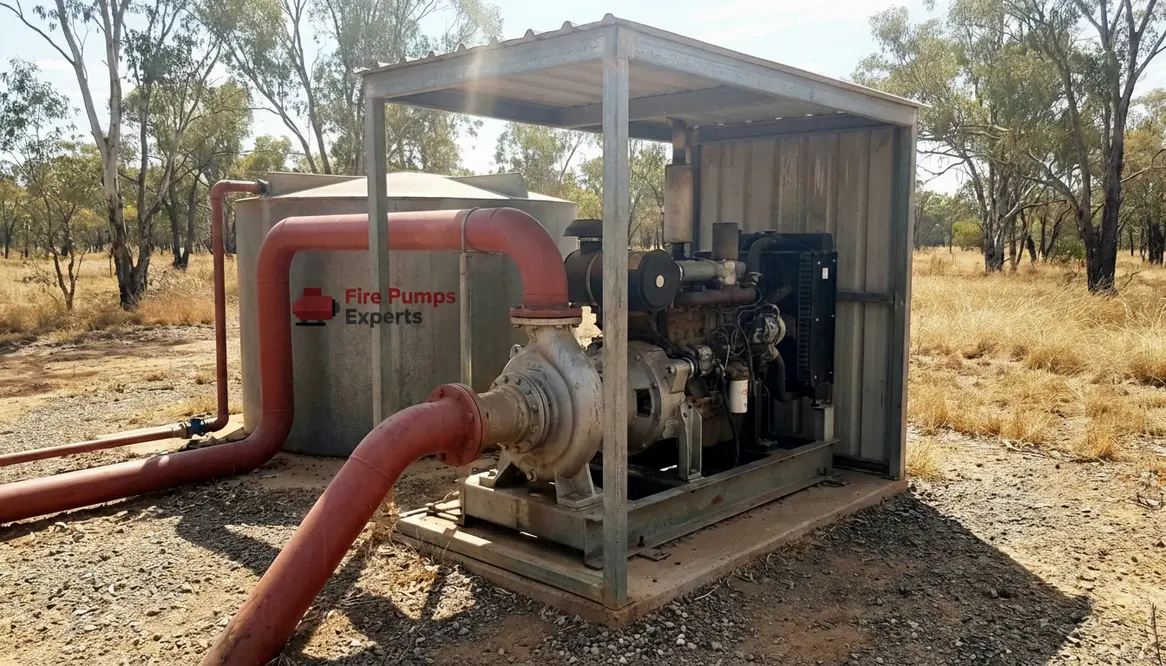
Fire Pump Bushfire Protection Australia Design
I have spent years around pumps, pipes, and the kind of heat that turns steel into a suggestion rather than a rule. When we talk about fire pump bushfire protection Australia, we are not talking about a luxury add on. We are talking about the difference between a facility that stands firm and one that becomes a cautionary tale whispered over coffee. In Australia, bushfires do not knock politely. They arrive like a blockbuster villain, all drama and no mercy. So I design systems that do not flinch.
Why bushfire conditions demand a different mindset
In most fire scenarios, I plan for contained events. A room. A floor. Maybe a section of a plant. However, bushfires rewrite the script. They bring radiant heat, ember attack, and long duration exposure. Therefore, I shift from reactive design to sustained defense.
Moreover, wind driven embers travel far beyond the flame front. That means even facilities not directly in the fire path face ignition risks. I design pump systems that can run longer, handle variable water sources, and maintain pressure under stress. Think of it less like a sprint and more like a marathon where the track is on fire.
How do I design a fire pump system for bushfire resilience?
I start with reliability. Then I build redundancy. Finally, I remove anything that could fail at the worst moment.
Core elements I prioritize
Power independence is critical. I often specify diesel driven pumps because the grid has a habit of disappearing right when you need it most. It is almost poetic, if it were not so inconvenient.
Water security comes next. I size storage to outlast extended fire exposure. Additionally, I ensure multiple water sources where possible, including tanks and static supplies.
Protected pump locations matter more than most expect. I place pumps in shielded enclosures, away from direct radiant heat and ember entry points. Because a pump that melts is just modern art.
Automatic operation ensures the system activates without human hesitation. In a crisis, seconds matter and so does simplicity.
Designing for commercial and industrial scale risks
When I work on large facilities, I think in layers. A single pump is not a strategy. It is a component. Therefore, I design integrated systems that support hydrants, sprinklers, and dedicated bushfire protection lines.
In industrial environments, fuel loads are higher and layouts are complex. Consequently, I calculate demand carefully to maintain consistent pressure across wide areas. I also factor in simultaneous system operation. Because in a real event, everything tends to be needed at once.
Furthermore, I coordinate with site infrastructure. Access roads, tank placement, and control panels all play a role. A great pump in a poorly planned site is like a sports car in a traffic jam. Impressive, but not helpful.
Fire pump bushfire protection Australia design priorities that actually matter
Performance under extreme heat
I select materials and components rated for high temperature exposure. Seals, wiring, and housings must endure more than standard conditions.
Extended runtime capability
I design fuel storage and cooling systems to support long operation periods. Bushfires do not follow office hours.
Redundant configurations
I often include duty and standby pumps. If one fails, the other takes over without drama.
Simple control systems
I avoid overcomplication. Clear controls reduce human error during high stress situations.
Ember resistant design
I protect air intakes and openings. Because embers are small, persistent, and annoyingly effective.
Compliance with Australian standards
I align designs with relevant codes while adapting for site specific bushfire risks.
Common mistakes I see and quietly fix
First, undersized systems. People assume average demand instead of worst case scenarios. That is like bringing a garden hose to a dragon fight. It will not end well.
Second, poor maintenance planning. Even the best system fails if neglected. Therefore, I design with access in mind. Testing points, clear layouts, and service friendly components all matter.
Third, overreliance on a single water source. Drought conditions and fire events often overlap. So I diversify supply wherever possible.
Finally, I see control systems placed in vulnerable locations. If operators cannot safely access controls, the system loses effectiveness. I keep them protected and reachable.
Integrating smart monitoring without overcomplicating things
I appreciate technology, but I do not worship it. Smart monitoring helps track pressure, fuel levels, and system health. However, I keep interfaces simple and reliable. If a system needs a software update during a bushfire, we have made a poor life choice.
That said, remote alerts and diagnostics allow facility managers to act quickly. So I include them where they add real value. Balance is key. Like adding spice to a meal, not turning it into a dare.
Understanding fire pump bushfire protection Australia obligations
Designing fire pump bushfire protection Australia systems starts with understanding regulatory obligations and then pushing beyond the bare minimum. Codes and standards provide the floor, not the ceiling. I review local bushfire attack levels, water authority constraints, and insurance expectations before sizing pumps or tanks. From there, I look at worst case bushfire exposure around the perimeter, not just the pretty drawings on a site plan.
For remote or high risk locations, I often integrate dedicated bushfire header lines separate from internal sprinklers. This allows external hydrants, monitors, or deluge systems to operate without starving internal protection. It also ensures firefighters arriving on site can connect to a system that is already designed to cope with bushfire intensity, not just an internal warehouse fire. That distinction matters when everything around the building is glowing.
Strategic site layout for resilient protection
A well designed fire pump for bushfire conditions does not live in isolation. The surrounding layout can either support or sabotage it. I keep pump houses away from heavy vegetation, combustible storage, and obvious ember traps. Wherever possible, I use non combustible separation zones and clear access paths so that maintenance crews and firefighters are not threading a needle just to reach the pump during a crisis.
Tank positioning is just as important. I avoid stacking all critical assets in a single corner of the site. If the only access road, the main tank, and the pump room all share the same vulnerability, one bad wind shift can take everything out at once. By staggering locations and adding protected pipe routing, the system keeps functioning even if part of the site is compromised. That kind of resilience turns a theoretical design into a practical lifeline.
Maintaining fire pump bushfire protection Australia systems for the long haul
A beautifully engineered fire pump bushfire protection Australia installation still fails if nobody cares for it. I build in clear suction strainers, accessible valves, and logical pipe routes so technicians can complete routine tests without feeling like they are solving a maze. Test headers, run lines, and fuel polishing access points are all placed where real humans can reach them with real tools.
I also encourage digital record keeping for test runs and inspections. Not because paperwork is thrilling, but because patterns matter. A slow drop in performance, a recurring fault, or a trend in fuel quality can be addressed long before bushfire season peaks. The goal is a system that does not just pass commissioning day, but continues to perform year after year, through heatwaves, droughts, and the occasional “once in a century” event that now seems to happen every few summers.
FAQ about fire pump systems for bushfire protection
Final thoughts and next steps
If you manage a commercial or industrial facility, now is the time to take bushfire resilience seriously. I design fire pump bushfire protection Australia systems that stand up when conditions turn hostile. Let us review your current setup, identify gaps, and build something that works when it matters most. Because when the heat arrives, preparation is not optional. It is everything.