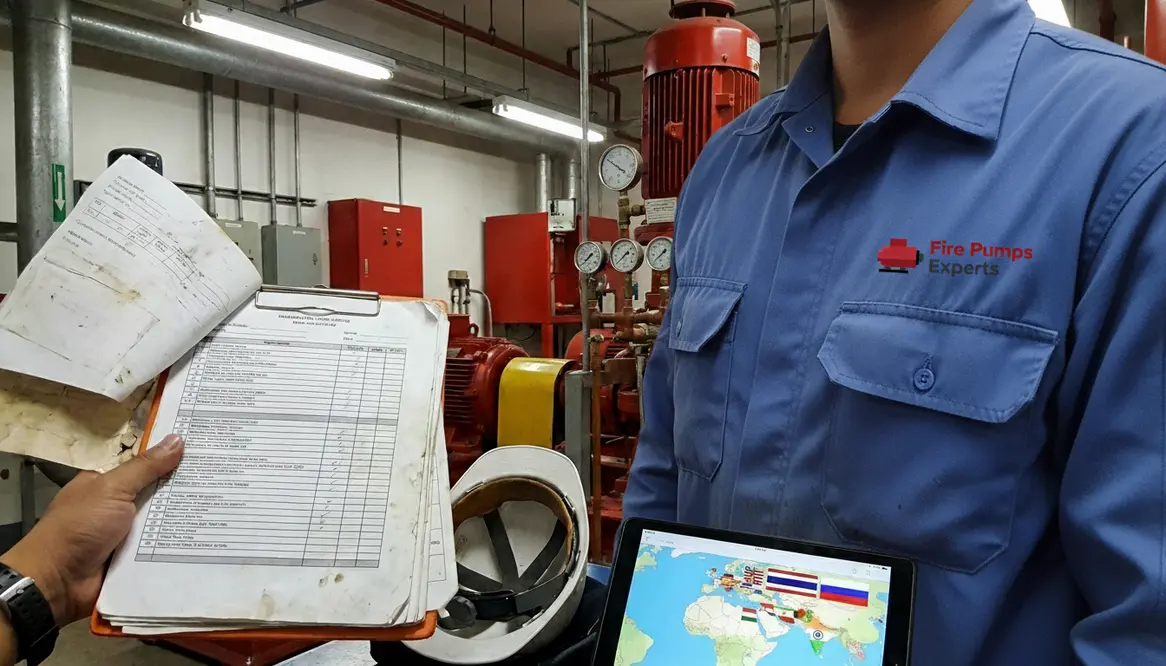
Fire Pump Certification Across Global Markets
Why one approved pump is not always approved everywhere, and how to keep your project out of the compliance maze.
Why fire pump certification is more than paperwork
I have seen one thing stay true across borders, industries, and building types: fire pump certification is never just paperwork. It is the quiet proof that a system can do its job when the pressure rises and the stakes get very real. For commercial towers, industrial plants, warehouses, and major properties, this process protects people, assets, and business continuity. And yes, it can feel as thrilling as watching paint dry, but unlike paint, this one can save a building. Since global markets do not all play by the same rulebook, I break the topic down country by country, so you can move with clarity instead of guesswork.
At a glance: what is at stake?
- Life safety for occupants and responders
- Protection of equipment, inventory, and buildings
- Insurance conditions and claim outcomes
- Commissioning schedules and handover dates
- Long term compliance and audit trails
Why global certification rules matter
I always start with the big picture. Every market wants the same result: a fire pump that works under stress. However, the path to proving that performance changes from place to place. Some regions focus on product listing, while others care more about local approval, test records, or third party inspection. As a result, a pump that passes in one country may still need more steps before it can be used in another.
For commercial and industrial facilities, this matters for project timing, insurance, commissioning, and long term compliance. In other words, one missed document can slow down the whole show. I have seen teams treat approval like a side quest, only to learn it is the main plot. So, before you buy, ship, or install, I check the target market’s rules first.
What fire pump certification usually includes
Most approval paths share the same core checks. First, authorities look at pump performance under rated flow and pressure. Next, they review the driver type, the controller, materials, and the test setup. Then, they often require proof from an approved lab, factory inspection, or local authority signoff.
In practical terms, I look for these common items:
- Performance test results
- Product listing or approval from a recognized lab
- Controller and driver compliance
- Factory quality records
- Installation and commissioning documents
- Ongoing inspection and maintenance rules
Furthermore, many buyers miss one simple point: certification is not only about the pump. It also covers the system around it. So, I always confirm the full package, because a strong pump with weak paperwork is like Iron Man with a dead arc reactor. Not ideal.
Typical documents to assemble
- Pump data sheets with performance curves
- Certificates from UL, FM, or equivalent bodies where required
- Controller and driver certificates matching the same standard
- Factory acceptance test summaries and serial tracking
- On site commissioning reports and as built documentation
- Maintenance plans aligned with local regulations
How rules differ in major markets
To make this easier, I use a simple two column view in my own review process.
| Market | Common expectation |
|---|---|
| United States | NFPA based design, UL listed or FM approved equipment, local code review |
| Canada | Alignment with national and local fire code, often tied to recognized listings |
| European Union | EN based standards, CE related product rules, local authority approval |
| Middle East | Often accepts global listings, but local civil defense approval remains key |
| Asia Pacific | Mix of international standards and country specific authority approval |
Now, let me unpack that a bit. In the United States, fire pump acceptance often leans on NFPA 20, UL, and FM approval. Therefore, engineers, contractors, and owners usually need strong product documentation before commissioning. In Europe, the process may involve EN standards and country specific rules, so local review still matters. Meanwhile, in the Middle East and parts of Asia Pacific, projects may rely on international listing plus local civil defense approval. That means one region may love a global certificate, while another still wants a local stamp. Bureaucracy, that timeless co star.
Fire pump certification in project planning
When I plan a project, I treat fire pump certification as a timeline item, not a final step. That shift saves time and reduces risk. First, I confirm the destination market. Then, I check whether the pump, driver, controller, and accessories already meet the needed standard. After that, I align the submittals with the authority having jurisdiction. This sequence keeps the job moving.
Also, I advise teams to involve the supplier early. A good supplier should know whether the equipment has the right listing, test record, and approval trail. If they do not, I slow down before the order goes out. That small pause can prevent a very expensive detour later. And in business, detours are great for road trips, not for commissioning schedules.
How I check compliance before purchase
I use a simple approach when I review a fire pump for a commercial or industrial site:
- I verify the required standard for the target country
- I confirm the pump curve matches the design need
- I check the listing body or approval body
- I review controller, motor, diesel engine, or drive compliance
- I make sure the vendor can supply test and trace documents
- I confirm the local authority will accept the package
Moreover, I never assume a certificate from one market will solve the need in another. A document can look polished and still miss the local rule. Therefore, I compare the paperwork with the project spec, the code, and the authority notes. That habit keeps surprises low and confidence high.
Practical tips to avoid delays
- Ask the supplier to confirm fire pump certification for the exact destination country.
- Match every certificate number to the model and options on the purchase order.
- Get written confirmation from the authority having jurisdiction when requirements are unclear.
- Keep all test reports and approvals organized; auditors love clean records.
- Use one central folder or system instead of scattered email attachments.
If you ever need deeper technical references, resources at https://firepumps.org can be a useful starting point alongside local codes.
FAQs
Conclusion
If you manage a commercial tower, industrial site, or major property, I urge you to treat fire pump certification as a core part of the job, not a box to tick at the end. The right approval path protects schedules, budgets, and lives. So, before you buy or install, confirm the market rules, review the documents, and make sure the system matches the local standard. If you want a smoother path, start early and keep every approval in view.
Handled well, fire pump certification becomes a quiet asset for the entire lifecycle of a building: design, construction, operation, and renewal. Handled poorly, it turns into a recurring source of surprise costs and delays. The choice is in how early and how seriously you build it into the plan.