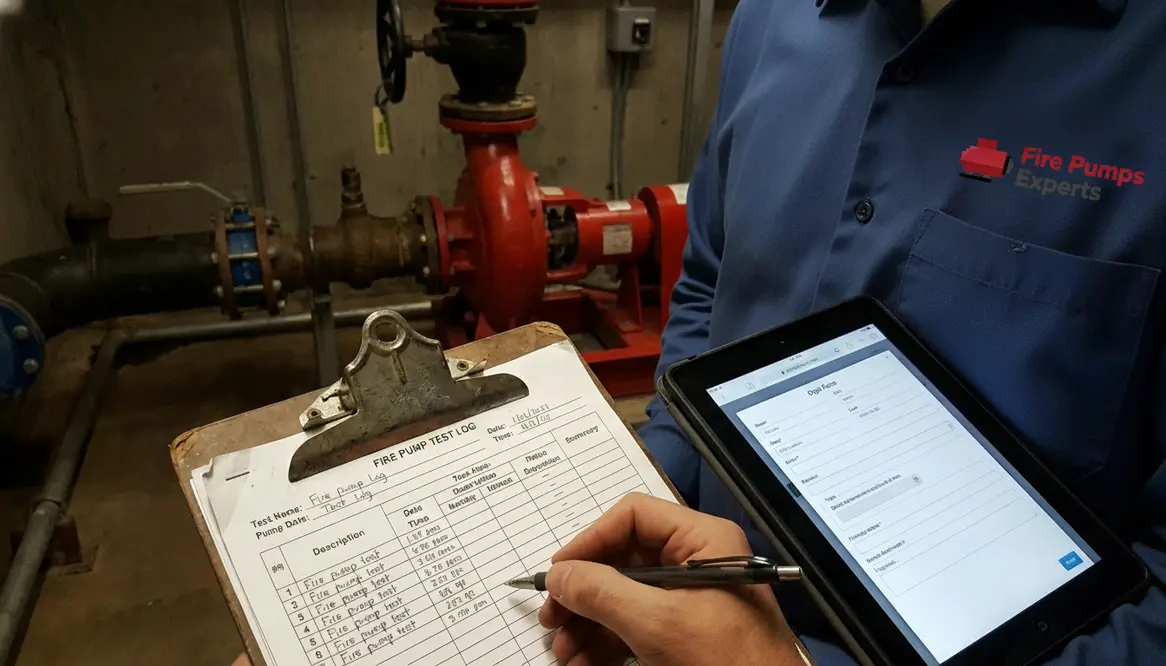
Fire Pump Testing Documentation Across Global Codes
How global rules shape the way facilities test, document, and prove that fire pumps are ready when everything is on the line.
When I talk about fire pump testing documentation, I am not talking about a pile of dusty forms that nobody wants to touch until an inspector shows up. I mean the paper trail that proves a commercial or industrial fire protection system did its job, or at least stood ready like a loyal guard dog. In today’s world, fire pump codes shape how we test, record, and verify performance across major property buildings, factories, warehouses, hospitals, and other high risk sites. Different regions may use different rules, but the goal stays the same: keep the pump ready, keep the records clean, and keep everyone calm when the pressure rises.
In this article, I will walk through how global codes affect testing records, what good documentation looks like, and why smart facility teams treat it like a business asset, not busywork.
Quick Snapshot
- Applies to commercial and industrial fire pumps
- Records prove performance under global fire pump codes
- Supports audits, insurance reviews, and investigations
- Turns “paperwork” into a real risk management tool
Why Fire Pump Records Matter in Global Compliance
Fire pump testing records do more than satisfy an inspector with a clipboard and a serious face. First, they show that the pump can deliver the water flow and pressure a building needs. Then, they create a history that helps spot wear, drift, or bad maintenance before failure shows up like an unwelcome sequel.
Across global code systems, documentation supports three main goals. It confirms compliance, it helps with maintenance planning, and it protects owners during audits, insurance reviews, and incident investigations. In large commercial and industrial facilities, that matters a lot. A missed detail can turn into a costly delay, and nobody wants that kind of drama on the front page of their risk register.
Where fire pump codes fit into the picture
Whether a facility follows NFPA 20 and NFPA 25, EN standards, LPCB, FM approvals, or a local authority’s rulebook, fire pump codes all push toward the same idea: test the pump in a consistent way, prove the results, and keep the evidence organized. That unified logic is what lets risk teams compare performance from one plant or property to another without guessing.
How I Document Tests Under Different Codes
Here is the short answer: I document every test in a way that matches the local code, the site standard, and the equipment setup. While the exact form changes by country or authority, the core data stays steady.
What I always record
- Test date and time
- Facility name and location
- Pump type and driver type
- Suction and discharge pressure
- Flow readings at key points
- Churn data and performance notes
- Valve position and controller status
- Any alarms, faults, or unusual noise
- Inspector or technician name
Then I compare the results to the required benchmark. For example, many fire safety systems follow NFPA based testing in North America, while other regions may use EN, LPCB, FM, or local authority rules. The format may shift, but the logic stays simple: measure, compare, record, and retain. That is not glamorous, but neither is losing a compliance case because someone misplaced a log sheet. Even Batman needs documentation, apparently.
Global Code Differences I Watch Closely
Now, let me get into the part that matters most for teams working across borders. Different codes ask for similar proof, but they do not always ask in the same way. Some standards want detailed weekly, monthly, or annual checks. Others focus more on performance testing at set intervals. A few want extra notes on driver condition, water supply reliability, or controller function.
Because of that, I never assume one template fits every site. Instead, I build the record set around the local rule and the facility risk level. For major properties with multiple pumps, backup power, or remote monitoring, I add more detail. That way, the record tells the full story and not just the headline. When fire pump codes shift between regions, that extra context stops confusion before it starts.
Two column snapshot for better record keeping
Test area
Equipment identity
Performance data
Condition notes
Follow up action
What I record
Pump tag, driver, controller, and location
Pressure, flow, run time, and result
Leaks, vibration, heat, sound, and alarms
Repair request, retest need, or approval
This kind of structure helps when I compare sites across countries. It also helps when I need a clean record during an audit. A tidy report reads like a good movie plot: clear, direct, and with no strange side characters hiding in the basement.
What Makes Strong Documentation in Industrial Facilities
Strong documentation does not just list numbers. It gives context. I want to know whether the pump started smoothly, whether the pressure held steady, and whether any part of the system behaved oddly. I also want notes that explain why a value changed, especially if the change came from seasonal water supply issues, wear, or repair work.
For industrial sites and large commercial buildings, I make sure the report links test data to maintenance history. That connection helps managers spot trends. For example, if discharge pressure drops over three tests, the team can act before the system turns into a cautionary tale. As a result, the documentation becomes a decision tool, not just a file folder trophy.
If a site needs help building or reviewing records, I recommend using a trusted industry resource such as commercial fire pump testing support to align testing and documentation with the right standards.
Keeping fire pump codes practical, not painful
The trick is to turn the dense language of fire pump codes into simple checklists and repeatable forms. When technicians can move through a test without hunting for what to write down, the data quality improves. When managers can read one clear report format across all their properties, they can finally compare risk in a sensible way.
How I Keep Records Clean, Useful, and Audit Ready
I keep the process simple, because simple systems get used. First, I use the same form structure for each test cycle. Then, I store digital copies with backup access. After that, I flag any failed reading right away so repairs do not get lost in email chaos. We have all seen that inbox. It is basically a black hole with a send button.
I also make sure the final report includes signatures, retest dates if needed, and clear pass or fail notes. When possible, I add photos of gauges, controllers, or fault indicators. Those images help explain the story fast, which matters when people need answers now, not next quarter.
Turning documentation into a business asset
Well organized reports make it easier to justify upgrades, defend maintenance budgets, and negotiate with insurers. When fire pump codes evolve, a strong archive proves that the facility was playing by the rules at every step, not improvising on the fly. That kind of proof is a lot more persuasive than a verbal “trust us” during an investigation.
Checklist: making your records audit ready
- Use one core format that aligns with local fire pump codes.
- Capture pressures, flows, and run times in the same order every time.
- Attach notes that explain anything that looks odd, not just the numbers.
- Link tests to maintenance work orders and repairs.
- Store records where both operations and risk teams can reach them quickly.
FAQ
Conclusion
Fire pump testing documentation only works when it stays accurate, complete, and easy to trace. I use the code requirements, the site risk level, and the equipment history to build records that hold up under review. If you manage a commercial or industrial facility, now is the time to tighten your process, clean up your logs, and make every test count. Strong records protect people, support compliance, and keep your building ready when it matters most, no matter which fire pump codes your jurisdiction happens to follow.